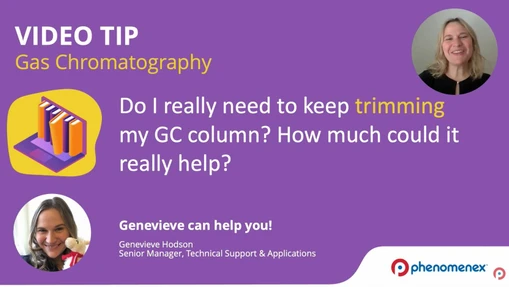
Trimming a GC Column: Purpose, Symptoms, and Proper Technique
Article | Academy

Trimming a GC Column: Purpose, Symptoms, and Proper Technique

GC column trimming helps resolve contamination, ghost peaks, baseline instability, and peak tailing. Learn key symptoms and the correct technique for proper column cutting.
Th, 2.4.2026
Phenomenex
tag
share
more
Trimming a GC Column: Purpose, Symptoms, and Proper Technique
How to Choose GC Column Dimensions
Article | Academy

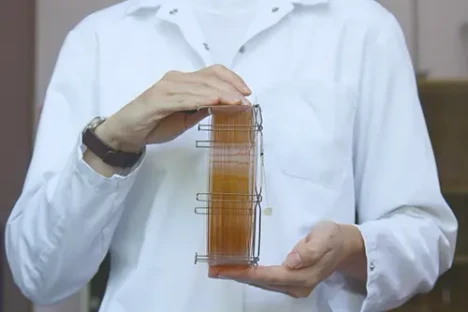
How to Choose GC Column Dimensions

Guidance on selecting key GC column parameters — length, internal diameter, and film thickness — and their influence on resolution, retention, run time, and sample capacity.
We, 25.3.2026
Phenomenex
tag
share
more
How to Choose GC Column Dimensions
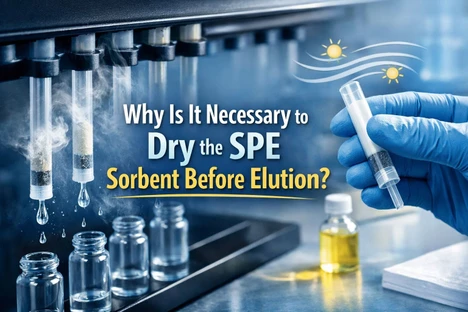
Why Is It Necessary to Dry the SPE Sorbent Before Elution?
Article | Academy

Why Is It Necessary to Dry the SPE Sorbent Before Elution?

Proper drying of the SPE sorbent is a critical step to achieve high sensitivity, good reproducibility, and maximum analyte recovery, especially for complex sample matrices.
We, 18.2.2026
Phenomenex
tag
share
more
Why Is It Necessary to Dry the SPE Sorbent Before Elution?
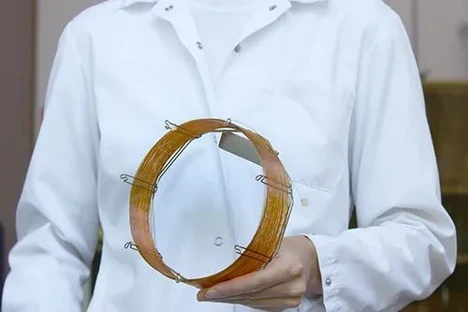
How to Protect Your GC Column - Part 2
Article | Academy

How to Protect Your GC Column - Part 2

How can you extend GC column lifetime and prevent contamination? Part 2 focuses on using liners with glass wool and proper column bake-out to maintain separation performance.
We, 11.2.2026
Phenomenex
tag
share
more
How to Protect Your GC Column - Part 2
How to Protect Your GC Column - Part 1
Article | Academy

How to Protect Your GC Column - Part 1

Dirty samples can quickly damage your GC column and shorten its lifetime. Learn simple, proven ways to protect your column, improve performance, and reduce downtime. Part 1 focuses on smart sample preparation.
We, 4.2.2026
Phenomenex
tag
share
more
How to Protect Your GC Column - Part 1
SPE Troubleshooting - Extra Peak
Article | Academy

SPE Troubleshooting - Extra Peak

An SPE technical tip focused on identifying the sources of interferences and extra peaks observed after sample extraction.
We, 28.1.2026
Phenomenex
tag
share
more
SPE Troubleshooting - Extra Peak
Why are my recoveries greater than 100%?
Article | Academy

Why are my recoveries greater than 100%?

Although 100% recovery is expected in SPE, values above 100% are sometimes observed. This article explains the most common causes and provides practical guidance on how to identify and resolve them.
We, 21.1.2026
Phenomenex
tag
share
more
Why are my recoveries greater than 100%?
Troubleshooting SPE
Article | Academy

Troubleshooting SPE

A technical guide to troubleshooting low analyte recovery in SPE. Explains relative vs. absolute recovery and provides practical solutions for conditioning, loading, and sorbent selection.
We, 14.1.2026
Phenomenex
tag
share
more
Troubleshooting SPE
All My Analytes are Neutrals, but Contaminants are Acids or Amines. What is the Best Way to Concentrate and Clean Up my Analytes of Interest?
Article | Academy

All My Analytes are Neutrals, but Contaminants are Acids or Amines. What is the Best Way to Concentrate and Clean Up my Analytes of Interest?

How can neutral analytes be efficiently concentrated in the presence of ionized acidic or basic contaminants? This SPE tip explains how mixed-mode cartridges improve selectivity and cleanup.
We, 31.12.2025
Phenomenex
tag
share
more
All My Analytes are Neutrals, but Contaminants are Acids or Amines. What is the Best Way to Concentrate and Clean Up my Analytes of Interest?
How is Normal Phase (NP) SPE Different from Reversed-Phase (RP) SPE?
Article | Academy

How is Normal Phase (NP) SPE Different from Reversed-Phase (RP) SPE?

A clear guide to Normal Phase SPE: when to use it, how polar interactions drive retention, and which solvents to choose in increasing polarity—plus a quick reference list for optimized sample preparation.
We, 3.12.2025
Phenomenex
tag
share
more
How is Normal Phase (NP) SPE Different from Reversed-Phase (RP) SPE?
Other projects
LCMS
ICPMS
Follow us
FacebookX (Twitter)LinkedInYouTube
More information
WebinarsAbout usContact usTerms of use
LabRulez s.r.o. All rights reserved. Content available under a CC BY-SA 4.0 Attribution-ShareAlike