The Chemistry of Human Decomposition: GC×GC, Body Farms, and Forensic Science with Dr. Darshil Patel
- Photo: Concentrating on Chromatography: The Chemistry of Human Decomposition: GC×GC, Body Farms, and Forensic Science with Dr. Darshil Patel
- Video: Concentrating on Chromatography: The Chemistry of Human Decomposition: GC×GC, Body Farms, and Forensic Science with Dr. Darshil Patel
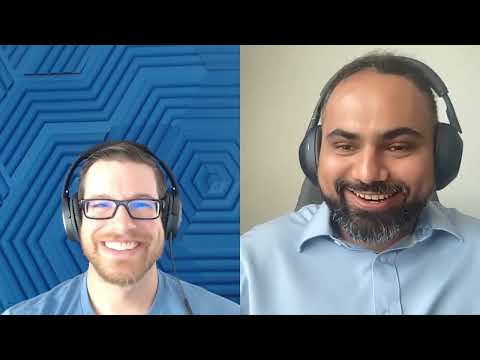
In this episode of ChromatographyTalk David sits down with Dr. Darshil Patel, Assistant Professor of Forensic Science at the University of North Dakota, to discuss his remarkable journey from dentistry in India to becoming a leading researcher in forensic chemistry across Australia, Canada, and the United States.
Dr. Patel shares how his work at human taphonomic facilities—commonly known as "body farms"—has helped advance our understanding of human decomposition and the volatile compounds released during the postmortem process. Using comprehensive two-dimensional gas chromatography coupled with time-of-flight mass spectrometry (GC×GC-TOFMS), his research aims to improve human remains detection, cadaver dog training, and the development of future electronic sensing technologies.
Topics discussed include:
- How a dentist became a forensic scientist
- Working in Australia, Canada, and the United States
- What human taphonomic facilities ("body farms") really do
- The chemistry of human decomposition
- Why GC×GC-TOFMS excels at analyzing complex VOC mixtures
- How chromatography can improve cadaver dog training
- The future of electronic noses and human remains detection
- Challenges posed by geography and environmental conditions
- Building a new forensic chemistry laboratory at the University of North Dakota
- The future of forensic chromatography
Video Transcription
A career that began in dentistry has taken Darshil Patel into one of the most complex areas of forensic analytical science: the chemical investigation of human decomposition. In an interview for Concentrating on Chromatography, Patel discussed his unconventional path into research, the role of comprehensive two-dimensional gas chromatography, work at human taphonomic facilities, and the potential of chemical profiling to improve human-remains detection.
An unconventional route into forensic science
Patel originally trained as a dentist in India. During his internship, however, he began looking for a professional direction that differed from the conventional routes followed by many of his colleagues, such as postgraduate dentistry or public health.
His first interest was forensic odontology, which offered a natural connection between dentistry and forensic investigation. After exploring programs in several countries, he broadened his focus to forensic science and enrolled at the University of Technology Sydney.
The decision was not part of a long-term plan. It was during his second year, when he transferred into an honours research program, that forensic research became more than an academic interest. Working on his first project showed him that he wanted to pursue research full-time, eventually leading him toward doctoral study and a career in forensic analytical chemistry.
Living and working in Australia, Canada, and the United States subsequently shaped both his scientific perspective and his personal development. Moving between countries exposed him to different research environments, climatic conditions, institutional approaches, and scientific questions.
Discovering chromatography through decomposition research
Patel’s introduction to chromatography did not follow the usual route of classroom exercises followed by progressively more advanced instrumentation. Instead, he encountered separation science through a specific forensic problem.
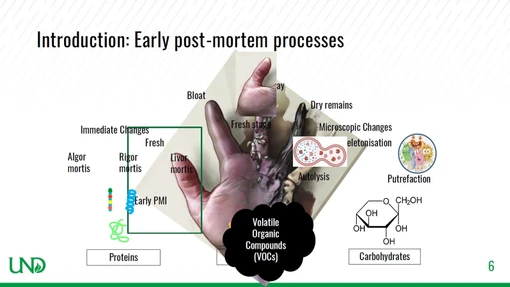
His research focused on the early postmortem period and the volatile organic compounds released during human decomposition. These compounds contribute to the characteristic odor profile associated with decomposing remains and may provide valuable information for locating missing persons or concealed bodies.
Rather than beginning with conventional one-dimensional gas chromatography, Patel started directly with comprehensive two-dimensional gas chromatography (GC×GC).
“I went directly to GC×GC, which is not a traditional route for most people,” he explained.
The laboratory in which he worked had already established GC×GC as a preferred approach for decomposition-odor analysis. Human decomposition produces a chemically diverse mixture containing compounds from multiple functional groups, making the samples difficult to resolve using conventional one-dimensional separations.
How comprehensive two-dimensional gas chromatography works
GC×GC is designed for highly complex mixtures. The technique uses two columns with different stationary phases and therefore different separation mechanisms. An interface known as a modulator connects the two dimensions.
As compounds leave the first column, the modulator collects and refocuses them before transferring small fractions into the second column. The second separation provides additional resolution based on a complementary chemical property.
The result is a structured two-dimensional chromatographic separation with substantially greater resolving power than conventional one-dimensional GC. Compounds that might otherwise overlap because of similar boiling points or interactions with the first stationary phase can often be separated in the second dimension.
For decomposition analysis, this capability is particularly important. The volatile profile may contain numerous sulfur-containing compounds, nitrogen-containing compounds, and many other chemical families. Each family may itself contain multiple closely related substances.
Patel discussed the value of combining comprehensive chromatography with mass spectrometric detection, including GC×GC–TOF-MS, to separate the complex mixture and support compound identification. Without the second chromatographic dimension, coeluting substances may be overlooked or interpreted as a single signal.
Research at human taphonomic facilities
A major part of Patel’s work has taken place at human taphonomic facilities in Australia and Canada. These secured outdoor research sites are sometimes colloquially described as “body farms,” although the scientific activities conducted there extend far beyond this simplified label.
Forensic taphonomy examines what happens to human remains after death and how biological, chemical, physical, and environmental processes influence decomposition. Human taphonomic facilities allow researchers to observe these processes under realistic outdoor conditions.
The surrounding environment is critical. Temperature, rainfall, humidity, soil, vegetation, insect activity, and seasonal conditions can all change the rate and pathway of decomposition. Data collected in one geographical region therefore cannot always be transferred directly to another.
Researchers at these facilities work closely with law-enforcement agencies. Some studies originate from questions encountered during casework, while others recreate scenarios that investigators may face in the field.
According to Patel, projects may examine:
- Volatile organic compounds released during decomposition
- The influence of clothing on decomposition
- Shallow and deep burial scenarios
- Graves containing multiple sets of remains
- Insect colonization and forensic entomology
- DNA and fingerprint recovery from postmortem remains
- Isotope profiles
- Fungal communities during advanced decomposition
- Detection-dog training
- Concealment inside vehicles or other enclosed spaces
- Drone and remote-sensing methods for locating graves or remains
This multidisciplinary environment brings together analytical chemists, anthropologists, entomologists, microbiologists, law-enforcement personnel, detection-dog teams, and specialists in remote sensing.
Addressing misconceptions about decomposition facilities
Because death and decomposition remain socially sensitive subjects, human taphonomic facilities are often surrounded by misconceptions.
One frequent concern is odor. Patel noted that the smell is generally far less disruptive than people expect, particularly at a distance from the research area. These facilities are normally located away from residential neighborhoods and are designed to operate without disturbing surrounding communities.
Security and respectful management of donated remains are also central priorities. Bodies placed outdoors are protected by anti-scavenging cages where necessary, and skeletal material is carefully accounted for.
Patel described the facilities not as chaotic or disturbing places, but as controlled, quiet research environments created to answer questions that cannot be studied adequately using simplified laboratory models.
Why decomposition is chemically difficult to predict
One of the largest analytical challenges is the variability of the human body itself.
Although people are composed of the same general classes of biomolecules, the proportions of those materials differ between individuals. Diet, age, health, habits, physiology, body composition, and microbial communities all influence decomposition.
“No two bodies are the same,” Patel emphasized.
Environmental conditions introduce another major source of variation. Even within the same location, no two summers or winters are identical. Differences in temperature, precipitation, and seasonal patterns can substantially alter decomposition chemistry.
The process is also uneven within a single body. Different tissues and anatomical regions do not decompose at the same rate. Unlike a controlled chemical reaction, decomposition does not begin with standardized starting material under fixed conditions and proceed toward one predictable result.
This makes method development especially demanding. Researchers must distinguish meaningful chemical trends from biological and environmental variability, while working with sample sets that are necessarily smaller and more difficult to obtain than those available in many other analytical disciplines.
Where decomposition VOCs come from
Volatile compounds are generated through several overlapping processes.
Some arise directly from the breakdown of tissues and cells. Others are produced through microbial metabolism as bacteria and other microorganisms transform proteins, lipids, carbohydrates, and other biological materials. Interactions between the remains and the surrounding environment further modify which compounds are produced, retained, or released.
From a forensic perspective, the most immediate application of these VOCs is the search for human remains. The odor profile provides the chemical basis for detection by trained dogs and may also support the development of instrumental sensors.
Because the decomposition profile contains many compounds rather than a single universal marker, a comprehensive analytical approach is essential. GC×GC can reveal a broader and more detailed chemical pattern than one-dimensional GC, potentially providing a more representative picture of the odor available to a detection dog or sensor.
Improving human-remains detection
Well-trained human-remains detection dogs and their handlers remain exceptionally effective. Patel does not expect an electronic instrument to replace them in the immediate future.
However, there are situations in which sending a dog and handler may be dangerous or impossible. Collapsed buildings, unstable structures, inaccessible terrain, and other hazardous environments create a strong need for portable detection technologies.
A future electronic nose or portable chemical sensor could complement canine teams by entering areas that are unsafe for people or animals. Developing such devices requires a better understanding of the complete VOC profile and the combinations of compounds that are most significant for detection.
GC×GC data could also improve training aids used for detection dogs. A training material based only on compounds identified by one-dimensional GC may omit important components because of unresolved coelution. A more comprehensive two-dimensional profile could help researchers design aids that better reproduce the chemical complexity of actual human decomposition.
Managing the data generated by GC×GC
The resolving power of GC×GC also creates a data-processing challenge. A single analysis can generate a large number of peaks distributed across a two-dimensional separation space.
Patel noted that processing workflows are now more established than they were a decade ago. Vendor-specific software can align chromatograms, compare samples, filter features, and help distinguish compounds associated with experimental samples from those present in the background.
Control and quality-control samples are essential. They allow researchers to remove signals originating from collection materials, the environment, sampling equipment, or other sources unrelated to decomposition.
Open-source tools are also becoming increasingly important. Data can be processed using R, Python, and custom scripts, giving researchers additional options for statistical analysis, visualization, and the development of specialized workflows.
Nevertheless, more analytical power also means more variables to manage. Extracting biologically and forensically meaningful information from comprehensive datasets remains one of the central challenges of the field.
The need for larger and more standardized studies
Patel believes the past decade has established a strong foundation for decomposition VOC research. The next step is to conduct larger studies involving more human donors.
Increasing the number of donors is necessary to address the natural variability between individuals, but access to suitable samples remains a significant limitation. Research must also be repeated across different climates and geographical environments.
A chemical pattern observed in Australia, Canada, or one region of the United States may not appear in exactly the same form elsewhere. Broader datasets are therefore needed before decomposition VOC profiles can be applied reliably across diverse environments.
Interlaboratory studies will also be essential. Replication by multiple research groups could help identify robust findings, harmonize sampling and analytical procedures, and support eventual standardization.
“It is still an evolving field, and there is a lot of work to be done,” Patel said.
Building a new research program in North Dakota
At the University of North Dakota, Patel is developing his own laboratory and preparing to establish in-house GC×GC capabilities.
One of his goals is to introduce comprehensive two-dimensional chromatography into forensic applications that have traditionally relied on one-dimensional GC. He is also interested in investigating the use of hydrogen as a carrier gas and evaluating its suitability for forensic laboratory workflows.
Another priority is to study complex samples and forensic questions relevant to North Dakota. The region’s climate and geographical characteristics create analytical challenges that differ from those encountered in Australia, Canada, or warmer areas of the United States.
By applying GC×GC to locally relevant problems, Patel hopes to generate data that can directly support regional forensic investigations while also contributing to the broader development of separation science.
Separation science with a direct forensic purpose
Patel’s career illustrates how analytical chemistry can develop from a practical question rather than from an instrument-centered starting point. His introduction to chromatography began with the challenge of understanding a complex biological process and locating human remains through chemical signatures.
GC×GC provides the separation power needed to examine that complexity, while mass spectrometry supports the identification of the compounds involved. Together with carefully designed field studies, quality-control samples, data-processing workflows, and collaboration across disciplines, these tools can transform decomposition odor from an undefined sensory phenomenon into measurable analytical information.
The work may ultimately improve detection-dog training, guide the development of portable sensors, support law-enforcement searches, and deepen scientific understanding of postmortem processes. For Patel, the next phase will involve expanding GC×GC into new forensic applications, building larger datasets, and encouraging the interlaboratory collaboration needed to turn emerging findings into reliable forensic practice.
This text has been automatically transcribed from a video presentation using AI technology. It may contain inaccuracies and is not guaranteed to be 100% correct.
Concentrating on Chromatography Podcast
Dive into the frontiers of chromatography, mass spectrometry, and sample preparation with host David Oliva. Each episode features candid conversations with leading researchers, industry innovators, and passionate scientists who are shaping the future of analytical chemistry. From decoding PFAS detection challenges to exploring the latest in AI-assisted liquid chromatography, this show uncovers practical workflows, sustainability breakthroughs, and the real-world impact of separation science. Whether you’re a chromatographer, lab professional, or researcher you'll discover inspiring content!
You can find Concentrating on Chromatography Podcast in podcast apps:
and on YouTube channel