Simplifying Fuel Analysis: Why Laboratories Are Moving From Reformulyzer to GC-VUV
- Photo: Thermo Fisher Scientific: Simplifying Fuel Analysis: Why Laboratories Are Moving From Reformulyzer to GC-VUV
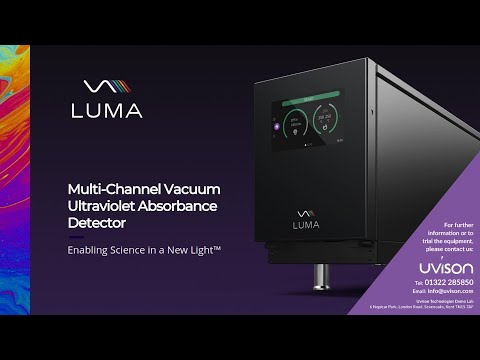
- Video: UVISON Technologies: VUV Analytics, Inc. Introduces the LUMA™ Multi-Channel Vacuum Ultraviolet Absorbance Detector
Fuel analysis laboratories are facing a growing challenge: delivering highly accurate hydrocarbon characterization while maintaining operational efficiency and controlling costs. For many years, multidimensional gas chromatography (MDGC) systems such as the Reformulyzer have been the established solution for compliance with EN ISO 22854. However, these systems were designed in an era when chromatographic separation was the only viable path to resolving complex fuel matrices.
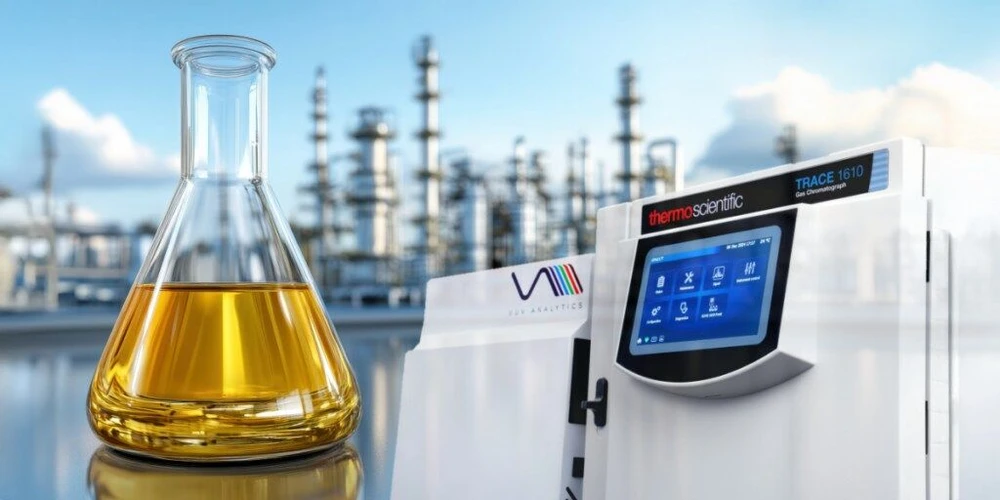 Thermo Fisher Scientific: Simplifying Fuel Analysis: Why Laboratories Are Moving From Reformulyzer to GC-VUV
Today, that paradigm is shifting. With the introduction from VUV Analytics, Inc. of Gas Chromatography–Vacuum Ultraviolet detection (GC-VUV) and its recognition within the EN 228:2025 framework, laboratories now have the opportunity to modernize fuel analysis workflows using a simpler, more robust approach.
Limitations of traditional MDGC workflows
The Reformulyzer is a highly engineered system designed to achieve detailed hydrocarbon class separation through multidimensional chromatography. This involves multiple columns, rotary valves, adsorption traps, and complex switching sequences.
While this architecture delivers the required analytical output, it also introduces several practical limitations. The presence of numerous moving parts increases the risk of mechanical failure and requires regular maintenance. System tuning and troubleshooting often demand specialized expertise, leading to extended downtime and higher operational costs.
From an analytical perspective, MDGC systems rely heavily on chromatographic resolution. In real-world fuel samples, particularly heavy naphtha or complex gasoline blends, co-elution is unavoidable. This can result in misclassification of compounds, especially at higher carbon numbers, impacting the accuracy of PIONA groupings and detailed hydrocarbon analysis. For many laboratories, these challenges raise an important question: is there a more efficient way to achieve the same or better analytical outcomes?
GC-VUV: a transformational approach to fuel analysis
GC-VUV introduces a fundamentally different analytical strategy. Rather than relying solely on chromatographic separation, it combines gas chromatography with vacuum ultraviolet spectroscopy (125–240 nm), where virtually all organic compounds absorb and produce unique spectral fingerprints.
This means that even when compounds co-elute chromatographically, they can still be identified and quantified based on their spectral signatures. The detector captures data in three dimensions, retention time, wavelength, and intensity, enabling powerful deconvolution and compound classification.
The impact on system design is significant. Compared to the Reformulyzer:
- A single capillary column replaces multiple column configurations
- No valves or adsorption traps are required
- The system architecture is inherently simpler and more robust
- Individual or group compound identification
For laboratory managers and analysts, the advantages of GC-VUV go beyond theory, translating directly into improved daily operations:
- Reduced maintenance and downtime
With fewer moving parts, the GC-VGA system minimizes mechanical failures and reduces the need for frequent intervention, improving system uptime. - Improved accuracy in complex matrices
Spectral deconvolution allows accurate identification of co-eluting compounds, addressing known limitations of traditional chromatographic methods. - Higher productivity
Shorter run times and fully automated data processing significantly increase throughput, enabling laboratories to handle more samples with fewer resources. - Simplified workflows
Eliminating complex calibration schemes and reducing user-dependent steps leads to more consistent and reproducible results. - Expanded application range
Unlike the Reformulyzer, which is primarily optimized for gasoline and naphtha, GC-VUV can be applied across a broader range of hydrocarbon streams, including jet fuel, diesel, and petrochemical feedstocks.
Alignment with evolving standards
The publication in 2024 of the EN 18015 as standard procedure for the determination of saturates, olefins, aromatics and oxygenates in unleaded petrol using GC-VUV, established the inclusion of this technology as an alternative method within the Fuel Specification EN 228:2025, representing a significant milestone for the industry.
This recognition provides laboratories with the regulatory confidence to adopt a more efficient analytical approach while maintaining alignment with fuel quality standards. It also reflects a broader shift toward leveraging advanced detection technologies to simplify analytical workflows without compromising data integrity.
The transition from Reformulyzer to GC-VGA is not simply an upgrade. It is a step towards a more modern, resilient laboratory. By reducing system complexity, improving analytical performance, and expanding application flexibility, GC-VUV enables laboratories to meet today’s demands while preparing for future challenges.
For end users, the value is clear: fewer operational constraints, greater analytical confidence, and a more streamlined path to compliance.
Learn more
Discover the Thermo Scientific GC-VUV solutions. Visit VUV Detector for TRACE 1600 Series GC or contact your Thermo Fisher Scientific representative.
 Thermo Fisher Scientific: Simplifying Fuel Analysis: Why Laboratories Are Moving From Reformulyzer to GC-VUV
Visit us on LinkedIn: #GasChromatography #industrial