Innovative Pyrolysis GC-MS Techniques with Eugene Oga

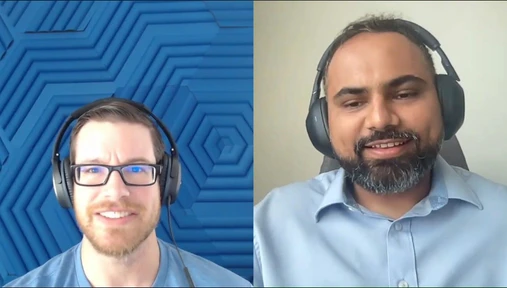
- Photo: Concentrating on Chromatography: Innovative Pyrolysis GC-MS Techniques with Eugene Oga
- Video: Concentrating on Chromatography: Innovative Pyrolysis GC-MS Techniques with Eugene Oga
Eugene Oga, a PhD student in Analytical Chemistry at the University of North Dakota, joins David Oliva to discuss his innovative research on silicone sealant degradation using evolved gas analysis and thermal desorption-pyrolysis gas chromatography. With his background in materials chemistry and current focus on analytical techniques, Eugene shares insights into how these advanced methods can characterize material breakdown over time, with significant implications for the construction industry and beyond.
Eugene's Background and Research Focus
Eugene Oga is pursuing his PhD in Analytical Chemistry at the University of North Dakota, following his Bachelor's and Master's degrees from the University of Buea in Cameroon. His academic journey began with a focus on materials chemistry before transitioning to analytical chemistry, recognizing that material properties and performance depend heavily on proper characterization.
His current research employs advanced analytical techniques like evolved gas analysis and pyrolysis gas chromatography to understand how materials break down over time and identify the specific fragments produced during degradation. This work aims to provide recommendations to manufacturers about potential improvements to their processes.
Understanding Structural Sealant Glazing and Its Importance
Structural Sealant Glazing (SSG) plays a critical role in modern construction, particularly in buildings that extensively use glass and metal. Eugene explains that sealants are thick liquids used to bind different construction materials together.
These sealants serve multiple important functions, including preventing air infiltration, moisture penetration, and enhancing building stability. While studies have estimated how long sealants and buildings should last, they often don't explain the actual breakdown mechanisms. Eugene's research aims to fill this gap by identifying which components are lost over time and how this degradation occurs, ultimately enabling better prediction of failure and development of solutions.
Different Failure Modes and Analytical Approaches
Eugene identifies several categories of sealant failure that require different analytical approaches:
- Adhesive/cohesive failures: These occur when materials don't properly bind together, often due to surface preparation issues that can be addressed through proper cleaning.
- Chemical degradation: This includes processes like UV exposure, hydrolysis, and oxidation.
- Environmental factors: Temperature fluctuations, moisture, and pollutants can contribute to degradation.
- Physical degradation: Manifesting as cracking, fatigue, and creep.
While mechanical analysis can identify physical changes like cracking and strength loss, it doesn't reveal which chemical components are being lost. For all these failure modes, gas chromatography and mass spectrometry prove essential.
In all of these different failure modes and causes, gas chromatography and mass spectrometry would be very important to identify the volatile degradation products and the changes that are accompanying the backbone.
Innovative Methodological Approach
Eugene's research employs a two-step analytical approach that modifies standard GC-MS protocols to accommodate siloxane chemistry:
- Evolved Gas Analysis (EGA-MS): This serves as a rapid screening technique to identify temperature ranges where components evolve.
- Thermal Desorption-Pyrolysis GC-MS: This follows as a verification tool, focusing on the specific temperature zones identified by EGA to perform detailed analysis of components evolving at different temperatures.
This sequential approach allows for more targeted analysis and better characterization of degradation products. The method is particularly valuable because it eliminates extensive sample preparation—samples can be analyzed as received, saving significant time and reducing potential preparation errors.
Surprising Findings
Instead of compositional changes, Eugene observed a temperature shift in the elution of compounds as samples aged. Older samples tended to show compound evolution at lower temperatures, which accounted for the surface changes and other observed degradation effects. This finding suggests that EGA can serve as an effective screening tool to quickly assess sealant aging.
Future Directions in Pyrolysis Gas Chromatography
In terms of instrumentation improvements, Eugene mentions:
- Enhanced detectors, including the integration of flame ionization detectors and methanizers to better quantify carbon monoxide and carbon dioxide
- Development of portable systems for field analysis
- Potential AI integration to automate analysis processes
Eugene's lab at the University of North Dakota is open to collaborations to test their developing methods across different matrices and applications, from environmental analysis to energy systems and beyond.
Concentrating on Chromatography Podcast
Dive into the frontiers of chromatography, mass spectrometry, and sample preparation with host David Oliva. Each episode features candid conversations with leading researchers, industry innovators, and passionate scientists who are shaping the future of analytical chemistry. From decoding PFAS detection challenges to exploring the latest in AI-assisted liquid chromatography, this show uncovers practical workflows, sustainability breakthroughs, and the real-world impact of separation science. Whether you’re a chromatographer, lab professional, or researcher you'll discover inspiring content!
You can find Concentrating on Chromatography Podcast in podcast apps:
and on YouTube channel