Tracking Toxic PCBs in River Water using Gas Chromatography–Electron Capture Detection

- Photo: Concentrating on Chromatography: Tracking Toxic PCBs in River Water using Gas Chromatography–Electron Capture Detection
- Video: Concentrating on Chromatography: Tracking Toxic PCBs in River Water using Gas Chromatography–Electron Capture Detection
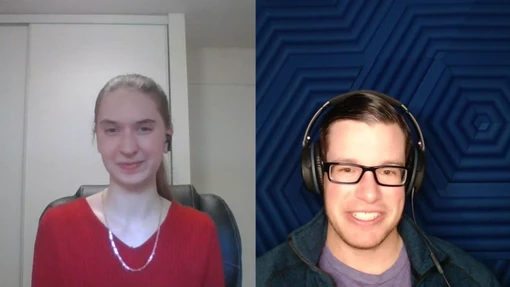
🎤Francis Femi Oloy
In this episode of Concentrating on Chromatography, David speaks with Francis Femi Oloy about using chromatography to uncover hidden pollutants in real-world water systems.
Femi’s team analyzed polychlorinated biphenyls (PCBs) in six major rivers in southwestern Nigeria — compounds that were banned decades ago but still persist in the environment. Using a workflow that many analytical labs will recognize — liquid–liquid extraction, cleanup, rotary evaporation, nitrogen blowdown, and GC-ECD detection — they quantified 25 PCB congeners at trace levels and linked the results to ecological and human health risk.
In this conversation, we cover:
- Why legacy pollutants like PCBs still show up today
- Choosing GC-ECD vs LC-MS for halogenated compounds
- Liquid–liquid extraction and matrix cleanup strategies
- Why sample concentration is critical for dilute environmental samples
- How rotovap + nitrogen blowdown work together without losing volatile analytes
- Seasonal trends (why wet season levels were higher)
- Translating concentration data into meaningful risk assessments
Video Transcription
Persistent organic pollutants such as polychlorinated biphenyls (PCBs) remain a significant environmental concern despite decades of regulatory restrictions. In this interview, Francais Femi Oloy discusses the environmental and analytical challenges associated with monitoring PCB contamination in rivers of southwestern Nigeria, a rapidly industrializing region where urban growth, industrial activity, agriculture, and dense populations intersect with extensive aquatic systems.
Oloy explains that his interest in environmental contaminant analysis emerged from observing unexplained health problems and environmental degradation while growing up in Nigeria. This motivated his transition into organic and environmental chemistry, with a focus on identifying pollutants present in drinking water, agricultural soils, and food systems. Southwestern Nigeria, particularly the Lagos region, represents a critical environmental monitoring area due to intense industrial development, shipping activity, and widespread human dependence on rivers for domestic use, agriculture, and fishing.
Although PCBs are considered “legacy pollutants” and are no longer intentionally produced, the interview highlights why they continue to persist in aquatic environments. Old electrical transformers and aging industrial equipment still contain PCB residues, while historical contamination stored in river sediments can become remobilized during flooding, dredging, or sediment disturbance. Because PCBs are hydrophobic and resistant to degradation, they preferentially accumulate in sediments and bioaccumulate through aquatic food chains, creating long-term environmental and human exposure risks.
A major focus of the discussion centers on the analytical workflow used for PCB determination in environmental water samples. Composite river water samples were collected in amber glass bottles to avoid contamination and photodegradation, preserved with sodium azide to minimize microbial activity, and stored under cooled conditions prior to extraction. The analytical protocol employed liquid–liquid extraction using dichloromethane (DCM) and hexane to recover both polar and nonpolar PCB congeners. Oloy emphasizes that liquid–liquid extraction was selected over solid-phase extraction (SPE) because of concerns about congener retention within sorbent materials and clogging issues associated with large-volume environmental samples.
Following extraction, concentration and cleanup represented critical analytical stages due to the trace-level occurrence and volatility of PCBs. Silica and alumina cleanup procedures were used to remove matrix interferences prior to instrumental analysis. The concentration workflow combined rotary evaporation for bulk solvent reduction with nitrogen blowdown for final volume reduction to less than 1 mL, while carefully avoiding excessive temperature or complete dryness to minimize analyte loss. Oloy repeatedly stresses that improper concentration procedures are among the most common causes of analytical failure in PCB analysis.
For instrumental determination, the study utilized gas chromatography coupled with electron capture detection (GC-ECD) rather than LC-MS or GC-MS. According to Oloy, GC was preferred because PCBs are sufficiently volatile for gas chromatographic separation, while ECD provided superior sensitivity and selectivity for chlorinated compounds at environmentally relevant concentrations. The interview also discusses analytical validation strategies, including the use of surrogate standards to assess recoveries, which ranged from approximately 85% to 114%, and signal-to-noise-based determination of detection limits.
The study further examined seasonal variations in PCB concentrations, revealing higher levels during the wet season. This observation was attributed to rainfall-driven runoff from contaminated infrastructure, sediment resuspension, and lower temperatures that reduce volatilization losses. To communicate toxicological relevance beyond simple concentration reporting, the researchers also calculated toxic equivalency values (TEQs), converting mixtures of PCB congeners into biologically meaningful toxicity estimates comparable to dioxin toxicity metrics.
Beyond environmental monitoring, Oloy highlights broader research interests focused on pollutant remediation and sustainable environmental protection. His group is also involved in developing catalytic materials capable of degrading or removing persistent contaminants from environmental systems. Throughout the discussion, he emphasizes that analytical chemistry plays a central role not only in detecting pollutants, but also in enabling prevention, remediation, and long-term environmental management strategies.
This text has been automatically transcribed from a video presentation using AI technology. It may contain inaccuracies and is not guaranteed to be 100% correct.
Concentrating on Chromatography Podcast
Dive into the frontiers of chromatography, mass spectrometry, and sample preparation with host David Oliva. Each episode features candid conversations with leading researchers, industry innovators, and passionate scientists who are shaping the future of analytical chemistry. From decoding PFAS detection challenges to exploring the latest in AI-assisted liquid chromatography, this show uncovers practical workflows, sustainability breakthroughs, and the real-world impact of separation science. Whether you’re a chromatographer, lab professional, or researcher you'll discover inspiring content!
You can find Concentrating on Chromatography Podcast in podcast apps:
and on YouTube channel