

Building DIY Lab Equipment for Water Research: Homemade Nitrogen Evaporators & PFAS Analysis
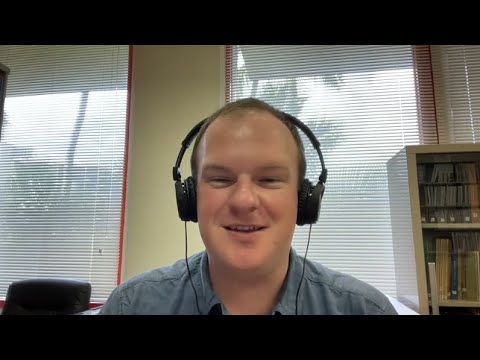
- Photo: Concentrating on Chromatography: Building DIY Lab Equipment for Water Research: Homemade Nitrogen Evaporators & PFAS Analysis
- Video: Concentrating on Chromatography: Building DIY Lab Equipment for Water Research: Homemade Nitrogen Evaporators & PFAS Analysis
Join us for an in-depth conversation with Dr. Eamonn Clark, postdoctoral researcher at the University of Hawaii, Mānoa' and the Water Resources Research Center, as he shares his journey in water research and laboratory innovation.
In this episode:
- Dr. Clark introduces his work on water treatment and disinfection byproducts, including research following the Red Hill fuel spill in Oahu.
- A behind-the-scenes look at the development of a home-built nitrogen blowdown evaporator—why it was needed, how it was designed, and who can benefit from building their own lab equipment.
- Discussion of workflows for PFAS analysis, the importance of accessible analytical tools, and the impact of DIY solutions in low-resource settings.
- Insights into other homemade lab instruments, the role of 3D printing and PCB design, and the value of community science in water quality monitoring.
- Reflections on the broader impact of water research, community engagement, and the importance of making science accessible to all.
Key topics covered:
- Water Resources Research Center and its mission
- Analytical methods for PFAS and disinfection byproducts
- Step-by-step overview of building a nitrogen evaporator
- Who should consider DIY lab equipment
- The future of homemade scientific tools and citizen science
- Community outreach and the real-world impact of water research
Whether you’re a scientist, student, or simply curious about how research labs innovate on a budget, this episode offers practical advice and inspiration for building your own scientific equipment and making a difference in your community.
Video Transcription
Host: Hi, Dr. Clark. Could you introduce yourself and tell us a little bit about your work at the Water Resources Research Center?
Dr. Eamonn Clark: Yeah, David, thanks for having me on. My name is Eamonn Clark. I’m a postdoctoral researcher here at the University of Hawaiʻi at Mānoa in the Water Resources Research Center (WRRC). If you’re not familiar with WRRC, it’s part of a nationwide initiative called the Water Resources Research Initiative run by the USGS. There are centers like this throughout the U.S.—54 total including states and territories. Researchers across these centers work on a wide range of water-related questions: water security, cultural practices, water safety, and water contamination. Our center supports both Hawaiʻi and American Samoa.
My research is with Dr. Emily Marin’s group. We focus on water treatment processes and the disinfection byproducts that can form as a result of chemical treatment. More specifically, my recent focus is on disinfection byproducts that can form when drinking water sources are contaminated with petroleum hydrocarbons—an issue that arose following the Red Hill fuel spill a few years ago. A Navy underground fuel storage tank leaked jet fuel into Oʻahu’s aquifer and contaminated the drinking water supply for roughly 96,000 people living around Pearl Harbor.
Host: Wow, that’s terrible. I wasn’t familiar with that disaster.
Dr. Eamonn Clark: Yeah. In terms of what we work on, the initial screening was understandably, “There’s fuel in the water—we have to see the fuel.” We came in afterward and said, “Wait a minute—there are also potential transformation products. We need to see the transformation products, and we need to see the disinfection byproducts.” To our knowledge, nobody had really looked at the DBPs of fuel specifically. It’s been a really interesting line of research, and we’re hoping to have some manuscripts submitted before the end of the year.
Host: That’s great to hear. You mentioned that you occasionally need to use a nitrogen evaporator in your research. What does that workflow look like? Is it connected to an LC–MS?
Dr. Eamonn Clark: Yeah, it is. We’re trying to be as broadly analytical as we can. Part of my work is learning non-targeted LC–MS analysis, which is new for me—great for a postdoc to pick up new techniques. Our non-targeted workflow involves solid-phase extraction and then nitrogen blowdown to concentrate the sample further before injecting it on our LC–MS and doing data-dependent MS/MS on an Orbitrap.
Host: That tracks with what I’ve seen—evaporators like this are sometimes used for GC–MS work too, but LC–MS is common. You were previously at the University of Utah, and I was curious what inspired you to develop the homebuilt nitrogen evaporator. It sounded like colleagues asked you to build one for them as well.
Dr. Eamonn Clark: Yeah—let me tell the whole story. When I was at the University of Utah, I was a PhD student in Mark Porter’s group. Toward the end of my time there, we started a PFAS analysis project. We were developing a novel sensing methodology, and we knew we’d need to compare it to a standard method. We were looking at drinking water, and EPA Method 537.1 is pretty much the standard—though you could also choose 533 or 1633. We picked 537.1.
Part of my job was to set up the lab’s capacity to run that method. I ordered all the parts for SPE—an SPE manifold and consumables can be expensive. Then we realized we also needed blowdown. We looked at commercial systems and said, “We don’t have the budget.”
In the past I’d done some sample prep that called for blowdown, and I’d rigged a simple setup using a ring stand, a few three-finger clamps, and Pasteur pipettes in a hood, hooked up to a nitrogen line. That worked for a few samples. But for PFAS and LC–MS, we needed method blanks, instrument blanks, and reagent blanks—and we knew our throughput would increase. We needed a way to do more samples in parallel, but we didn’t have the money for a commercial evaporator.
So we said, “We have a collaborator in mechanical engineering with a laser cutter, and we have a water bath—let’s figure it out.” That’s how the project started. Once we were assembling it, collaborators stopped by and we mentioned we were building a blowdown evaporator because we didn’t have one. They said, “Can you make us one too? We need one for another project.”
Once ours was working, they bought the parts and I helped them build one for their lab. That gave us an opportunity to refine the design, identify a couple of sticking points, and ultimately document three different geometries for different sample tube formats. One of those designs—used for glass tubes—needed a special geometry because the tubes were different, and that version supported their work. We realized other folks might find this useful, so we wrote a paper. That’s how the technical note was born.
Host: Very cool. In terms of assembly, would you say six to ten hours is reasonable?
Dr. Eamonn Clark: I always pad estimates a little. I’d say more like eight to twelve hours—but spread over a week. It’s a “hurry up and wait” type of build. First you have to get the parts. Then you laser cut the components; you don’t have to stand there the whole time, but it can take a couple hours. Then during assembly there’s glue in a few steps, and you need cure time—overnight, for example. So overall it’s not that much hands-on time, but it’s spread out.
Host: Who’s the ideal candidate for a homemade solution? Budget is one factor, but I also think about labs that don’t need constant use—maybe a limited-term project where it makes sense to build and use it for a few months.
Dr. Eamonn Clark: I think you’re right. If someone’s just dipping their toe in—where a small, improvised setup no longer cuts it—you might need more sample capacity, but you don’t have the budget or you’re not sure it won’t be a one-off project. Building your own evaporator can serve your purposes. Then down the road you may decide, “This worked, but we’ve used it heavily and it’s time to invest in a commercial product.” I’m not saying it will fall apart after a year—I think it’s a robust design—but it’s a good entry-level piece of equipment. It’s also a great way to show people you can build lab equipment; you don’t always have to buy it.
Host: That’s a great point. What happened to the prototype? It sounds like there were actually two units in operation.
Dr. Eamonn Clark: Yeah—you could call them the alpha and beta. As far as I know, both are still in use. The collaborator who asked us to build the other unit is actually my postdoc adviser now—Emily Marin. She was at Utah and then moved here to Mānoa and recruited me. The evaporator I built with her graduate student stayed at Utah while he finished his project, and I think it may end up in another faculty member’s lab. The original unit I built in Mark Porter’s lab is, as far as I know, still sitting in the fume hood for whenever someone needs SPE and blowdown for PFAS analysis.
Host: On the RSC website, your technical note was included in a collection on analytical methods for a low-resource world. Based on your lab experience, what other tools or processes seem attractive for homemade solutions?
Dr. Eamonn Clark: Great question—this is something I’ve been interested in for a while. As an undergraduate at Central Washington University, I worked with Dr. Tim Sor and we built a homebuilt spectrometer using LEDs and a poster mailing tube to keep things aligned, plus 3D printed parts and some lenses. I think spectroscopic techniques—especially when you’re doing single-analyte work—are great candidates for DIY approaches. In that project, we tuned the instrument to an absorption maximum of a lead complex. Similarly, some biologists might want a small fluorescence setup for something like chlorophyll where you only need specific excitation and emission wavelengths. If you don’t need full spectra or ultra-high sensitivity, DIY can be a good fit.
I also think electrochemical methods are promising, especially with the availability of DIY PCBs. There’s end-user software now where you can design your own PCB, send it off to a company that will make a small batch, and build a little potentiostat for electrochemical experiments.
For me, what’s really exciting is the potential to build inexpensive instrumentation—things you could once have built at a place like RadioShack, or now source online. That could support citizen science, especially for contaminant monitoring. People worry about what’s in their backyard, what’s in a stream near their home, or what’s coming from a nearby industrial site. If we can build equipment people can assemble—or provide kits—and use for real contaminant monitoring, that could be really powerful.
Host: I totally agree. What developments in water research—PFAS or otherwise—should chemists be aware of?
Dr. Eamonn Clark: Water research is a big field, and I’m still new in this space compared to my PhD work, which was more bioanalytical assay development. But what stands out to me is how directly water research impacts people’s everyday lives. That may not be a novel statement, but it’s important.
With PFAS specifically, we have strong methods—LC–MS-based methods, and total organic fluorine methods like combustion ion chromatography. But these aren’t accessible to the average person who’s concerned about what’s in their tap water. So we should think about whether we can develop approaches that let communities collect meaningful results, or establish community collaborative projects where researchers use their instrumentation to help answer real-world questions.
We have ongoing outreach work here at Mānoa and through WRRC. For example, Dr. Aurora Kagawa-Viviani works with Native Hawaiian land and water stewards. She connects with us when groups stewarding a spring want to know whether there are legacy or emerging contaminants. That’s a great model: community members doing cultural practices are concerned about contamination, and university researchers have the tools and expertise to help. Working together provides real value.
I also think scientists can help communities understand regulations and what concentration limits actually mean. Regulations can vary locally, and communicating the meaning of parts-per-billion versus parts-per-trillion, or how hazard indices work, is challenging—but we can help break it down and explain it clearly. That’s a real service.
Host: At the end of each interview, I like to ask: what did we miss? Is there anything else from the technical note you’d like to share?
Dr. Eamonn Clark: Maybe one thing we glossed over is the design flexibility. We talked about three geometries for holding sample tubes, but the real takeaway isn’t “Here are three holders—use them.” If they work for your samples, great. The main point is that you can design for whatever you’re working with. We included notes like, “If you shrink this opening and shorten this standoff, you could adapt it for a different tube.” We wanted our design to be an example people could build on—so they can be creative and tailor it to their own application.
It’s not meant to be prescriptive; it’s descriptive. This is something we did, it worked for us, and we think it can work for you. And if someone designs something based on it, I’d love to see it—send me a picture. I think it’s neat when people build equipment for their own bespoke workflows.
This text has been automatically transcribed from a video presentation using AI technology. It may contain inaccuracies and is not guaranteed to be 100% correct.
Concentrating on Chromatography Podcast
Dive into the frontiers of chromatography, mass spectrometry, and sample preparation with host David Oliva. Each episode features candid conversations with leading researchers, industry innovators, and passionate scientists who are shaping the future of analytical chemistry. From decoding PFAS detection challenges to exploring the latest in AI-assisted liquid chromatography, this show uncovers practical workflows, sustainability breakthroughs, and the real-world impact of separation science. Whether you’re a chromatographer, lab professional, or researcher you'll discover inspiring content!
You can find Concentrating on Chromatography Podcast in podcast apps:
and on YouTube channel


