GCMS
More information
WebinarsAbout usContact usTerms of use
LabRulez s.r.o. All rights reserved. Content available under a CC BY-SA 4.0 Attribution-ShareAlike
Author
Organomation
Organomation
Organomation, founded in 1959, designs and manufactures high-quality nitrogen evaporators and extraction systems. Known for innovation and durability, their lab instruments are used globally for efficient sample preparation with strong customer support.
Tags
Interview
Science and research
Scientists
Video
LinkedIn Logo

Mastering Filtration in Chromatography: Expert Tips on Syringe Filters
Fr, 16.1.2026
| Original article from: Concentrating on Chromatography / David Oliva
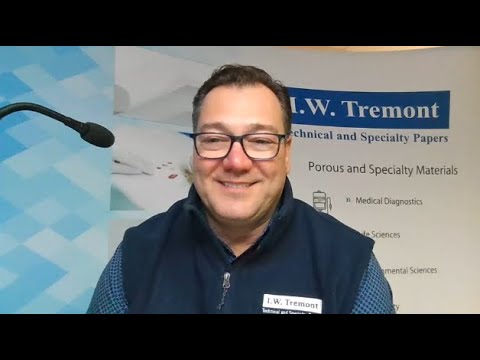
Jim Averso explains why syringe filtration is critical for chromatography, how to choose membranes and pore sizes, avoid common mistakes, cut backpressure, and streamline sample prep with prefiltration.
Video placeholder
  • Photo: Concentrating on Chromatography: Mastering Filtration in Chromatography: Expert Tips on Syringe Filters
  • Video: Concentrating on Chromatography: Mastering Filtration in Chromatography: Expert Tips on Syringe Filters

🎤 Jim Averso

In this episode of Concentrating on Chromatography, host David Oliva interviews Jim Averso, Co-President of I.W. Tremont and manufacturer of the LabExact brand, celebrating their 45th year in business. Jim shares expert insights on the critical role of filtration in chromatography sample preparation.

Discover:

  • Why proper filtration is essential for protecting your expensive HPLC columns
  • How to select the right membrane type (Nylon, PTFE, PVDF, or PES) based on your sample
  • Common mistakes researchers make with syringe filters and how to avoid them
  • The innovative TruPor membrane technology that increases loading capacity while improving flow rates
  • Tips for preventing membrane intrusion and back pressure issues
  • The new HandyPrep device that simplifies pre-filtration steps
  • Advanced techniques like filter stacking for improved sample preparation

Whether you're working with HPLC, UHPLC, GC, or other chromatography methods, this conversation provides valuable insights to optimize your workflow and improve analytical results.

Jim also discusses the Laboratory Products Association's student engagement committee, which is building bridges between academia and commercial science careers.

Video Transcription

After a decade of crossing paths through industry trade groups, the conversation opened with a look at how the Laboratory Products Association (LPA) is strengthening student engagement. Jim explained that the LPA’s Student Engagement Committee was created to build a practical bridge between academia and “the industry of science”—the manufacturers and distributors behind the tools, consumables, and workflows used every day in laboratories. His message to students and early-career scientists was clear: lab supply and laboratory products can be a rewarding career path for people who want to combine a STEM background with business, customer support, product development, or commercial science.

Introducing IW Tremont and the LabExact brand

Jim then introduced IW Tremont as a family-owned company celebrating 45 years in business. He noted that he co-leads the company with his brother and business partner, Andy, and that their father founded the business with a focus on bringing value and quality to both research markets and industrial QA/QC. The company’s core activities sit in sample preparation, filtration, separations, and extraction, supported by additional categories such as lab plastics, safety products, and porous materials. Jim highlighted their LabExact brand—introduced around 13 years ago—which he described as a strong performer in the filtration space and a key part of the company’s identity.

Why syringe filters matter in HPLC sample preparation

From there, the discussion moved directly into chromatography—specifically how syringe filters influence HPLC results. Jim emphasized a guiding principle for sample preparation: optimize your workflow, but don’t cut corners. In his view, syringe filters are often treated as routine consumables, yet they have a direct impact on instrument protection and analytical quality.

He explained that the most basic function is particle removal—capturing microscopic particulates that may remain even after upstream steps like extraction, prefiltration, concentration, or other preparation methods. Removing those particles prevents them from entering the analytical system, where they can accumulate in columns and flow paths. Over time, particulate buildup can shorten column life and degrade chromatographic performance, leading to distorted peak shapes and reduced reproducibility—an expensive problem in HPLC where columns are a major cost driver.

Jim also pointed to backpressure as a practical consequence of poor filtration. Just as mineral deposits can restrict a water line, particulate load in tubing and components leading into an instrument can increase backpressure, disrupt flow rates, and ultimately affect results. In short, filtration helps protect the system, stabilize performance, and reduce the risk that sample prep becomes the hidden source of variability.

Choosing the right syringe filter: membrane, pore size, and diameter

When comparing filtration options, Jim broke syringe filter selection into a few key variables. First is membrane type, which determines chemical compatibility and suitability for different sample types. In chromatography, he noted common choices such as nylon, PTFE, PVDF, and PES. He described nylon as broadly compatible with aqueous solutions and many organic solvents, often used for general HPLC work. PTFE was positioned as a strong option for aggressive solvents, acids, and bases, and especially common for organic solvent workflows. PVDF and PES were discussed in the context of biological samples, where low protein binding is important. He described PES as offering low protein binding with high flow rate and being particularly suitable for aqueous solutions.

Second is pore size, selected based on the particles you need to capture and the demands of the method. Jim referenced the common 0.45 µm and 0.22 µm categories, with 0.45 µm widely used for general HPLC and 0.22 µm often chosen for UHPLC workflows.

Third is filter diameter, which relates to membrane surface area and therefore loading capacity. Smaller diameters may be sufficient for small sample volumes, while larger devices provide more membrane area for higher volumes or more challenging samples. He noted that these variables explain why syringe filter portfolios become large, with many SKUs designed to cover combinations of membrane, pore size, and format.

Jim also highlighted a membrane technology line branded as TruePore, developed through a partnership with Hollingsworth & Vose. He described it as a nanotechnology-enabled membrane designed to provide more controlled pore structure, higher loading capacity, and improved flow—aimed at reducing backpressure and improving the filtration experience at the bench.

Common mistakes and how to avoid them

Asked about the most frequent user errors, Jim identified chemical compatibility as the leading cause of filtration problems. Using a membrane that is not compatible with the solvent system or acid/base conditions can lead to failures or contamination risks. He recommended relying on chemical compatibility charts—typically available from manufacturers and often posted in labs—as a routine checkpoint before filtration.

Another major issue is overpressurizing the filter during use. Jim described a careful technique: attach the filter securely but do not overtighten it, expel the air bubble, then apply steady, gentle pressure while filtering into the vial. Pushing too hard can cause what he referred to as “intrusion,” where a sudden release of pressure suggests the membrane has ruptured. While the sample can often be recovered and re-filtered, the failure can disrupt workflows and create safety hazards.

He also discussed the safety implications of pressure events, including potential rupture or backspray around the luer connection. His advice was to use proper PPE and appropriate shielding (such as working behind a fume hood guard when needed), and to choose products from trustworthy manufacturers—especially when working with aggressive solvents.

Where sample filtration is heading: cleaner materials and smarter prefiltration

Looking ahead, Jim argued that improvements in instrument resolution are increasing demands on sample prep quality. As systems become more sensitive, the tolerance for extractables, contaminants, and inconsistent filtration decreases. He described several manufacturing trends intended to reduce contamination risk, including the use of natural (undyed) polypropylene components and processes such as ultrasonic welding in place of adhesives, to avoid introducing potential leachables into samples.

He also emphasized the growing importance of prefiltration, especially for cloudy or heavily precipitated samples. Traditional coarse filtration (for example using funnel filtration) can clarify samples before final “absolute” filtration with a syringe filter. Jim described a newer device concept—positioned as a coarse filtration step built into a syringe-style format—that aims to simplify preparation and reduce workflow steps. He also discussed syringe filters that incorporate glass microfiber prefilters upstream of the membrane to increase loading capacity, while noting that prefilters can introduce dead volume and retain some sample.

To address sample loss, he described an approach where filtration media integrated into the syringe barrel can be compressed during use, helping to recover more liquid and reduce volume retained in the filter structure.

Practical tips: filter stacking and method-aware membrane selection

Toward the end, Jim shared two practical points intended to help analysts make better choices at the bench. First, he explained that membrane recommendations can vary by technique: PTFE membranes are commonly used in GC sample prep, while IC and MS workflows often prioritize low ion extractables and low protein binding, depending on sample type. He also noted the role of regenerated cellulose in IC contexts due to low extractables.

Second, he highlighted a hands-on trick that many users don’t realize is possible: stacking syringe filters. Because syringe filters are designed with compatible male/female luer connections, it can be possible to connect a glass microfiber depth filter upstream of a membrane filter to achieve coarse prefiltration followed by absolute filtration in a single workflow. He positioned binderless glass microfiber media as especially clean, aiming to reduce background and support sharper chromatographic peaks.

This text has been automatically transcribed from a video presentation using AI technology. It may contain inaccuracies and is not guaranteed to be 100% correct.

Concentrating on Chromatography Podcast

Dive into the frontiers of chromatography, mass spectrometry, and sample preparation with host David Oliva. Each episode features candid conversations with leading researchers, industry innovators, and passionate scientists who are shaping the future of analytical chemistry. From decoding PFAS detection challenges to exploring the latest in AI-assisted liquid chromatography, this show uncovers practical workflows, sustainability breakthroughs, and the real-world impact of separation science. Whether you’re a chromatographer, lab professional, or researcher you'll discover inspiring content!

You can find Concentrating on Chromatography Podcast in podcast apps:

and on YouTube channel

Organomation
LinkedIn Logo
 

Related content

Analysis of Aroma Components in Apples Using the Smart Aroma Database

Applications
| 2026 | Shimadzu
Instrumentation
GC/MSD, GC/SQ, HeadSpace
Manufacturer
Shimadzu
Industries
Food & Agriculture

Analysis of Acetaldehyde and Limonene in Recycled PET Using an HS-GCMS System (Carrier Gas: H2)

Applications
| 2026 | Shimadzu
Instrumentation
GC/MSD, GC/SQ, HeadSpace
Manufacturer
Shimadzu
Industries
Energy & Chemicals

What Causes GC Capillary Column Performance Degradation, and How Can I Prevent It?

Technical notes
| 2026 | Agilent Technologies
Instrumentation
Consumables, GC columns
Manufacturer
Agilent Technologies
Industries
Other

Aromatic Component Analysis of Gasoline According to ASTM D5580 Using the Brevis GC- 2050 Gas Chromatograph

Applications
| 2025 | Shimadzu
Instrumentation
GC
Manufacturer
Shimadzu
Industries
Energy & Chemicals

Micro GC Analysis of Permanent Gas Impurities in PEM Fuel Cell-Grade Hydrogen

Applications
| 2025 | Agilent Technologies
Instrumentation
GC
Manufacturer
Agilent Technologies
Industries
Energy & Chemicals
 

Related articles

JUNIOR STAR Grants at UCT Prague: Two talented women from abroad driving innovation in science
Article | Scientists

JUNIOR STAR Grants at UCT Prague: Two talented women from abroad driving innovation in science

Two outstanding early-career researchers at UCT Prague, Filipa Oliveira and Stella Gonsales, received prestigious GAČR JUNIOR STAR grants for innovative research in materials science and sustainable chemistry.
UCT Prague
tag
share
more
Revealing hidden chemicals at sea
Article | Health

Revealing hidden chemicals at sea

Flame retardants were found throughout cruise ship interiors, with some areas showing much higher levels. A new RECETOX and NIVA study explores potential exposure risks for crew and passengers.
RECETOX - Centrum pro výzkum toxických látek v prostředí
tag
share
more
News from LabRulezGCMS Library - Week 06, 2026
Article | Application

News from LabRulezGCMS Library - Week 06, 2026

This week we bring you technical note by Agilent Technologies and application notes by BaySpec, Metrohm and Shimadzu!
LabRulez
tag
share
more
Research from IOCB Prague reveals a previously unknown mechanism of genetic transcription
Article | Science and research

Research from IOCB Prague reveals a previously unknown mechanism of genetic transcription

Scientists at IOCB Prague reveal a previously unknown mechanism that initiates gene transcription. Using cryo-EM, they uncover how alarmone molecules enable RNA synthesis under stress.
Institute of Organic Chemistry and Biochemistry of the Czech Academy of Sciences
tag
share
more
 

Related content

Analysis of Aroma Components in Apples Using the Smart Aroma Database

Applications
| 2026 | Shimadzu
Instrumentation
GC/MSD, GC/SQ, HeadSpace
Manufacturer
Shimadzu
Industries
Food & Agriculture

Analysis of Acetaldehyde and Limonene in Recycled PET Using an HS-GCMS System (Carrier Gas: H2)

Applications
| 2026 | Shimadzu
Instrumentation
GC/MSD, GC/SQ, HeadSpace
Manufacturer
Shimadzu
Industries
Energy & Chemicals

What Causes GC Capillary Column Performance Degradation, and How Can I Prevent It?

Technical notes
| 2026 | Agilent Technologies
Instrumentation
Consumables, GC columns
Manufacturer
Agilent Technologies
Industries
Other

Aromatic Component Analysis of Gasoline According to ASTM D5580 Using the Brevis GC- 2050 Gas Chromatograph

Applications
| 2025 | Shimadzu
Instrumentation
GC
Manufacturer
Shimadzu
Industries
Energy & Chemicals

Micro GC Analysis of Permanent Gas Impurities in PEM Fuel Cell-Grade Hydrogen

Applications
| 2025 | Agilent Technologies
Instrumentation
GC
Manufacturer
Agilent Technologies
Industries
Energy & Chemicals
 

Related articles

JUNIOR STAR Grants at UCT Prague: Two talented women from abroad driving innovation in science
Article | Scientists

JUNIOR STAR Grants at UCT Prague: Two talented women from abroad driving innovation in science

Two outstanding early-career researchers at UCT Prague, Filipa Oliveira and Stella Gonsales, received prestigious GAČR JUNIOR STAR grants for innovative research in materials science and sustainable chemistry.
UCT Prague
tag
share
more
Revealing hidden chemicals at sea
Article | Health

Revealing hidden chemicals at sea

Flame retardants were found throughout cruise ship interiors, with some areas showing much higher levels. A new RECETOX and NIVA study explores potential exposure risks for crew and passengers.
RECETOX - Centrum pro výzkum toxických látek v prostředí
tag
share
more
News from LabRulezGCMS Library - Week 06, 2026
Article | Application

News from LabRulezGCMS Library - Week 06, 2026

This week we bring you technical note by Agilent Technologies and application notes by BaySpec, Metrohm and Shimadzu!
LabRulez
tag
share
more
Research from IOCB Prague reveals a previously unknown mechanism of genetic transcription
Article | Science and research

Research from IOCB Prague reveals a previously unknown mechanism of genetic transcription

Scientists at IOCB Prague reveal a previously unknown mechanism that initiates gene transcription. Using cryo-EM, they uncover how alarmone molecules enable RNA synthesis under stress.
Institute of Organic Chemistry and Biochemistry of the Czech Academy of Sciences
tag
share
more
 

Related content

Analysis of Aroma Components in Apples Using the Smart Aroma Database

Applications
| 2026 | Shimadzu
Instrumentation
GC/MSD, GC/SQ, HeadSpace
Manufacturer
Shimadzu
Industries
Food & Agriculture

Analysis of Acetaldehyde and Limonene in Recycled PET Using an HS-GCMS System (Carrier Gas: H2)

Applications
| 2026 | Shimadzu
Instrumentation
GC/MSD, GC/SQ, HeadSpace
Manufacturer
Shimadzu
Industries
Energy & Chemicals

What Causes GC Capillary Column Performance Degradation, and How Can I Prevent It?

Technical notes
| 2026 | Agilent Technologies
Instrumentation
Consumables, GC columns
Manufacturer
Agilent Technologies
Industries
Other

Aromatic Component Analysis of Gasoline According to ASTM D5580 Using the Brevis GC- 2050 Gas Chromatograph

Applications
| 2025 | Shimadzu
Instrumentation
GC
Manufacturer
Shimadzu
Industries
Energy & Chemicals

Micro GC Analysis of Permanent Gas Impurities in PEM Fuel Cell-Grade Hydrogen

Applications
| 2025 | Agilent Technologies
Instrumentation
GC
Manufacturer
Agilent Technologies
Industries
Energy & Chemicals
 

Related articles

JUNIOR STAR Grants at UCT Prague: Two talented women from abroad driving innovation in science
Article | Scientists

JUNIOR STAR Grants at UCT Prague: Two talented women from abroad driving innovation in science

Two outstanding early-career researchers at UCT Prague, Filipa Oliveira and Stella Gonsales, received prestigious GAČR JUNIOR STAR grants for innovative research in materials science and sustainable chemistry.
UCT Prague
tag
share
more
Revealing hidden chemicals at sea
Article | Health

Revealing hidden chemicals at sea

Flame retardants were found throughout cruise ship interiors, with some areas showing much higher levels. A new RECETOX and NIVA study explores potential exposure risks for crew and passengers.
RECETOX - Centrum pro výzkum toxických látek v prostředí
tag
share
more
News from LabRulezGCMS Library - Week 06, 2026
Article | Application

News from LabRulezGCMS Library - Week 06, 2026

This week we bring you technical note by Agilent Technologies and application notes by BaySpec, Metrohm and Shimadzu!
LabRulez
tag
share
more
Research from IOCB Prague reveals a previously unknown mechanism of genetic transcription
Article | Science and research

Research from IOCB Prague reveals a previously unknown mechanism of genetic transcription

Scientists at IOCB Prague reveal a previously unknown mechanism that initiates gene transcription. Using cryo-EM, they uncover how alarmone molecules enable RNA synthesis under stress.
Institute of Organic Chemistry and Biochemistry of the Czech Academy of Sciences
tag
share
more
 

Related content

Analysis of Aroma Components in Apples Using the Smart Aroma Database

Applications
| 2026 | Shimadzu
Instrumentation
GC/MSD, GC/SQ, HeadSpace
Manufacturer
Shimadzu
Industries
Food & Agriculture

Analysis of Acetaldehyde and Limonene in Recycled PET Using an HS-GCMS System (Carrier Gas: H2)

Applications
| 2026 | Shimadzu
Instrumentation
GC/MSD, GC/SQ, HeadSpace
Manufacturer
Shimadzu
Industries
Energy & Chemicals

What Causes GC Capillary Column Performance Degradation, and How Can I Prevent It?

Technical notes
| 2026 | Agilent Technologies
Instrumentation
Consumables, GC columns
Manufacturer
Agilent Technologies
Industries
Other

Aromatic Component Analysis of Gasoline According to ASTM D5580 Using the Brevis GC- 2050 Gas Chromatograph

Applications
| 2025 | Shimadzu
Instrumentation
GC
Manufacturer
Shimadzu
Industries
Energy & Chemicals

Micro GC Analysis of Permanent Gas Impurities in PEM Fuel Cell-Grade Hydrogen

Applications
| 2025 | Agilent Technologies
Instrumentation
GC
Manufacturer
Agilent Technologies
Industries
Energy & Chemicals
 

Related articles

JUNIOR STAR Grants at UCT Prague: Two talented women from abroad driving innovation in science
Article | Scientists

JUNIOR STAR Grants at UCT Prague: Two talented women from abroad driving innovation in science

Two outstanding early-career researchers at UCT Prague, Filipa Oliveira and Stella Gonsales, received prestigious GAČR JUNIOR STAR grants for innovative research in materials science and sustainable chemistry.
UCT Prague
tag
share
more
Revealing hidden chemicals at sea
Article | Health

Revealing hidden chemicals at sea

Flame retardants were found throughout cruise ship interiors, with some areas showing much higher levels. A new RECETOX and NIVA study explores potential exposure risks for crew and passengers.
RECETOX - Centrum pro výzkum toxických látek v prostředí
tag
share
more
News from LabRulezGCMS Library - Week 06, 2026
Article | Application

News from LabRulezGCMS Library - Week 06, 2026

This week we bring you technical note by Agilent Technologies and application notes by BaySpec, Metrohm and Shimadzu!
LabRulez
tag
share
more
Research from IOCB Prague reveals a previously unknown mechanism of genetic transcription
Article | Science and research

Research from IOCB Prague reveals a previously unknown mechanism of genetic transcription

Scientists at IOCB Prague reveal a previously unknown mechanism that initiates gene transcription. Using cryo-EM, they uncover how alarmone molecules enable RNA synthesis under stress.
Institute of Organic Chemistry and Biochemistry of the Czech Academy of Sciences
tag
share
more
Other projects
LCMS
ICPMS
Follow us
More information
WebinarsAbout usContact usTerms of use
LabRulez s.r.o. All rights reserved. Content available under a CC BY-SA 4.0 Attribution-ShareAlike