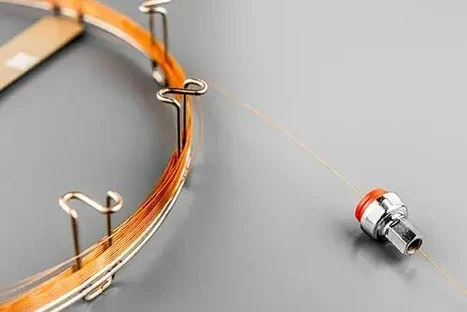
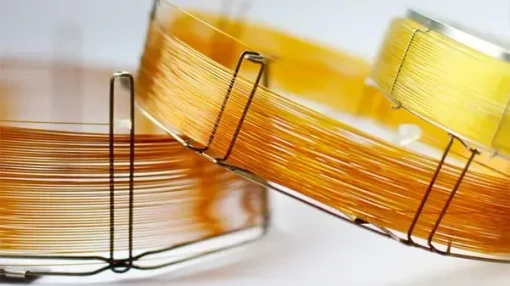
Robust Results Up to 430 ºC
- First non-metal columns stable to 430 °C
- Provides true boiling point separation for hydrocarbon distillation methods
- Longer lifetime with rugged high temperature, polyimide coated, fused silica tubing
- Low activity, provides good peak shape for acidic and basic samples
- Provides robust column performance for high temperature bake outs
 Phenomenex: Zebron-ZB-1HT
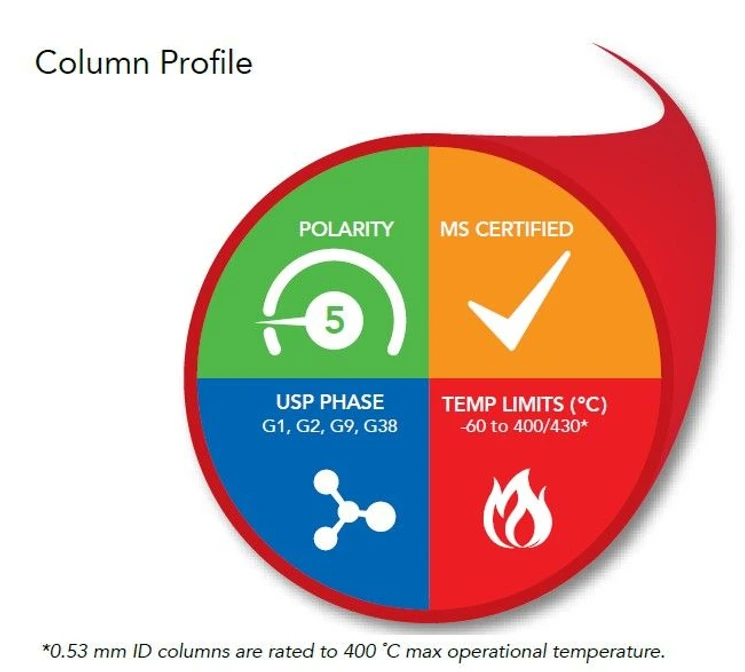 Phenomenex: Zebron™ ZB-1HT Inferno™
Recommended Use
Rugged, high-temperature stability (up to 430 °C) for:
- non-polar compounds
- for high boilers
- contaminants
- carry-overs
- high-temp bakeouts
Recommended Applications
- High Boiling Petroleum Products
- Simulated Distillation Methods
- Long-Chained Hydrocarbons
- High Molecular Weight Waxes
- Polymers/Plastics
- Motor Oils
- Diesel Fuel
Alternative To: Any 100 % Dimethylpolysiloxane Phase:
- DB®-1ht
- Rxi®-1HT
- Petrocol 2887
- CP-SimDist
Phenomenex Zebron Inferno GC Columns
Overcome Traditional Obstacles
Challenge # 1: Short Fused Silica Column Lifetimes
Unlike Zebron™ Inferno™ GC columns, traditional fused silica columns are not equipped to handle prolonged exposure to
temperatures above 360 °C. At high temperatures, fused silica GC columns:
- Become inflexible and brittle
- Break easily and cause costly replacement
- Require more system downtime for maintenance
- Can’t separate high molecular weight compounds
Challenge # 2: Cumbersome Metal Column Tubing
Though metal columns have higher temperature limits than capillary columns, they are more difficult to use.
Most metal columns:
- Are inflexible and hard to use
- Require special tubing cutters for installation
- Are prone to leaks from expansion and contraction
- Have active surfaces, giving poor peak shapes for acids and bases
- Are incompatible with MS detectors
How it works
Zebron™ Inferno™ columns offer enhanced performance where other columns fail. The two critical factors that allow for this are:
Advanced ESC™ Bonding Technology
At high temperature ranges, the stability of standard GC columns deteriorates, resulting in increased bleed. Zebron’s Engineered Self Cross-linking™ (ESC) bonding technology reinforces the stationary phase for enhanced column durability and extremely low bleed levels at high temperatures. The result: Inferno columns with the flexibility to perform for high temp oven ramps and bakeouts.
- High Temperature Polyimide Coating
Standard polyimide resin pyrolyzes at temperatures above 360 °C, making the tubing unstable. Zebron Inferno columns use a temperature resistant polyimide resin that shows minimal thermal degradation, even at temperatures up to 430 °C*. This means longer column lifetime at elevated temperatures.
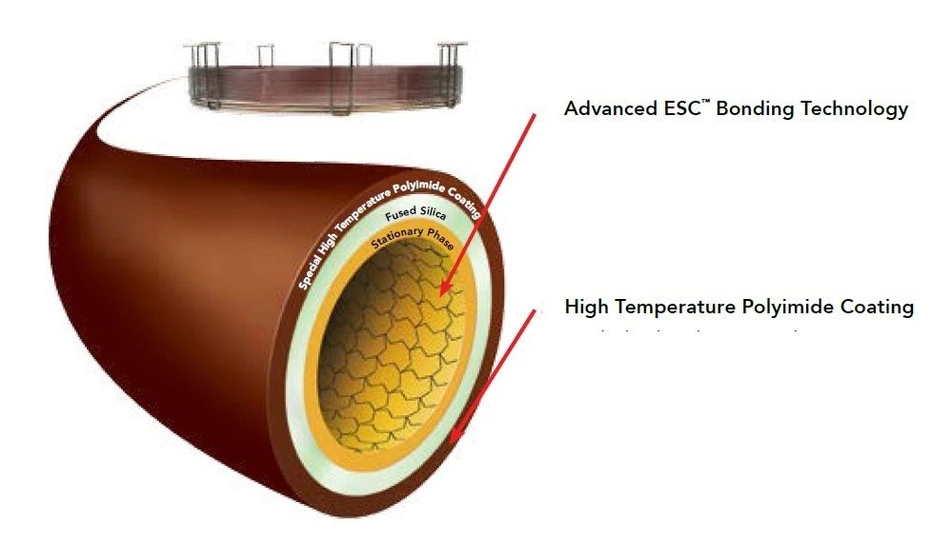 Phenomenex: Zebron Inferno GC Columns - How it works
Features of Zebron Inferno GC Columns
Extremely Low Bleed for Rugged Performance
- Longer column lifetime
- Better reproducibility
- Maximum sensitivity
- More accurate quantitation
Increased Column Lifetime with Enhanced Durability
- Less instrument downtime
- More productivity
- Lower laboratory costs
Standard GC Columns Cannot Withstand High Temperature
After prolonged exposure to temperatures above 360 °C, most traditional GC columns become brittle and inflexible, often spontaneously breaking in the middle of a run. Work is stopped in order to change out the column and perform system maintenance. Unlike these fragile columns, ZebronTM InfernoTM columns have a thermally resistant polyimide coating for longer column lifetime at temperatures up to 430 °C. As a result, you get less instrument downtime, and higher productivity.
Greater Performance for High Boiling Compounds
- Better peak shape
- Improved separation
- More analytes detected
Zebron™ Inferno™ columns have the inertness and temperature stability needed to separate high molecular weight compounds. These high boilers require a thermally rugged column with low bleed levels. Inferno columns provide optimal separation of these analytes.