Tackling Today’s Toughest Pollutants: Emerging POPs Analysis With GC-MS Technology
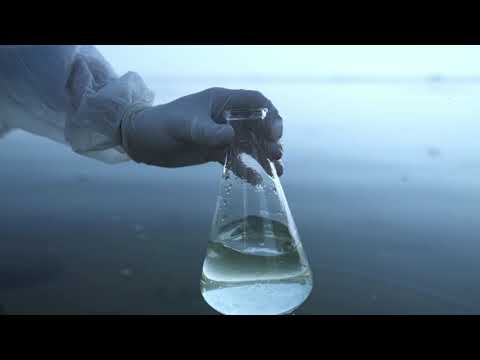
- Photo: Thermo Fisher Scientific: Tackling Today’s Toughest Pollutants: Emerging POPs Analysis With GC-MS Technology
- Video: Chromatography & Mass Spectrometry Solutions: Orbitrap Exploris GC Mass Spectrometer
Emerging persistent organic pollutants (POPs) are a major challenge for environmental testing laboratories. As industrial processes evolve and regulatory scrutiny intensifies, labs are being asked tougher questions than ever before. What exactly is being emitted? Are we capturing both regulated and unknown compounds? And can we confidently identify trace-level contaminants in highly complex matrices?
 Thermo Fisher Scientific: Tackling Today’s Toughest Pollutants: Emerging POPs Analysis With GC-MS Technology
In our recent webinar, we explored how advanced GC high-resolution accurate mass (HRAM) technology is helping scientists answer those questions with greater confidence, flexibility, and efficiency. This blog summarizes the key points covered and why it matters for environmental and industrial laboratories today.
Access the full webinar recording to dive deeper into this topic: GC-MS Solutions to Emerging Persistent Organic Pollutants
Why this is relevant today
Environmental monitoring is increasingly more about anticipation as much as it is about compliance. Regulatory agencies are tightening limits, expanding compound lists, and demanding greater transparency. Communities and stakeholders expect accurate, defensible data.
By combining high-resolution GC-MS instrumentation with advanced data processing tools, laboratories gain the ability to look deeper into complex samples, improve identification confidence, and respond proactively to emerging regulatory demands.
Emerging POPs demand a new analytical approach
Industrial stack emissions and combustion byproducts are chemically complex and constantly evolving. Laboratories routinely monitor priority pollutants such as polycyclic aromatic hydrocarbons (PAHs), polychlorinated dibenzo-p-dioxins and furans (PCDD/Fs), brominated flame retardants, and per- and poly-fluoroalkyl substances (PFAS). However, high-temperature industrial processes often generate transformation products and previously uncharacterized compounds that may also pose environmental and health risks.
Traditional targeted methods remain essential for compliance-driven testing, but now they’re being complemented by non-targeted screening approaches that allow scientists to go beyond predefined compound lists and uncover unexpected contaminants. The shift toward combining targeted and discovery-based analysis was a key theme of this webinar.
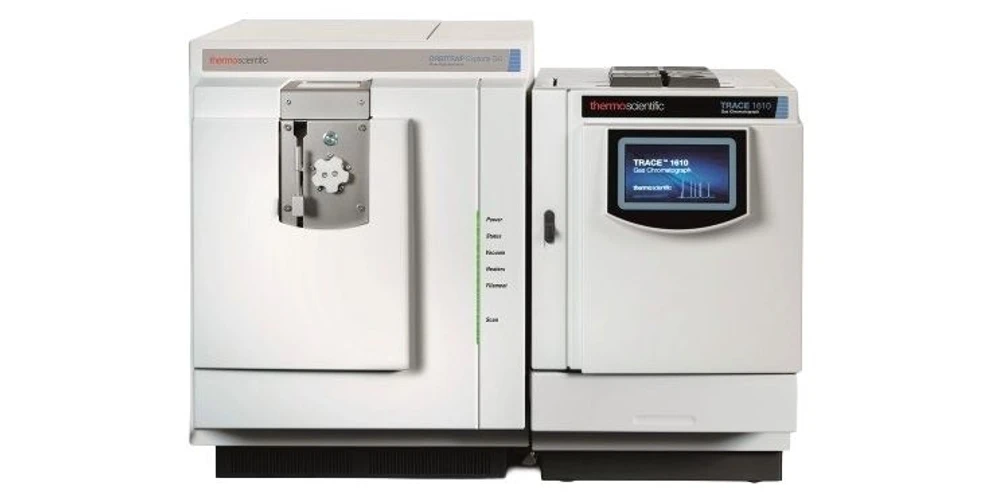
Learn more about the Thermo Scientific Orbitrap Exploris GC mass spectrometer and how it can be used for a combination of targeted and discover-based analysis.
 Thermo Fisher Scientific: Tackling Today’s Toughest Pollutants: Emerging POPs Analysis With GC-MS Technology
Why high-resolution matters
In complex environmental matrices, resolving power directly affects analytical confidence. Higher mass resolution improves matrix interference removal, enhances mass accuracy, and strengthens elemental composition assignments. This becomes especially important when distinguishing target compounds from co-eluting background components.
During the session, we demonstrated how operating at higher resolving power can separate analytes from interfering species that would otherwise distort mass accuracy. The result is greater clarity in identification and stronger defensibility in reporting, particularly valuable in regulatory or compliance settings.
Smarter non-targeted workflows with advanced software
High-resolution instrumentation is not good enough on its own; laboratories also need efficient data processing tools to interpret the results. This webinar highlighted how Thermo Scientific Compound Discoverer software streamlines non-targeted workflows. Using full scan acquisition in electron ionization (EI) mode, laboratories can perform automated deconvolution, peak alignment, and library matching against resources such as NIST and high-resolution accurate mass libraries. The software also supports multivariate statistical analysis, enabling prioritization of features based on mass-to-charge ratio and retention time.
Explore Compound Discoverer software:
When EI data alone does not provide sufficient molecular ion information, chemical ionization (CI) can be used to confirm molecular weight and chemical formula. A notable capability discussed in the webinar was the ability to switch between EI and CI without venting the system, minimizing downtime and improving laboratory productivity.
 Thermo Fisher Scientific: Tackling Today’s Toughest Pollutants: Emerging POPs Analysis With GC-MS Technology
Method optimization for brominated dioxins and BDE-209
The second segment focused on method optimization for BDE-209 (decabromodiphenyl ether) and brominated dioxins and furans, classes of analytes known for their analytical challenges. These compounds can exhibit thermal instability, low volatility, and complex fragmentation patterns, making sensitivity and selectivity critical.
High-resolution GC-HRMS provides enhanced selectivity and improved signal-to-noise performance, supporting more reliable detection at trace levels. For laboratories operating in compliance-driven environments, this level of performance translates into greater confidence in regulatory reporting and long-term method robustness.
Volatile PFAS in water and air
PFAS remains one of the most pressing topics in environmental testing today. While many non-volatile PFAS compounds are analyzed using LC-MS techniques, volatile and semi-volatile PFAS species require GC-based methods. The webinar addresses analytical strategies for volatile PFAS in water and air matrices, including considerations for sensitivity, contamination control, and accurate mass identification. As global regulations continue to evolve and target lists expand, flexible high-resolution platforms enable laboratories to adapt without fundamentally redesigning workflows.
From targeted compliance to discovery-driven insight
The central theme of the session was the evolution from purely targeted analysis toward an integrated approach that combines compliance monitoring with discovery-driven insight.
Industrial emissions and environmental samples rarely contain only the compounds we expect. High-resolution GC-MS platforms allow laboratories to:
- Monitor regulated priority pollutants
- Detect unknown transformation products
- Perform retrospective data analysis
- Strengthen regulatory defensibility
This flexibility ensures that laboratories are not only meeting current regulatory requirements but are also prepared for future emerging contaminants.
Watch the full webinar
This blog encompasses the key themes of the session, but the full webinar includes detailed case studies, real stack emission data, method optimization examples, and live demonstrations of the workflows discussed.
Access the full webinar recording here: GC-MS Solutions to Emerging Persistent Organic Pollutants
- Visit us on LinkedIn: #DioxinAnalysis #EnvironmentalContaminants #GCMS #POPs