Author
Organomation
Organomation
Organomation, founded in 1959, designs and manufactures high-quality nitrogen evaporators and extraction systems. Known for innovation and durability, their lab instruments are used globally for efficient sample preparation with strong customer support.
Tags
Interview
Video
Scientists
Science and research
Water
LinkedIn Logo

Regulated Drinking Water Testing: PFAS Detection, Sample Prep & Real Lab Insights

Fr, 27.3.2026
| Original article from: Concentrating on Chromatography / David Oliva
Discover how regulated drinking water laboratories use GC-MS and LC-MS, rigorous QC protocols, and PFAS-focused workflows to ensure reliable analytical results and protect public health.
Video placeholder
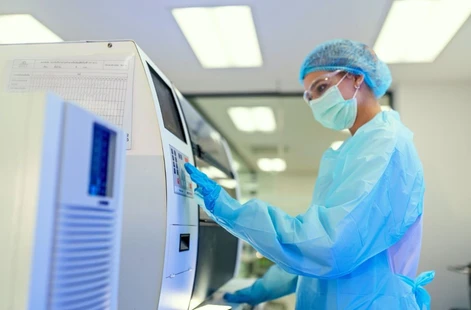
  • Photo: Concentrating on Chromatography: Regulated Drinking Water Testing: PFAS Detection, Sample Prep & Real Lab Insights
  • Video: Concentrating on Chromatography: Regulated Drinking Water Testing: PFAS Detection, Sample Prep & Real Lab Insights

🎤Alex Brody

In this episode of Concentrating on Chromatography, we sit down with Alex Brody, an organic chemist at Aqua America, to discuss the rigorous analytical methods required for regulated drinking water testing.

Alex walks us through the multi-step PFAS detection process using EPA Method 537.1, including extraction, nitrogen blowdown concentration, and LC-MS analysis. He explains why sample preparation and quality control are critical for achieving trace-level detection—and why these methods can't be rushed or simplified, even with new technologies available.

We also explore taste and odor investigations, disinfection byproducts, and volatile organic compounds, plus the surprising reality of why regulated labs move slowly when adopting new instrumentation. You'll learn about the quality control checkpoints, peer review processes, and the misconceptions surrounding analytical turnaround times in compliance labs.

Topics Covered:
  • Role of organic chemistry in regulated drinking water labs
  • EPA compliance requirements and regulatory bodies (EPA, PA-DEP)
  • PFAS detection using Method 537.1 and LC-MS
  • The critical importance of nitrogen blowdown sample concentration
  • Taste and odor analysis: MIB, Geosmin, and unknown compound identification
  • Why regulated methods evolve slowly (validation timelines, approval processes)
  • Quality control procedures: calibration checks, matrix spikes, surrogate standards, internal standards
  • Automated sample preparation and lab efficiency
  • Future PFAS regulations and Method 533 expansion
Ideal For:
  • Analytical chemists and environmental lab professionals
  • Water utilities and compliance officers
  • Chromatography practitioners interested in regulated workflows
  • Anyone curious about how drinking water safety is ensured

Video Transcription

Ensuring Safe Drinking Water Through Advanced Analytical Chemistry

Insights from a Regulated Water Testing Laboratory

Analytical laboratories responsible for regulated drinking water testing operate under strict compliance frameworks to ensure the delivery of safe and reliable water supplies. In this interview, Alex, an organic chemist at Aqua America, outlines the scope of analytical work conducted in a modern water quality laboratory. The team primarily focuses on the determination of taste- and odor-causing compounds, disinfection byproducts, volatile organic compounds (VOCs), and per- and polyfluoroalkyl substances (PFAS). These analyses rely heavily on GC-MS and LC-MS instrumentation, supported by rigorous maintenance programs to ensure continuous operational performance and data reliability.

Regulatory Compliance and Quality Control in Drinking Water Analysis

Operating as a regulated drinking water laboratory requires adherence to stringent requirements established by agencies such as the U.S. Environmental Protection Agency (EPA) and state-level regulatory bodies. Compliance is driven by extensive quality control protocols integrated into every analytical batch. Typical workflows include calibration verification, matrix spike recovery assessments, internal standard monitoring, and surrogate performance checks. Notably, analytical batches are often limited in sample number to accommodate a substantial proportion of quality control samples, reflecting the critical importance of data defensibility in regulatory reporting.

One common misconception is the perceived speed at which results can be delivered. In reality, comprehensive sample preparation, including extraction procedures and validation steps, can extend turnaround times to a full working day or longer. Additionally, validated regulatory workflows impose limitations on the rapid adoption of new analytical technologies, as method modifications must undergo formal evaluation and approval before implementation.

Analytical Strategies for Taste and Odor Investigations

Taste and odor events represent a significant operational challenge for water utilities. Standard targeted methods are routinely applied for compounds such as 2-methylisoborneol (MIB) and geosmin, which are commonly associated with earthy or musty sensory characteristics. When targeted analysis does not reveal the source, laboratories employ broad-scan GC-MS screening combined with spectral library interpretation to identify potential causative compounds. In some cases, sensory evaluation panels complement instrumental analysis, providing preliminary insight into potential treatment-related or environmental influences affecting water quality.

PFAS Monitoring: Methodological Complexity and Trace-Level Sensitivity

PFAS determination represents a rapidly evolving priority in drinking water monitoring. The laboratory currently applies EPA Method 537.1, with efforts underway to expand capabilities through certification for Method 533, thereby broadening analyte coverage. Analytical workflows typically involve solid-phase extraction followed by solvent evaporation using nitrogen-assisted blow-down techniques to achieve the trace-level sensitivity required for regulatory compliance. This concentration step is essential because PFAS compounds remain non-volatile under controlled evaporation conditions, enabling enhanced detection performance upon reconstitution and LC-MS analysis.

Future Directions in Drinking Water Analytics

Looking ahead, the primary technological driver in regulated water analysis is the demand for increasingly lower detection limits and expanded compound coverage. While regulatory frameworks can slow methodological innovation, laboratories continue to pursue efficiency improvements, such as automated sample preparation systems and optimized analytical workflows. These advances support the growing need to process high sample volumes while maintaining the stringent data quality standards required for public health protection.

Ultimately, the work performed in regulated drinking water laboratories represents a critical intersection of analytical chemistry, environmental monitoring, and public safety. Continuous methodological refinement, coupled with advances in mass spectrometry and sample preparation technologies, will play a central role in addressing emerging contaminants and ensuring long-term water quality assurance.

This text has been automatically transcribed from a video presentation using AI technology. It may contain inaccuracies and is not guaranteed to be 100% correct.

Concentrating on Chromatography Podcast

Dive into the frontiers of chromatography, mass spectrometry, and sample preparation with host David Oliva. Each episode features candid conversations with leading researchers, industry innovators, and passionate scientists who are shaping the future of analytical chemistry. From decoding PFAS detection challenges to exploring the latest in AI-assisted liquid chromatography, this show uncovers practical workflows, sustainability breakthroughs, and the real-world impact of separation science. Whether you’re a chromatographer, lab professional, or researcher you'll discover inspiring content!

You can find Concentrating on Chromatography Podcast in podcast apps:

and on YouTube channel

Organomation
LinkedIn Logo
 

Related content

High-Throughput BTEX Analysis in Nail Products by SPME and GC/TQ

Applications
| 2026 | Agilent Technologies
Instrumentation
GC/MSD, GC/MS/MS, GC/QQQ, SPME
Manufacturer
Agilent Technologies
Industries
Materials Testing

Accurate multi-component blast furnace gas analysis maximizes iron production and minimizes coke consumption

Applications
| 2026 | Thermo Fisher Scientific
Instrumentation
GC/MSD
Manufacturer
Thermo Fisher Scientific
Industries
Energy & Chemicals

Gas Chromatograph Nexis GC-2060

Brochures and specifications
| 2026 | Shimadzu
Instrumentation
GC
Manufacturer
Shimadzu
Industries
Other

Quantitative Volatile PFAS Analysis in Textiles

Applications
| 2026 | Agilent Technologies
Instrumentation
GC/MSD, GC/MS/MS, GC/QQQ
Manufacturer
Agilent Technologies
Industries
Materials Testing

Effectiveness of the MonoTrap Collection Method for VOC Analysis in Exhaled Breath Using GC-MS

Applications
| 2026 | Shimadzu
Instrumentation
GC/MSD, Thermal desorption, GC/SQ
Manufacturer
Shimadzu
Industries
Clinical Research
 

Related articles

News from LabRulezGCMS Library - Week 30, 2025
Article | Poster

News from LabRulezGCMS Library - Week 30, 2025

This week we bring you posters by Agilent Technologies / ASMS, Shimadzu / ASMS, presentation by UCT / MDCW and technical note by Thermo Fisher Scientific!
LabRulez
tag
share
more
Breaking the Forever Cycle: PFAS Destruction & EPA Methodologies with Dr. David Hanigan
Interview | Video

Breaking the Forever Cycle: PFAS Destruction & EPA Methodologies with Dr. David Hanigan

Prof. David Hanigan explains why PFAS removal isn’t enough, how online FTIR reveals gas-phase products, and where EPA 1633 vs. 533/537 and OTM-45/50 fit in real-world PFAS analysis.
Organomation
tag
share
more
Protecting Europe's Waters: Reliable Sample Prep for Water Framework Directive Compliance
Article | Environment

Protecting Europe's Waters: Reliable Sample Prep for Water Framework Directive Compliance

Stringent Water Framework Directive requirements drive high analytical sensitivity. EQS limits, GC-MS determination of priority substances, and the critical role of sample preparation in practice.
Organomation
tag
share
more
VOC Analysis in Drinking Water: Achieving ppt-Level Sensitivity with ITEX Dynamic Headspace GC-MS
Article | Water

VOC Analysis in Drinking Water: Achieving ppt-Level Sensitivity with ITEX Dynamic Headspace GC-MS

Trace-level VOCs shape drinking water quality and perception. ITEX dynamic headspace GC-MS enables ppt-level sensitivity for regulatory compliance and reliable odor-active compound analysis.
Thermo Fisher Scientific
tag
share
more
 

Related content

High-Throughput BTEX Analysis in Nail Products by SPME and GC/TQ

Applications
| 2026 | Agilent Technologies
Instrumentation
GC/MSD, GC/MS/MS, GC/QQQ, SPME
Manufacturer
Agilent Technologies
Industries
Materials Testing

Accurate multi-component blast furnace gas analysis maximizes iron production and minimizes coke consumption

Applications
| 2026 | Thermo Fisher Scientific
Instrumentation
GC/MSD
Manufacturer
Thermo Fisher Scientific
Industries
Energy & Chemicals

Gas Chromatograph Nexis GC-2060

Brochures and specifications
| 2026 | Shimadzu
Instrumentation
GC
Manufacturer
Shimadzu
Industries
Other

Quantitative Volatile PFAS Analysis in Textiles

Applications
| 2026 | Agilent Technologies
Instrumentation
GC/MSD, GC/MS/MS, GC/QQQ
Manufacturer
Agilent Technologies
Industries
Materials Testing

Effectiveness of the MonoTrap Collection Method for VOC Analysis in Exhaled Breath Using GC-MS

Applications
| 2026 | Shimadzu
Instrumentation
GC/MSD, Thermal desorption, GC/SQ
Manufacturer
Shimadzu
Industries
Clinical Research
 

Related articles

News from LabRulezGCMS Library - Week 30, 2025
Article | Poster

News from LabRulezGCMS Library - Week 30, 2025

This week we bring you posters by Agilent Technologies / ASMS, Shimadzu / ASMS, presentation by UCT / MDCW and technical note by Thermo Fisher Scientific!
LabRulez
tag
share
more
Breaking the Forever Cycle: PFAS Destruction & EPA Methodologies with Dr. David Hanigan
Interview | Video

Breaking the Forever Cycle: PFAS Destruction & EPA Methodologies with Dr. David Hanigan

Prof. David Hanigan explains why PFAS removal isn’t enough, how online FTIR reveals gas-phase products, and where EPA 1633 vs. 533/537 and OTM-45/50 fit in real-world PFAS analysis.
Organomation
tag
share
more
Protecting Europe's Waters: Reliable Sample Prep for Water Framework Directive Compliance
Article | Environment

Protecting Europe's Waters: Reliable Sample Prep for Water Framework Directive Compliance

Stringent Water Framework Directive requirements drive high analytical sensitivity. EQS limits, GC-MS determination of priority substances, and the critical role of sample preparation in practice.
Organomation
tag
share
more
VOC Analysis in Drinking Water: Achieving ppt-Level Sensitivity with ITEX Dynamic Headspace GC-MS
Article | Water

VOC Analysis in Drinking Water: Achieving ppt-Level Sensitivity with ITEX Dynamic Headspace GC-MS

Trace-level VOCs shape drinking water quality and perception. ITEX dynamic headspace GC-MS enables ppt-level sensitivity for regulatory compliance and reliable odor-active compound analysis.
Thermo Fisher Scientific
tag
share
more
 

Related content

High-Throughput BTEX Analysis in Nail Products by SPME and GC/TQ

Applications
| 2026 | Agilent Technologies
Instrumentation
GC/MSD, GC/MS/MS, GC/QQQ, SPME
Manufacturer
Agilent Technologies
Industries
Materials Testing

Accurate multi-component blast furnace gas analysis maximizes iron production and minimizes coke consumption

Applications
| 2026 | Thermo Fisher Scientific
Instrumentation
GC/MSD
Manufacturer
Thermo Fisher Scientific
Industries
Energy & Chemicals

Gas Chromatograph Nexis GC-2060

Brochures and specifications
| 2026 | Shimadzu
Instrumentation
GC
Manufacturer
Shimadzu
Industries
Other

Quantitative Volatile PFAS Analysis in Textiles

Applications
| 2026 | Agilent Technologies
Instrumentation
GC/MSD, GC/MS/MS, GC/QQQ
Manufacturer
Agilent Technologies
Industries
Materials Testing

Effectiveness of the MonoTrap Collection Method for VOC Analysis in Exhaled Breath Using GC-MS

Applications
| 2026 | Shimadzu
Instrumentation
GC/MSD, Thermal desorption, GC/SQ
Manufacturer
Shimadzu
Industries
Clinical Research
 

Related articles

News from LabRulezGCMS Library - Week 30, 2025
Article | Poster

News from LabRulezGCMS Library - Week 30, 2025

This week we bring you posters by Agilent Technologies / ASMS, Shimadzu / ASMS, presentation by UCT / MDCW and technical note by Thermo Fisher Scientific!
LabRulez
tag
share
more
Breaking the Forever Cycle: PFAS Destruction & EPA Methodologies with Dr. David Hanigan
Interview | Video

Breaking the Forever Cycle: PFAS Destruction & EPA Methodologies with Dr. David Hanigan

Prof. David Hanigan explains why PFAS removal isn’t enough, how online FTIR reveals gas-phase products, and where EPA 1633 vs. 533/537 and OTM-45/50 fit in real-world PFAS analysis.
Organomation
tag
share
more
Protecting Europe's Waters: Reliable Sample Prep for Water Framework Directive Compliance
Article | Environment

Protecting Europe's Waters: Reliable Sample Prep for Water Framework Directive Compliance

Stringent Water Framework Directive requirements drive high analytical sensitivity. EQS limits, GC-MS determination of priority substances, and the critical role of sample preparation in practice.
Organomation
tag
share
more
VOC Analysis in Drinking Water: Achieving ppt-Level Sensitivity with ITEX Dynamic Headspace GC-MS
Article | Water

VOC Analysis in Drinking Water: Achieving ppt-Level Sensitivity with ITEX Dynamic Headspace GC-MS

Trace-level VOCs shape drinking water quality and perception. ITEX dynamic headspace GC-MS enables ppt-level sensitivity for regulatory compliance and reliable odor-active compound analysis.
Thermo Fisher Scientific
tag
share
more
 

Related content

High-Throughput BTEX Analysis in Nail Products by SPME and GC/TQ

Applications
| 2026 | Agilent Technologies
Instrumentation
GC/MSD, GC/MS/MS, GC/QQQ, SPME
Manufacturer
Agilent Technologies
Industries
Materials Testing

Accurate multi-component blast furnace gas analysis maximizes iron production and minimizes coke consumption

Applications
| 2026 | Thermo Fisher Scientific
Instrumentation
GC/MSD
Manufacturer
Thermo Fisher Scientific
Industries
Energy & Chemicals

Gas Chromatograph Nexis GC-2060

Brochures and specifications
| 2026 | Shimadzu
Instrumentation
GC
Manufacturer
Shimadzu
Industries
Other

Quantitative Volatile PFAS Analysis in Textiles

Applications
| 2026 | Agilent Technologies
Instrumentation
GC/MSD, GC/MS/MS, GC/QQQ
Manufacturer
Agilent Technologies
Industries
Materials Testing

Effectiveness of the MonoTrap Collection Method for VOC Analysis in Exhaled Breath Using GC-MS

Applications
| 2026 | Shimadzu
Instrumentation
GC/MSD, Thermal desorption, GC/SQ
Manufacturer
Shimadzu
Industries
Clinical Research
 

Related articles

News from LabRulezGCMS Library - Week 30, 2025
Article | Poster

News from LabRulezGCMS Library - Week 30, 2025

This week we bring you posters by Agilent Technologies / ASMS, Shimadzu / ASMS, presentation by UCT / MDCW and technical note by Thermo Fisher Scientific!
LabRulez
tag
share
more
Breaking the Forever Cycle: PFAS Destruction & EPA Methodologies with Dr. David Hanigan
Interview | Video

Breaking the Forever Cycle: PFAS Destruction & EPA Methodologies with Dr. David Hanigan

Prof. David Hanigan explains why PFAS removal isn’t enough, how online FTIR reveals gas-phase products, and where EPA 1633 vs. 533/537 and OTM-45/50 fit in real-world PFAS analysis.
Organomation
tag
share
more
Protecting Europe's Waters: Reliable Sample Prep for Water Framework Directive Compliance
Article | Environment

Protecting Europe's Waters: Reliable Sample Prep for Water Framework Directive Compliance

Stringent Water Framework Directive requirements drive high analytical sensitivity. EQS limits, GC-MS determination of priority substances, and the critical role of sample preparation in practice.
Organomation
tag
share
more
VOC Analysis in Drinking Water: Achieving ppt-Level Sensitivity with ITEX Dynamic Headspace GC-MS
Article | Water

VOC Analysis in Drinking Water: Achieving ppt-Level Sensitivity with ITEX Dynamic Headspace GC-MS

Trace-level VOCs shape drinking water quality and perception. ITEX dynamic headspace GC-MS enables ppt-level sensitivity for regulatory compliance and reliable odor-active compound analysis.
Thermo Fisher Scientific
tag
share
more
Other projects
LCMS
ICPMS
Follow us
FacebookX (Twitter)LinkedInYouTube
More information
WebinarsAbout usContact usTerms of use
LabRulez s.r.o. All rights reserved. Content available under a CC BY-SA 4.0 Attribution-ShareAlike