GCMS
More information
WebinarsAbout usContact usTerms of use
LabRulez s.r.o. All rights reserved. Content available under a CC BY-SA 4.0 Attribution-ShareAlike
Author
Organomation
Organomation
Organomation, founded in 1959, designs and manufactures high-quality nitrogen evaporators and extraction systems. Known for innovation and durability, their lab instruments are used globally for efficient sample preparation with strong customer support.
Tags
Article
Science and research
Product
Video
LinkedIn Logo

The Effect of Needle Gauge and Flow Rate on Evaporation Rate

Th, 12.3.2026
| Original article from: Organomation / Emma Briggs
The study evaluates how needle gauge, nitrogen flow rate, and needle design influence solvent evaporation rate during sample concentration and provides practical optimization guidance.
Video placeholder
  • Photo: Organomation: The Effect of Needle Gauge and Flow Rate on Evaporation Rate
  • Video: Organomation: Organomation 24 position N-EVAP Nitrogen Evaporator

Sample preparation is one of the most time-consuming steps in analytical workflows. Whether a lab is conducting forensic analyses, environmental testing, pharmaceutical development, or food safety analysis, researchers often face the challenge of concentrating samples before analysis. Nitrogen blowdown evaporation has become a widely used technique for this purpose because it is simple, efficient, and adaptable to a wide range of solvents. When preparing samples for evaporation, factors that play a major role in efficiency include: needle gauge and flow rate. Optimization of these parameters could aid in developing more effective solvent evaporation methods.

At Organomation, all blowdown evaporators come with standard 4-inch, 19-gauge stainless steel needles. This size has proven to be effective for most laboratory applications as it balances evaporation speed with nitrogen consumption while also accommodating for common sample tube sizes. For labs that need to process higher sample volumes, 16-gauge and 14-gauge needles are also available. All needles are constructed from 304 stainless steel and feature a luer lock fitting for easy attachment and removal from the nitrogen evaporator.

Traditionally, Organomation has recommended using a straight 19-gauge needle with a flow rate of 0.33 L/min per sample. This setting works well for most solvents, but how could changing these parameters aid in increasing evaporation efficiency?

  • Could switching to a larger gauge needle accelerate evaporation?
  • Does increasing nitrogen flow rate always improve efficiency, or are there trade-offs?
  • Can needle design modifications reduce splashing while maintaining faster drying times?

To investigate this, a series of controlled trials using methanol as a representative solvent were conducted. The study compared evaporation rates across different needle gauges, flow rates, and needle shapes to provide practical insights for laboratories seeking to optimize their sample preparation methods.

Needle Variations

While straight stainless-steel needles are the standard for nitrogen blowdown evaporation, alternative needle shapes may influence how nitrogen interacts with the solvent surface. Two main modifications were tested in this study:

  • Bent needles: Designed with either a short bend or a long bend near the end of the needle. The goal was to change the angle of nitrogen delivery to reduce splashing and improve solvent exposure.
  • Pseudo-spiral needles: Created by adding two bends to the bottom quarter of 19-gauge needles, forming it into a spiral-like curve. These were intended to generate a more turbulent nitrogen flow pattern, potentially enhancing evaporation.

Both designs were hypothesized to improve evaporation efficiency by concentrating gas flow while minimizing sample loss.

Experimental Design

The study evaluated how needle gauge, needle modifications, and nitrogen flow rate influence methanol evaporation under controlled conditions. All experiments were conducted at both room temperature and 63 °C, the recommended bath temperature for methanol.

Needle Gauge

  • Compared 19-, 16- and 14-gauge needle evaporation rates. 
  • Used each needle’s recommended flow rate
    • 19 ga: 0.33 L/min
    • 16 ga: 0.83 L/min
    • 14 ga: 1.2 L/min
  • Purpose: determine whether larger needle diameters accelerate evaporation relative to the standard 19-gauge configuration.

Needle Modifications

  • Compared straight needles to bent and pseudo-spiral designs. 
  • 19- and 16-gauge needles were modified to have a short bend or long bend on the end of the needle. 
  • Additional pseudo-spiral designs of the 19-gauge needles were created by bending the lower quarter of the needle into two spiral shapes. 
  • Purpose: evaluate whether altering gas flow direction could improve evaporation rates.

Flow Rate Variation

  • Increased the nitrogen flow rate past original recommendations.
  • Used the recommended flow rate for 16-gauge needles on the 19-gauge bent needles.
  • Used the recommended flow rate for 14-gauge needles on the 16-gauge bent needles.
  • Purpose assess whether higher flow rates improve efficiency and if pairing higher flow rates with bent needles can reduce splashing.

Results

Table 1. Different Needle Sizes - Methanol Evaporation Rate

Organomation: The Effect of Needle Gauge and Flow Rate on Evaporation RateOrganomation: The Effect of Needle Gauge and Flow Rate on Evaporation Rate

The 14-gauge had the fastest evaporation rate, which was expected, as the standard flow rate for this size needle is the fastest. All needle sizes showed an increase in evaporation when using the heated water bath.

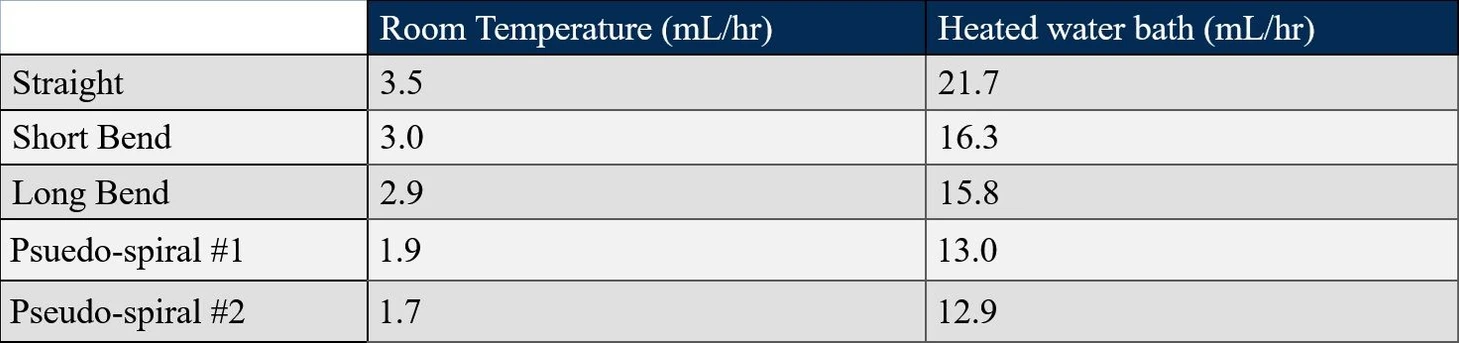
Table 2. 19-gauge Needle - Methanol Evaporation Rates
Organomation: The Effect of Needle Gauge and Flow Rate on Evaporation RateOrganomation: The Effect of Needle Gauge and Flow Rate on Evaporation Rate

Table 3. 16-gauge Needle - Methanol Evaporation Rates

Organomation: The Effect of Needle Gauge and Flow Rate on Evaporation RateOrganomation: The Effect of Needle Gauge and Flow Rate on Evaporation Rate

The most effective needle shape for both the 19- and 16-gauge needles, without increasing nitrogen flow rate, proved to be the standard straight needles for both room temperature and heated water bath evaporation. There was a significant jump observed in the heated evaporation, especially in the 16-gauge needles, with over 75% increase. When comparing the short and long bend needle configurations, there were no significant differences, as the style with faster evaporation varied between trials.

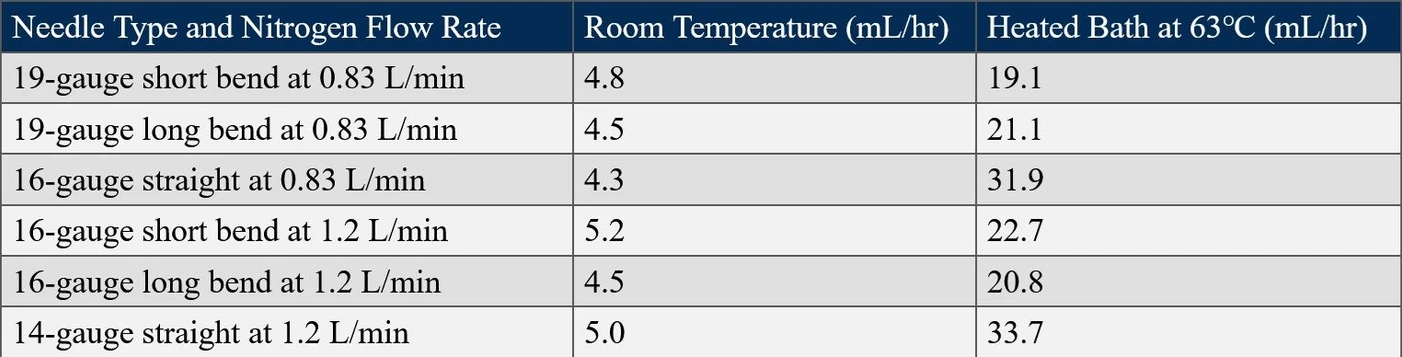
Table. 4 Methanol Evaporation Rates with Increased Flow Rates
Organomation: The Effect of Needle Gauge and Flow Rate on Evaporation RateOrganomation: The Effect of Needle Gauge and Flow Rate on Evaporation Rate

At room temperature, bent needles showed only a slight improvement in evaporation rates compared to larger gauge straight needles at the same flow rates. However, under heated water bath conditions, needle gauge size played a more significant role. The larger-gauge straight needles achieved substantially higher evaporation rates than bent needles at comparable flow rates. This indicates that gauge size and flow rate have a stronger influence than needle shape when a heated water bath is used.

Key Takeaways

  • 19-gauge needles remain reliable, especially at higher-than-standard flow rates.
  • Flow rate is critical: higher flow rates generally increased evaporation speed, but also introduced challenges such as potential sample splashing
  • Heated baths amplify overall performance: all needles performed significantly better at 63 °C water baths than at room temperature.
  • Needle design benefits: bent needles showed potential in minimizing splashing. They allowed for increased flow rate and for the needle to be closer to the sample solution inside the tube.

Applying These Findings in Your Lab

The results of this study show that needle gauge, flow rate, and needle design can all significantly influence evaporation speed. But how do these findings translate into day-to-day laboratory use?

  • Stick with the standard setup for most workflows. For routine sample preparation, the 19-gauge needle at 0.33 L/min remains an ideal choice, offering reliable performance while minimizing nitrogen consumption.
  • If your lab works with high-volume samples or needs quicker turnaround, switching to a 16-gauge needle and increasing the flow rate from 0.83 L/min to 1.2 L/min could provide significant time savings especially when paired with a heated water bath.
  • Faster nitrogen delivery can improve speed, but it also increases the risk of sample loss. Start by slowly increasing flow rate, and then adjust needle position above the solvent surface to control splashing.
  • Consider using bent or spiral needles for reducing splashing while maintaining strong evaporation rates. While not always necessary, they may be helpful in some scenarios.

Conclusion

For most applications, the standard 19-gauge, 0.33 L/min setting remains sufficient. However, labs working with high-volume samples or those needing faster evaporation can benefit from using 16-gauge needles at higher flow rates, especially when paired with a heated water bath. Needle modifications can help address the issue of sample splashing, although they have shown to decrease the rate of evaporation when compared to the standard straight needles of the same gauge. Ultimately, the choice of needle gauge and flow rate should balance speed, safety, and solvent conservation. These results provide a framework for labs looking to optimize their evaporation setup.

Contact our team to discuss the best needle option and gas parameters for your application.

Organomation
LinkedIn Logo
 

Related content

Quantitative Volatile PFAS Analysis in Textiles

Applications
| 2026 | Agilent Technologies
Instrumentation
GC/MSD, GC/MS/MS, GC/QQQ
Manufacturer
Agilent Technologies
Industries
Materials Testing

Effectiveness of the MonoTrap Collection Method for VOC Analysis in Exhaled Breath Using GC-MS

Applications
| 2026 | Shimadzu
Instrumentation
GC/MSD, Thermal desorption, GC/SQ
Manufacturer
Shimadzu
Industries
Clinical Research

Rapid analysis of organochlorine pesticides (OCPs) in soil samples using the EXTREVA ASE accelerated solvent extractor

Applications
| 2026 | Thermo Fisher Scientific
Instrumentation
Sample Preparation, GC
Manufacturer
Thermo Fisher Scientific
Industries
Environmental

Total Hydrocarbon Impurity Analysis in PEM Fuel Cell Grade Hydrogen Using the Agilent 8890 GC-FID System

Applications
| 2026 | Agilent Technologies
Instrumentation
GC
Manufacturer
Agilent Technologies
Industries
Energy & Chemicals

Analysis of Aroma Components in Apples Using the Smart Aroma Database

Applications
| 2026 | Shimadzu
Instrumentation
GC/MSD, GC/SQ, HeadSpace
Manufacturer
Shimadzu
Industries
Food & Agriculture
 

Related articles

Basic instructions for participants in a proficiency testing scheme
Article | Science and research

Basic instructions for participants in a proficiency testing scheme

A practical checklist for laboratories participating in proficiency testing (PT) schemes. Learn the key steps—from receiving PT samples to reviewing reports and implementing corrective actions.
Eurachem
tag
share
more
Sniff smarter: Empowering GC–O with trap-based enrichment and GC×GC for advanced aroma profiling (Lina Mikaliunaite, MDCW 2026)
Presentation | Video

Sniff smarter: Empowering GC–O with trap-based enrichment and GC×GC for advanced aroma profiling (Lina Mikaliunaite, MDCW 2026)

Integrating GC-O with GC×GC enables a direct link between chemical data and sensory perception. Sample enrichment, two-dimensional separation, and chemometrics improve aroma analysis.
The Multidimensional Chromatography Workshop
tag
share
more
News from LabRulezGCMS Library - Week 11, 2026
Article | Application

News from LabRulezGCMS Library - Week 11, 2026

This week we bring you application notes by Agilent Technologies, Shimadzu and Thermo Fisher Scientific and poster by MDCW / C³AL!
LabRulez
tag
share
more
CATRIN researchers offer a “greener” way to make supercapacitors
Article | Science and research

CATRIN researchers offer a “greener” way to make supercapacitors

CATRIN scientists show that green solvents Cyrene and Tamisolve can replace toxic NMP in supercapacitor production while maintaining high electrochemical performance and enabling more sustainable manufacturing.
CATRIN
tag
share
more
 

Related content

Quantitative Volatile PFAS Analysis in Textiles

Applications
| 2026 | Agilent Technologies
Instrumentation
GC/MSD, GC/MS/MS, GC/QQQ
Manufacturer
Agilent Technologies
Industries
Materials Testing

Effectiveness of the MonoTrap Collection Method for VOC Analysis in Exhaled Breath Using GC-MS

Applications
| 2026 | Shimadzu
Instrumentation
GC/MSD, Thermal desorption, GC/SQ
Manufacturer
Shimadzu
Industries
Clinical Research

Rapid analysis of organochlorine pesticides (OCPs) in soil samples using the EXTREVA ASE accelerated solvent extractor

Applications
| 2026 | Thermo Fisher Scientific
Instrumentation
Sample Preparation, GC
Manufacturer
Thermo Fisher Scientific
Industries
Environmental

Total Hydrocarbon Impurity Analysis in PEM Fuel Cell Grade Hydrogen Using the Agilent 8890 GC-FID System

Applications
| 2026 | Agilent Technologies
Instrumentation
GC
Manufacturer
Agilent Technologies
Industries
Energy & Chemicals

Analysis of Aroma Components in Apples Using the Smart Aroma Database

Applications
| 2026 | Shimadzu
Instrumentation
GC/MSD, GC/SQ, HeadSpace
Manufacturer
Shimadzu
Industries
Food & Agriculture
 

Related articles

Basic instructions for participants in a proficiency testing scheme
Article | Science and research

Basic instructions for participants in a proficiency testing scheme

A practical checklist for laboratories participating in proficiency testing (PT) schemes. Learn the key steps—from receiving PT samples to reviewing reports and implementing corrective actions.
Eurachem
tag
share
more
Sniff smarter: Empowering GC–O with trap-based enrichment and GC×GC for advanced aroma profiling (Lina Mikaliunaite, MDCW 2026)
Presentation | Video

Sniff smarter: Empowering GC–O with trap-based enrichment and GC×GC for advanced aroma profiling (Lina Mikaliunaite, MDCW 2026)

Integrating GC-O with GC×GC enables a direct link between chemical data and sensory perception. Sample enrichment, two-dimensional separation, and chemometrics improve aroma analysis.
The Multidimensional Chromatography Workshop
tag
share
more
News from LabRulezGCMS Library - Week 11, 2026
Article | Application

News from LabRulezGCMS Library - Week 11, 2026

This week we bring you application notes by Agilent Technologies, Shimadzu and Thermo Fisher Scientific and poster by MDCW / C³AL!
LabRulez
tag
share
more
CATRIN researchers offer a “greener” way to make supercapacitors
Article | Science and research

CATRIN researchers offer a “greener” way to make supercapacitors

CATRIN scientists show that green solvents Cyrene and Tamisolve can replace toxic NMP in supercapacitor production while maintaining high electrochemical performance and enabling more sustainable manufacturing.
CATRIN
tag
share
more
 

Related content

Quantitative Volatile PFAS Analysis in Textiles

Applications
| 2026 | Agilent Technologies
Instrumentation
GC/MSD, GC/MS/MS, GC/QQQ
Manufacturer
Agilent Technologies
Industries
Materials Testing

Effectiveness of the MonoTrap Collection Method for VOC Analysis in Exhaled Breath Using GC-MS

Applications
| 2026 | Shimadzu
Instrumentation
GC/MSD, Thermal desorption, GC/SQ
Manufacturer
Shimadzu
Industries
Clinical Research

Rapid analysis of organochlorine pesticides (OCPs) in soil samples using the EXTREVA ASE accelerated solvent extractor

Applications
| 2026 | Thermo Fisher Scientific
Instrumentation
Sample Preparation, GC
Manufacturer
Thermo Fisher Scientific
Industries
Environmental

Total Hydrocarbon Impurity Analysis in PEM Fuel Cell Grade Hydrogen Using the Agilent 8890 GC-FID System

Applications
| 2026 | Agilent Technologies
Instrumentation
GC
Manufacturer
Agilent Technologies
Industries
Energy & Chemicals

Analysis of Aroma Components in Apples Using the Smart Aroma Database

Applications
| 2026 | Shimadzu
Instrumentation
GC/MSD, GC/SQ, HeadSpace
Manufacturer
Shimadzu
Industries
Food & Agriculture
 

Related articles

Basic instructions for participants in a proficiency testing scheme
Article | Science and research

Basic instructions for participants in a proficiency testing scheme

A practical checklist for laboratories participating in proficiency testing (PT) schemes. Learn the key steps—from receiving PT samples to reviewing reports and implementing corrective actions.
Eurachem
tag
share
more
Sniff smarter: Empowering GC–O with trap-based enrichment and GC×GC for advanced aroma profiling (Lina Mikaliunaite, MDCW 2026)
Presentation | Video

Sniff smarter: Empowering GC–O with trap-based enrichment and GC×GC for advanced aroma profiling (Lina Mikaliunaite, MDCW 2026)

Integrating GC-O with GC×GC enables a direct link between chemical data and sensory perception. Sample enrichment, two-dimensional separation, and chemometrics improve aroma analysis.
The Multidimensional Chromatography Workshop
tag
share
more
News from LabRulezGCMS Library - Week 11, 2026
Article | Application

News from LabRulezGCMS Library - Week 11, 2026

This week we bring you application notes by Agilent Technologies, Shimadzu and Thermo Fisher Scientific and poster by MDCW / C³AL!
LabRulez
tag
share
more
CATRIN researchers offer a “greener” way to make supercapacitors
Article | Science and research

CATRIN researchers offer a “greener” way to make supercapacitors

CATRIN scientists show that green solvents Cyrene and Tamisolve can replace toxic NMP in supercapacitor production while maintaining high electrochemical performance and enabling more sustainable manufacturing.
CATRIN
tag
share
more
 

Related content

Quantitative Volatile PFAS Analysis in Textiles

Applications
| 2026 | Agilent Technologies
Instrumentation
GC/MSD, GC/MS/MS, GC/QQQ
Manufacturer
Agilent Technologies
Industries
Materials Testing

Effectiveness of the MonoTrap Collection Method for VOC Analysis in Exhaled Breath Using GC-MS

Applications
| 2026 | Shimadzu
Instrumentation
GC/MSD, Thermal desorption, GC/SQ
Manufacturer
Shimadzu
Industries
Clinical Research

Rapid analysis of organochlorine pesticides (OCPs) in soil samples using the EXTREVA ASE accelerated solvent extractor

Applications
| 2026 | Thermo Fisher Scientific
Instrumentation
Sample Preparation, GC
Manufacturer
Thermo Fisher Scientific
Industries
Environmental

Total Hydrocarbon Impurity Analysis in PEM Fuel Cell Grade Hydrogen Using the Agilent 8890 GC-FID System

Applications
| 2026 | Agilent Technologies
Instrumentation
GC
Manufacturer
Agilent Technologies
Industries
Energy & Chemicals

Analysis of Aroma Components in Apples Using the Smart Aroma Database

Applications
| 2026 | Shimadzu
Instrumentation
GC/MSD, GC/SQ, HeadSpace
Manufacturer
Shimadzu
Industries
Food & Agriculture
 

Related articles

Basic instructions for participants in a proficiency testing scheme
Article | Science and research

Basic instructions for participants in a proficiency testing scheme

A practical checklist for laboratories participating in proficiency testing (PT) schemes. Learn the key steps—from receiving PT samples to reviewing reports and implementing corrective actions.
Eurachem
tag
share
more
Sniff smarter: Empowering GC–O with trap-based enrichment and GC×GC for advanced aroma profiling (Lina Mikaliunaite, MDCW 2026)
Presentation | Video

Sniff smarter: Empowering GC–O with trap-based enrichment and GC×GC for advanced aroma profiling (Lina Mikaliunaite, MDCW 2026)

Integrating GC-O with GC×GC enables a direct link between chemical data and sensory perception. Sample enrichment, two-dimensional separation, and chemometrics improve aroma analysis.
The Multidimensional Chromatography Workshop
tag
share
more
News from LabRulezGCMS Library - Week 11, 2026
Article | Application

News from LabRulezGCMS Library - Week 11, 2026

This week we bring you application notes by Agilent Technologies, Shimadzu and Thermo Fisher Scientific and poster by MDCW / C³AL!
LabRulez
tag
share
more
CATRIN researchers offer a “greener” way to make supercapacitors
Article | Science and research

CATRIN researchers offer a “greener” way to make supercapacitors

CATRIN scientists show that green solvents Cyrene and Tamisolve can replace toxic NMP in supercapacitor production while maintaining high electrochemical performance and enabling more sustainable manufacturing.
CATRIN
tag
share
more
Other projects
LCMS
ICPMS
Follow us
FacebookX (Twitter)LinkedInYouTube
More information
WebinarsAbout usContact usTerms of use
LabRulez s.r.o. All rights reserved. Content available under a CC BY-SA 4.0 Attribution-ShareAlike