GCMS
More information
WebinarsAbout usContact usTerms of use
LabRulez s.r.o. All rights reserved. Content available under a CC BY-SA 4.0 Attribution-ShareAlike
Author
Organomation
Organomation
Organomation, founded in 1959, designs and manufactures high-quality nitrogen evaporators and extraction systems. Known for innovation and durability, their lab instruments are used globally for efficient sample preparation with strong customer support.
Tags
Article
Science and research
Product
Video
LinkedIn Logo

The Critical Role of Nitrogen Blowdown in SPE Sample Preparation
Th, 30.10.2025
| Original article from: Organomation / David Oliva
Explore how nitrogen blowdown enhances sample prep efficiency in SPE workflows using Waters Oasis, Agilent Bond Elut and Phenomenex Strata, improving analyte recovery, sensitivity and method reliability.
Video placeholder
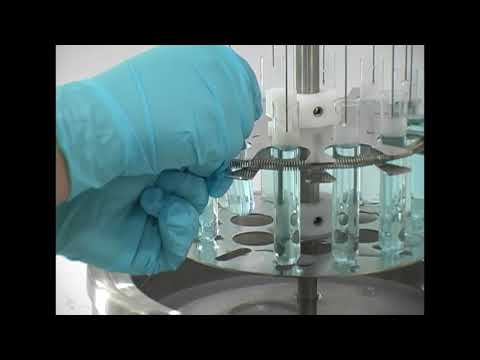
  • Photo: Organomation: The Critical Role of Nitrogen Blowdown in SPE Sample Preparation
  • Video: Organomation: 12 position N-EVAP Nitrogen Evaporator Demonstration

A Deep Dive into Waters Oasis, Agilent Bond Elut, and Phenomenex Strata Workflows

Solid phase extraction (SPE) has become a widely used sample preparation technique across pharmaceutical, environmental, and food safety laboratories worldwide. SPE is used to separate and isolate analytes of interest from a matrix, utilizing the analytes' differential affinities between a solid stationary phase and a liquid mobile phase. The process involves four key steps: conditioning the solid phase; loading the sample onto the solid phase; washing the sample to remove interfering compounds; and eluting the analytes of interest. Following this, the now purified and concentrated sample will usually undergo further analysis such as GC-MS, LC-MS, or HPLC [1]. An often overlooked element within this method of sample preparation is the nitrogen blowdown evaporation that bridges SPE extraction and instrumental analysis. This discussion explores the critical role of nitrogen blowdown in enhancing the performance of three widely used SPE platforms: Waters Oasis, Agilent Bond Elut, and Phenomenex Strata.

Why Nitrogen Blowdown Matters in SPE Workflows

In the final step of SPE, elution, an organic solvent like methanol, acetonitrile, or acetone is used to remove the analytes of interest from the solid phase. This solvent must then be removed before reconstitution and analysis [1]. Nitrogen blowdown provides controlled, gentle evaporation that concentrates analytes while preventing thermal degradation and sample loss that can occur with other drying methods.

Waters Oasis SPE: Precision Evaporation for Enhanced Sensitivity

Waters Oasis SPE cartridges and plates are renowned for their broad analyte retention capabilities, in particular for polar compounds. Their SPE products consistently deliver consistent and pure quality for sample analysis [2]. Many of their protocols consistently emphasize the importance of proper solvent evaporation following elution [3].

Critical Nitrogen Blowdown Steps in Oasis Protocols:

In Waters' documented procedures for pesticide analysis, the protocol states: "Blow down the acetone extract with nitrogen to ca. 0.2 ml then make to 2 ml with pure water" [4]. This concentration step is essential for achieving the required detection limits of pesticide compounds like diuron and its metabolites. When using the Oasis HLB cartridges to process larger sample volumes (2 L versus 200 mL), the method requires: "Blow down the acetone extract with nitrogen to ca. 0.8 ml then make to 2 ml with pure water" [4]. This increased degree of sample pre-concentration dramatically enhances the analytical sensitivity and is particularly important when analyzing trace-level environmental contaminants. The Waters protocols emphasize that this evaporation step must be performed under controlled conditions to aid in the prevention of analyte loss, making nitrogen blowdown the preferred method over thermal evaporation techniques.

Agilent Bond Elut: Streamlined Workflows with Controlled Evaporation

With over 40 different sorbent capabilities, Agilent's Bond Elut product line offers versatile solutions for a wide range of sample types and applications [5]. The company's method development guides consistently reference evaporation steps as critical for optimal results. Whether processing environmental samples, pharmaceutical matrices, or targeting polar and nonpolar analytes, the evaporation step remains a consistently critical factor in ensuring a method's success [5].

Nitrogen Evaporation in Bond Elut Protocol:

For Bond Elut PPL applications targeting polar compounds found within drinking water, Agilent's protocol specifies: "Dry the eluent under in 35 °C water bath, then reconstitute with 2 mL 10:90 MeOH/H2O" [6]. This controlled evaporation at moderate temperature ensures complete solvent removal while maintaining analyte integrity. The Bond Elut methodology emphasizes that the nitrogen drying step is particularly important when transitioning from organic elution solvents to aqueous-based mobile phases for LC/MS/MS analysis [6]. This solvent exchange is impossible without complete evaporation of the initial organic eluent.

Phenomenex Strata: Advanced Polymeric Performance Enhanced by Proper Evaporation

Phenomenex Strata products, particularly their Strata-X polymeric phases, have revolutionized SPE through water-wettable sorbents designed to work effectively with aqueous-based solutions with a simplified protocol [7]. However, even these advanced materials require proper post-extraction handling to achieve optimal results.

Strata-X Protocol Requirements:

Phenomenex documentation for their Strata-X PRO plates specifically instructs: "Dry: Evaporate the extract to dryness under a gentle stream of nitrogen at room temperature" [8]. This room-temperature evaporation is particularly important for thermally labile compounds that might degrade under increased temperatures.

Specialized Applications:

For Strata Activated Carbon applications targeting nitrosamines and other polar analytes, the protocol requires: "Evaporate solvent under Nitrogen to required volume and reconstitute with Methylene Chloride" [9]. This controlled evaporation is essential for achieving the trace detection limits required for these potential carcinogens.

The matrix removal technology within the Strata product line makes the nitrogen blowdown step even more critical. This step ensures complete removal of interfering matrix components from the eluent that could compromise downstream analysis [10].

Technical Considerations for Optimal Results

  • Temperature Control: All three manufacturers emphasize controlled temperature during nitrogen evaporation. Waters and Agilent protocols frequently specify 35°C water baths, while Phenomenex often recommends room temperature evaporation [4, 6, 8].
  • Flow Rate Management: Gentle nitrogen flow is recommended across many manufacturers to reduce and prevent analyte loss through splashing or mechanical carryover. Excessive flow rates can lead to incomplete evaporation or sample loss.
  • Timing Optimization: Complete solvent removal is essential, but over-drying can lead to analyte degradation or potentially irreversible adsorption to container walls. Protocols typically specify evaporation "to dryness" or to specific volumes [4, 8].


A Nitrogen Blowdown Solution for the Leading SPE Platforms

The importance of nitrogen blowdown in an SPE workflow has been well established. To support this critical step, Organomation offers the following solutions:

N-EVAP Nitrogen Evaporator

  • Analyte Preservation: The gentle nitrogen blowdown helps preserve heat-sensitive analytes that may degrade when exposed to high temperatures.
  • Solvent Removal Flexibility: This system is compatible with a range of tube sizes, enabling researchers to process varying sample volumes tailored to specific laboratory needs.
  • Controlled Evaporation: Individual gas flow control at each sample position ensures precise and consistent sample preparation, which is essential for obtaining reliable data.
  • Temperature Control: Water bath models are available with a wide temperature range enabling optimization for use of different solvents needed for varying SPE sorbents.
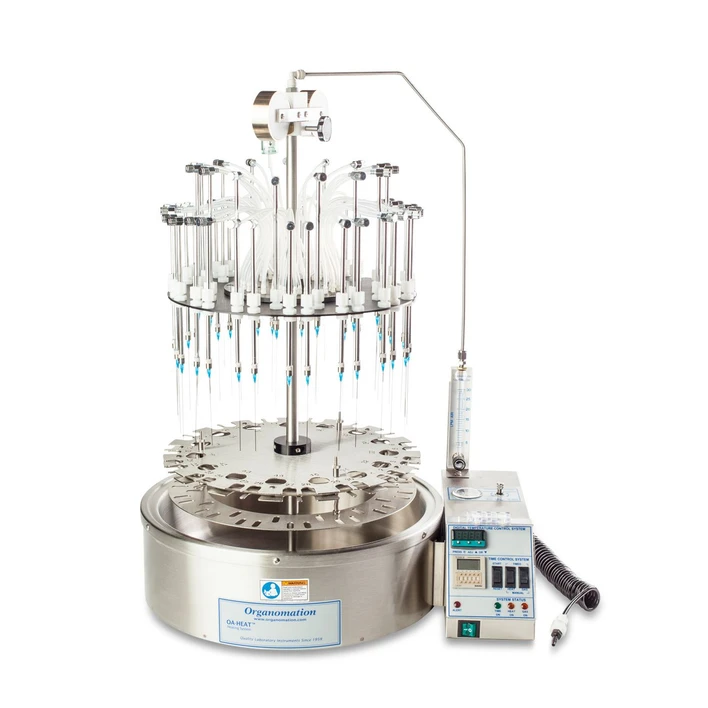
Organomation: 45 Position N-EVAP Nitrogen EvaporatorOrganomation: 45 Position N-EVAP Nitrogen Evaporator

MULTIVAP Batch Evaporator

  • Batch Capability: Some systems can process up to 100 samples simultaneously, making them essential for large-scale laboratory operations.
  • Sample Standardization: Provides consistent evaporation conditions across samples, reducing sample variability which can skew interpretation.
  • Analyte Integrity: Gentle nitrogen dry down protects delicate analytes from degradation.
  • Efficiency: This system significantly reduces sample preparation time, allowing for faster results and turnaround time in clinical settings.
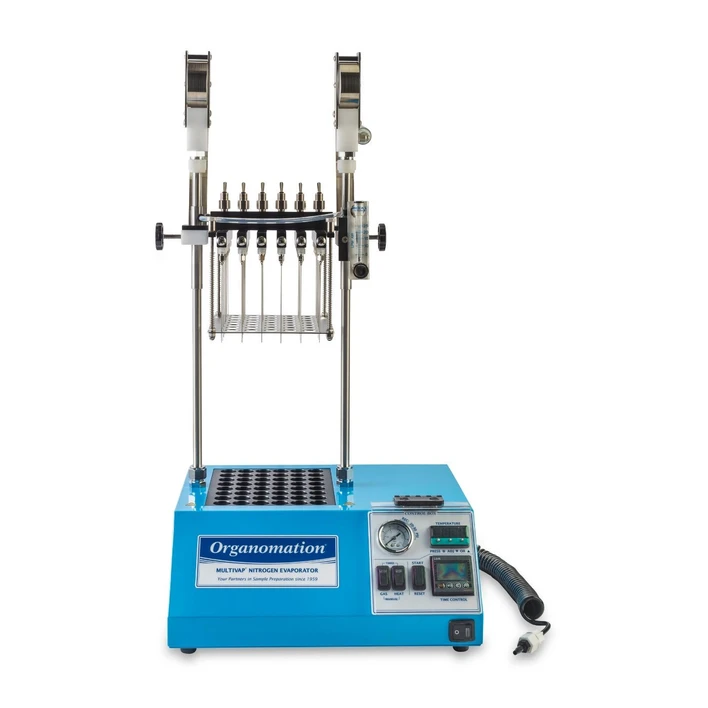
Organomation: 48 Position MULTIVAP Nitrogen EvaporatorOrganomation: 48 Position MULTIVAP Nitrogen Evaporator

Integration with Modern Laboratory Workflows

Modern laboratories increasingly rely on automated nitrogen evaporation systems that can process multiple samples simultaneously while also maintaining precise control over temperature, flow rate, and timing. Additionally, these systems integrate seamlessly with the 96-well plate formats offered by all three manufacturers, enabling high-throughput sample preparation. The combination of advanced SPE materials from Waters, Agilent, and Phenomenex with controlled nitrogen blowdown creates a powerful sample preparation platform that delivers the sensitivity, reproducibility, and throughput required for today's analytical challenges.

Conclusion

Nitrogen blowdown is not merely an optional step in SPE workflows, it is a critical component that enables the full potential of Waters Oasis, Agilent Bond Elut, and Phenomenex Strata products. Nitrogen blowdown ensures optimal analyte concentration, solvent exchange, and method sensitivity through gentle evaporation. Its versatility makes it applicable to diverse fields, including environmental monitoring and pharmaceutical analysis.

Laboratories investing in high-quality SPE products should equally prioritize incorporating proper nitrogen evaporation equipment and protocols to maximize their analytical capabilities and ensure consistent, reliable results. Organomation is a trusted provider of precision nitrogen evaporators, offering reliable solutions tailored to laboratory needs.

Organomation
LinkedIn Logo
 

Related content

Analysis of Aroma Components in Apples Using the Smart Aroma Database

Applications
| 2026 | Shimadzu
Instrumentation
GC/MSD, GC/SQ, HeadSpace
Manufacturer
Shimadzu
Industries
Food & Agriculture

Analysis of Acetaldehyde and Limonene in Recycled PET Using an HS-GCMS System (Carrier Gas: H2)

Applications
| 2026 | Shimadzu
Instrumentation
GC/MSD, GC/SQ, HeadSpace
Manufacturer
Shimadzu
Industries
Energy & Chemicals

What Causes GC Capillary Column Performance Degradation, and How Can I Prevent It?

Technical notes
| 2026 | Agilent Technologies
Instrumentation
Consumables, GC columns
Manufacturer
Agilent Technologies
Industries
Other

Aromatic Component Analysis of Gasoline According to ASTM D5580 Using the Brevis GC- 2050 Gas Chromatograph

Applications
| 2025 | Shimadzu
Instrumentation
GC
Manufacturer
Shimadzu
Industries
Energy & Chemicals

Micro GC Analysis of Permanent Gas Impurities in PEM Fuel Cell-Grade Hydrogen

Applications
| 2025 | Agilent Technologies
Instrumentation
GC
Manufacturer
Agilent Technologies
Industries
Energy & Chemicals
 

Related articles

JUNIOR STAR Grants at UCT Prague: Two talented women from abroad driving innovation in science
Article | Scientists

JUNIOR STAR Grants at UCT Prague: Two talented women from abroad driving innovation in science

Two outstanding early-career researchers at UCT Prague, Filipa Oliveira and Stella Gonsales, received prestigious GAČR JUNIOR STAR grants for innovative research in materials science and sustainable chemistry.
UCT Prague
tag
share
more
Revealing hidden chemicals at sea
Article | Health

Revealing hidden chemicals at sea

Flame retardants were found throughout cruise ship interiors, with some areas showing much higher levels. A new RECETOX and NIVA study explores potential exposure risks for crew and passengers.
RECETOX - Centrum pro výzkum toxických látek v prostředí
tag
share
more
News from LabRulezGCMS Library - Week 06, 2026
Article | Application

News from LabRulezGCMS Library - Week 06, 2026

This week we bring you technical note by Agilent Technologies and application notes by BaySpec, Metrohm and Shimadzu!
LabRulez
tag
share
more
Research from IOCB Prague reveals a previously unknown mechanism of genetic transcription
Article | Science and research

Research from IOCB Prague reveals a previously unknown mechanism of genetic transcription

Scientists at IOCB Prague reveal a previously unknown mechanism that initiates gene transcription. Using cryo-EM, they uncover how alarmone molecules enable RNA synthesis under stress.
Institute of Organic Chemistry and Biochemistry of the Czech Academy of Sciences
tag
share
more
 

Related content

Analysis of Aroma Components in Apples Using the Smart Aroma Database

Applications
| 2026 | Shimadzu
Instrumentation
GC/MSD, GC/SQ, HeadSpace
Manufacturer
Shimadzu
Industries
Food & Agriculture

Analysis of Acetaldehyde and Limonene in Recycled PET Using an HS-GCMS System (Carrier Gas: H2)

Applications
| 2026 | Shimadzu
Instrumentation
GC/MSD, GC/SQ, HeadSpace
Manufacturer
Shimadzu
Industries
Energy & Chemicals

What Causes GC Capillary Column Performance Degradation, and How Can I Prevent It?

Technical notes
| 2026 | Agilent Technologies
Instrumentation
Consumables, GC columns
Manufacturer
Agilent Technologies
Industries
Other

Aromatic Component Analysis of Gasoline According to ASTM D5580 Using the Brevis GC- 2050 Gas Chromatograph

Applications
| 2025 | Shimadzu
Instrumentation
GC
Manufacturer
Shimadzu
Industries
Energy & Chemicals

Micro GC Analysis of Permanent Gas Impurities in PEM Fuel Cell-Grade Hydrogen

Applications
| 2025 | Agilent Technologies
Instrumentation
GC
Manufacturer
Agilent Technologies
Industries
Energy & Chemicals
 

Related articles

JUNIOR STAR Grants at UCT Prague: Two talented women from abroad driving innovation in science
Article | Scientists

JUNIOR STAR Grants at UCT Prague: Two talented women from abroad driving innovation in science

Two outstanding early-career researchers at UCT Prague, Filipa Oliveira and Stella Gonsales, received prestigious GAČR JUNIOR STAR grants for innovative research in materials science and sustainable chemistry.
UCT Prague
tag
share
more
Revealing hidden chemicals at sea
Article | Health

Revealing hidden chemicals at sea

Flame retardants were found throughout cruise ship interiors, with some areas showing much higher levels. A new RECETOX and NIVA study explores potential exposure risks for crew and passengers.
RECETOX - Centrum pro výzkum toxických látek v prostředí
tag
share
more
News from LabRulezGCMS Library - Week 06, 2026
Article | Application

News from LabRulezGCMS Library - Week 06, 2026

This week we bring you technical note by Agilent Technologies and application notes by BaySpec, Metrohm and Shimadzu!
LabRulez
tag
share
more
Research from IOCB Prague reveals a previously unknown mechanism of genetic transcription
Article | Science and research

Research from IOCB Prague reveals a previously unknown mechanism of genetic transcription

Scientists at IOCB Prague reveal a previously unknown mechanism that initiates gene transcription. Using cryo-EM, they uncover how alarmone molecules enable RNA synthesis under stress.
Institute of Organic Chemistry and Biochemistry of the Czech Academy of Sciences
tag
share
more
 

Related content

Analysis of Aroma Components in Apples Using the Smart Aroma Database

Applications
| 2026 | Shimadzu
Instrumentation
GC/MSD, GC/SQ, HeadSpace
Manufacturer
Shimadzu
Industries
Food & Agriculture

Analysis of Acetaldehyde and Limonene in Recycled PET Using an HS-GCMS System (Carrier Gas: H2)

Applications
| 2026 | Shimadzu
Instrumentation
GC/MSD, GC/SQ, HeadSpace
Manufacturer
Shimadzu
Industries
Energy & Chemicals

What Causes GC Capillary Column Performance Degradation, and How Can I Prevent It?

Technical notes
| 2026 | Agilent Technologies
Instrumentation
Consumables, GC columns
Manufacturer
Agilent Technologies
Industries
Other

Aromatic Component Analysis of Gasoline According to ASTM D5580 Using the Brevis GC- 2050 Gas Chromatograph

Applications
| 2025 | Shimadzu
Instrumentation
GC
Manufacturer
Shimadzu
Industries
Energy & Chemicals

Micro GC Analysis of Permanent Gas Impurities in PEM Fuel Cell-Grade Hydrogen

Applications
| 2025 | Agilent Technologies
Instrumentation
GC
Manufacturer
Agilent Technologies
Industries
Energy & Chemicals
 

Related articles

JUNIOR STAR Grants at UCT Prague: Two talented women from abroad driving innovation in science
Article | Scientists

JUNIOR STAR Grants at UCT Prague: Two talented women from abroad driving innovation in science

Two outstanding early-career researchers at UCT Prague, Filipa Oliveira and Stella Gonsales, received prestigious GAČR JUNIOR STAR grants for innovative research in materials science and sustainable chemistry.
UCT Prague
tag
share
more
Revealing hidden chemicals at sea
Article | Health

Revealing hidden chemicals at sea

Flame retardants were found throughout cruise ship interiors, with some areas showing much higher levels. A new RECETOX and NIVA study explores potential exposure risks for crew and passengers.
RECETOX - Centrum pro výzkum toxických látek v prostředí
tag
share
more
News from LabRulezGCMS Library - Week 06, 2026
Article | Application

News from LabRulezGCMS Library - Week 06, 2026

This week we bring you technical note by Agilent Technologies and application notes by BaySpec, Metrohm and Shimadzu!
LabRulez
tag
share
more
Research from IOCB Prague reveals a previously unknown mechanism of genetic transcription
Article | Science and research

Research from IOCB Prague reveals a previously unknown mechanism of genetic transcription

Scientists at IOCB Prague reveal a previously unknown mechanism that initiates gene transcription. Using cryo-EM, they uncover how alarmone molecules enable RNA synthesis under stress.
Institute of Organic Chemistry and Biochemistry of the Czech Academy of Sciences
tag
share
more
 

Related content

Analysis of Aroma Components in Apples Using the Smart Aroma Database

Applications
| 2026 | Shimadzu
Instrumentation
GC/MSD, GC/SQ, HeadSpace
Manufacturer
Shimadzu
Industries
Food & Agriculture

Analysis of Acetaldehyde and Limonene in Recycled PET Using an HS-GCMS System (Carrier Gas: H2)

Applications
| 2026 | Shimadzu
Instrumentation
GC/MSD, GC/SQ, HeadSpace
Manufacturer
Shimadzu
Industries
Energy & Chemicals

What Causes GC Capillary Column Performance Degradation, and How Can I Prevent It?

Technical notes
| 2026 | Agilent Technologies
Instrumentation
Consumables, GC columns
Manufacturer
Agilent Technologies
Industries
Other

Aromatic Component Analysis of Gasoline According to ASTM D5580 Using the Brevis GC- 2050 Gas Chromatograph

Applications
| 2025 | Shimadzu
Instrumentation
GC
Manufacturer
Shimadzu
Industries
Energy & Chemicals

Micro GC Analysis of Permanent Gas Impurities in PEM Fuel Cell-Grade Hydrogen

Applications
| 2025 | Agilent Technologies
Instrumentation
GC
Manufacturer
Agilent Technologies
Industries
Energy & Chemicals
 

Related articles

JUNIOR STAR Grants at UCT Prague: Two talented women from abroad driving innovation in science
Article | Scientists

JUNIOR STAR Grants at UCT Prague: Two talented women from abroad driving innovation in science

Two outstanding early-career researchers at UCT Prague, Filipa Oliveira and Stella Gonsales, received prestigious GAČR JUNIOR STAR grants for innovative research in materials science and sustainable chemistry.
UCT Prague
tag
share
more
Revealing hidden chemicals at sea
Article | Health

Revealing hidden chemicals at sea

Flame retardants were found throughout cruise ship interiors, with some areas showing much higher levels. A new RECETOX and NIVA study explores potential exposure risks for crew and passengers.
RECETOX - Centrum pro výzkum toxických látek v prostředí
tag
share
more
News from LabRulezGCMS Library - Week 06, 2026
Article | Application

News from LabRulezGCMS Library - Week 06, 2026

This week we bring you technical note by Agilent Technologies and application notes by BaySpec, Metrohm and Shimadzu!
LabRulez
tag
share
more
Research from IOCB Prague reveals a previously unknown mechanism of genetic transcription
Article | Science and research

Research from IOCB Prague reveals a previously unknown mechanism of genetic transcription

Scientists at IOCB Prague reveal a previously unknown mechanism that initiates gene transcription. Using cryo-EM, they uncover how alarmone molecules enable RNA synthesis under stress.
Institute of Organic Chemistry and Biochemistry of the Czech Academy of Sciences
tag
share
more
Other projects
LCMS
ICPMS
Follow us
More information
WebinarsAbout usContact usTerms of use
LabRulez s.r.o. All rights reserved. Content available under a CC BY-SA 4.0 Attribution-ShareAlike