GCMS
More information
WebinarsAbout usContact usTerms of use
LabRulez s.r.o. All rights reserved. Content available under a CC BY-SA 4.0 Attribution-ShareAlike
Author
CATRIN
CATRIN
The Czech Advanced Technology and Research Institute (CATRIN) at Palacký University is a cutting-edge scientific hub dedicated to advancing research in the fields of nanotechnology, biotechnology, and biomedicine. At its core, CATRIN boasts outstanding scientific teams, featuring international researchers. We emphasize interdisciplinarity, foster global collaborations, and work to translate our research findings into practical applications.
Tags
Article
Science and research
LinkedIn Logo

Czech scientists develop a material for producing chemicals from water and sunlight, inspired by human enzymes
Th, 19.2.2026
| Original article from: CATRIN / Martina Šaradínová
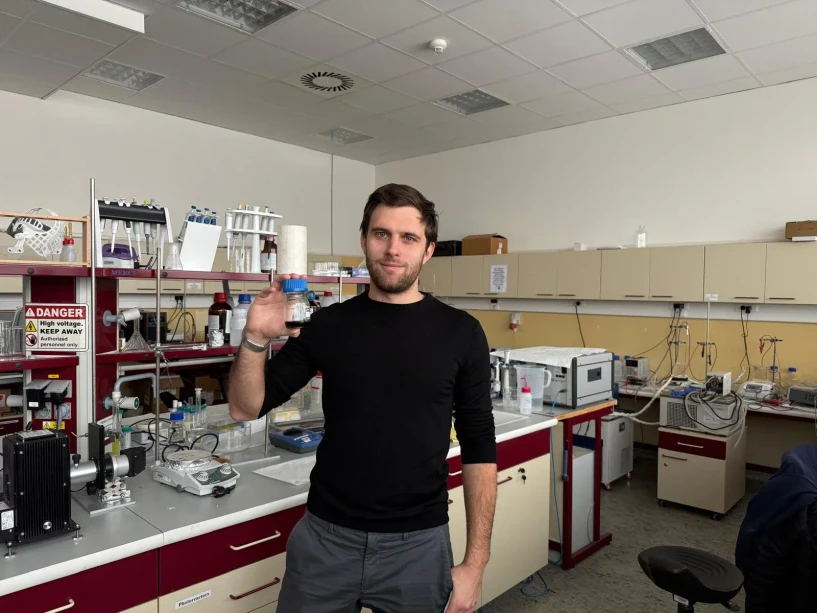
Czech scientists from CATRIN and CEET developed an enzyme-inspired photocatalyst that produces hydrogen peroxide from sunlight, water and oxygen—without toxic solvents or precious metals.
<p><strong>CATRIN:</strong> Czech scientists develop a material for producing chemicals from water and sunlight, inspired by human enzymes</p>

CATRIN: Czech scientists develop a material for producing chemicals from water and sunlight, inspired by human enzymes

The human body is the most sophisticated atomic engineer. This idea underpins a breakthrough technology developed by an international research team led by scientists from the Czech Advanced Technology and Research Institute (CATRIN) at Palacký University Olomouc and the Centre for Energy and Environmental Technologies (CEET) at VSB – Technical University of Ostrava. By drawing inspiration from the way enzymes function in the human body, the researchers have created a novel material that could fundamentally change the industrial production of hydrogen peroxide and other important chemicals. The new approach simplifies the production process, eliminates the need for toxic organic solvents and expensive precious metals, and requires only sunlight, oxygen and water to operate. The results were published by the prestigious journal Nature Communications, which ranked the study among the 50 most significant scientific discoveries of the year.

Hydrogen peroxide is one of the most important industrial chemicals. It is widely used not only in the chemical industry but also in pharmaceuticals, medicine, the textile industry and water-treatment technologies. The global hydrogen peroxide market is estimated to exceed USD 5 billion annually. Conventional production involves a multistep process that relies on toxic organic solvents and costly palladium-based catalysts. In addition, both the starting chemicals and the resulting waste products can have negative impacts on human health and the environment.
CATRIN: Czech scientists develop a material for producing chemicals from water and sunlight, inspired by human enzymesCATRIN: Czech scientists develop a material for producing chemicals from water and sunlight, inspired by human enzymes

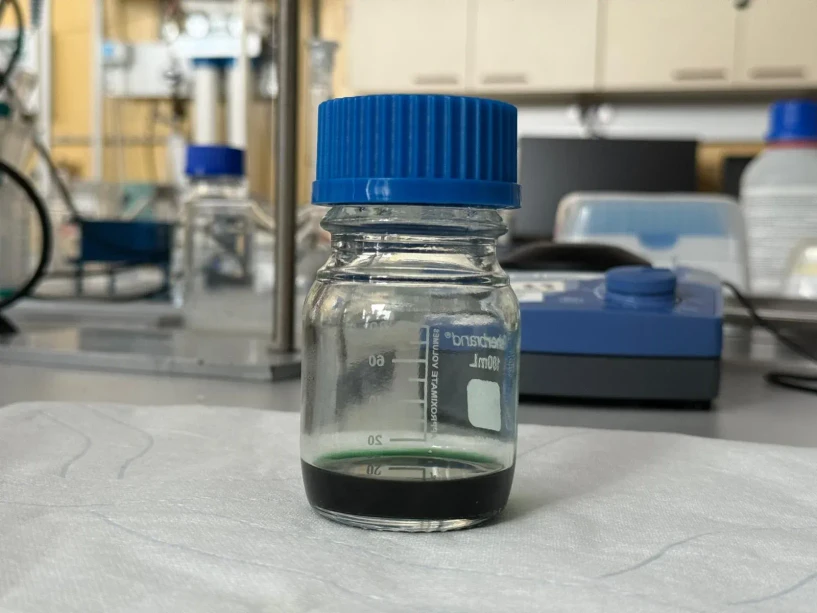
“Our aim was to develop a material that enables the efficient, environmentally friendly and affordable production of hydrogen peroxide. When designing this photocatalyst, we were inspired by the structure and behaviour of enzymes in the human body. The result is a technology that does not require toxic organic solvents or expensive precious metals and instead uses a low-cost material based on carbon, nitrogen and copper. It operates in water using only sunlight and oxygen from the air,” said Radek Zbořil, leader of research teams at CATRIN and CEET.

In developing the new photocatalyst, the Czech scientists mimicked the function of cytochrome c oxidase—an enzyme that enables human cells to obtain energy by transferring electrons to oxygen. This process relies on copper atoms embedded in the enzyme’s structure, and it was precisely this mechanism that the researchers sought to reproduce.

“We very precisely replicated the chemical environment of metals within the enzyme’s structure and anchored copper atoms onto the surface of extremely small carbon nanoparticles with photocatalytic properties. When exposed to light, highly efficient electron transfer occurs between the carbon nanoparticles, the copper atoms and oxygen molecules. This process closely resembles an enzymatic reaction and enables high hydrogen peroxide production,” explained the first author of the study, Lukáš Zdražil, who is affiliated with both CATRIN and CEET.

Producing hydrogen peroxide using sunlight and water has been a long-standing goal of research teams worldwide, as it eliminates the use of toxic organic solvents and avoids the formation of hazardous by-products. Until now, however, research in this area has largely remained at an academic level, mainly due to the use of noble metals and often complex photocatalyst designs. Laboratory studies have also resulted in relatively low hydrogen peroxide yields, which could not compete with existing industrial processes.

The new photocatalyst achieves hydrogen peroxide production rates up to two orders of magnitude higher than all previously reported systems, bringing us much closer to industrial requirements. In addition, the material is completely non-toxic, easily recyclable and reusable,” added Zdražil.

The Czech teams are now focusing on potential applications of this technology in decentralised production units. Such systems could enable efficient, local production of hydrogen peroxide, for example for use in agriculture, pharmaceutical manufacturing or environmental applications. The combination of solar energy and materials inspired by enzymatic systems may also lead to further promising advances.

“I believe that mimicking the structures and functions of iron- and copper-based enzymes could pave the way for other innovative technologies in the chemical industry and pharmaceuticals, such as the production of epoxides, alcohols or phenols,” concluded Zbořil.

CATRIN
LinkedIn Logo
 

Related content

Analysis of Aroma Components in Apples Using the Smart Aroma Database

Applications
| 2026 | Shimadzu
Instrumentation
GC/MSD, GC/SQ, HeadSpace
Manufacturer
Shimadzu
Industries
Food & Agriculture

Analysis of Acetaldehyde and Limonene in Recycled PET Using an HS-GCMS System (Carrier Gas: H2)

Applications
| 2026 | Shimadzu
Instrumentation
GC/MSD, GC/SQ, HeadSpace
Manufacturer
Shimadzu
Industries
Energy & Chemicals

What Causes GC Capillary Column Performance Degradation, and How Can I Prevent It?

Technical notes
| 2026 | Agilent Technologies
Instrumentation
Consumables, GC columns
Manufacturer
Agilent Technologies
Industries
Other

Aromatic Component Analysis of Gasoline According to ASTM D5580 Using the Brevis GC- 2050 Gas Chromatograph

Applications
| 2025 | Shimadzu
Instrumentation
GC
Manufacturer
Shimadzu
Industries
Energy & Chemicals

Micro GC Analysis of Permanent Gas Impurities in PEM Fuel Cell-Grade Hydrogen

Applications
| 2025 | Agilent Technologies
Instrumentation
GC
Manufacturer
Agilent Technologies
Industries
Energy & Chemicals
 

Related articles

Hexane in Food: When Processing Chemistry Meets Public Health
Article | Health

Hexane in Food: When Processing Chemistry Meets Public Health

Hexane remains a key food extraction solvent, but EFSA now calls for re-evaluation of its long-term safety. Robust GC-FID and GC-MS methods are critical for reliable residue detection and risk assessment.
Thermo Fisher Scientific
tag
share
more
Why Is It Necessary to Dry the SPE Sorbent Before Elution?
Article | Academy

Why Is It Necessary to Dry the SPE Sorbent Before Elution?

Proper drying of the SPE sorbent is a critical step to achieve high sensitivity, good reproducibility, and maximum analyte recovery, especially for complex sample matrices.
Phenomenex
tag
share
more
Application of GC×GC for the investigation of fermented beverages (Sarah C. Foster, MDCW 2026)
Presentation | Video

Application of GC×GC for the investigation of fermented beverages (Sarah C. Foster, MDCW 2026)

GC×GC-TOFMS reveals how yeast strain and honey concentration shape mead aroma. Learn the workflow from headspace sampling to PCA/PCoA/HCA, plus key VOC trends across fermentations.
The Multidimensional Chromatography Workshop
tag
share
more
News from LabRulezGCMS Library - Week 08, 2026
Article | Application

News from LabRulezGCMS Library - Week 08, 2026

This week we bring you technical note by Agilent Technologies, presentation by MDCW / C³AL and application notes by BaySpec and Shimadzu!
LabRulez
tag
share
more
 

Related content

Analysis of Aroma Components in Apples Using the Smart Aroma Database

Applications
| 2026 | Shimadzu
Instrumentation
GC/MSD, GC/SQ, HeadSpace
Manufacturer
Shimadzu
Industries
Food & Agriculture

Analysis of Acetaldehyde and Limonene in Recycled PET Using an HS-GCMS System (Carrier Gas: H2)

Applications
| 2026 | Shimadzu
Instrumentation
GC/MSD, GC/SQ, HeadSpace
Manufacturer
Shimadzu
Industries
Energy & Chemicals

What Causes GC Capillary Column Performance Degradation, and How Can I Prevent It?

Technical notes
| 2026 | Agilent Technologies
Instrumentation
Consumables, GC columns
Manufacturer
Agilent Technologies
Industries
Other

Aromatic Component Analysis of Gasoline According to ASTM D5580 Using the Brevis GC- 2050 Gas Chromatograph

Applications
| 2025 | Shimadzu
Instrumentation
GC
Manufacturer
Shimadzu
Industries
Energy & Chemicals

Micro GC Analysis of Permanent Gas Impurities in PEM Fuel Cell-Grade Hydrogen

Applications
| 2025 | Agilent Technologies
Instrumentation
GC
Manufacturer
Agilent Technologies
Industries
Energy & Chemicals
 

Related articles

Hexane in Food: When Processing Chemistry Meets Public Health
Article | Health

Hexane in Food: When Processing Chemistry Meets Public Health

Hexane remains a key food extraction solvent, but EFSA now calls for re-evaluation of its long-term safety. Robust GC-FID and GC-MS methods are critical for reliable residue detection and risk assessment.
Thermo Fisher Scientific
tag
share
more
Why Is It Necessary to Dry the SPE Sorbent Before Elution?
Article | Academy

Why Is It Necessary to Dry the SPE Sorbent Before Elution?

Proper drying of the SPE sorbent is a critical step to achieve high sensitivity, good reproducibility, and maximum analyte recovery, especially for complex sample matrices.
Phenomenex
tag
share
more
Application of GC×GC for the investigation of fermented beverages (Sarah C. Foster, MDCW 2026)
Presentation | Video

Application of GC×GC for the investigation of fermented beverages (Sarah C. Foster, MDCW 2026)

GC×GC-TOFMS reveals how yeast strain and honey concentration shape mead aroma. Learn the workflow from headspace sampling to PCA/PCoA/HCA, plus key VOC trends across fermentations.
The Multidimensional Chromatography Workshop
tag
share
more
News from LabRulezGCMS Library - Week 08, 2026
Article | Application

News from LabRulezGCMS Library - Week 08, 2026

This week we bring you technical note by Agilent Technologies, presentation by MDCW / C³AL and application notes by BaySpec and Shimadzu!
LabRulez
tag
share
more
 

Related content

Analysis of Aroma Components in Apples Using the Smart Aroma Database

Applications
| 2026 | Shimadzu
Instrumentation
GC/MSD, GC/SQ, HeadSpace
Manufacturer
Shimadzu
Industries
Food & Agriculture

Analysis of Acetaldehyde and Limonene in Recycled PET Using an HS-GCMS System (Carrier Gas: H2)

Applications
| 2026 | Shimadzu
Instrumentation
GC/MSD, GC/SQ, HeadSpace
Manufacturer
Shimadzu
Industries
Energy & Chemicals

What Causes GC Capillary Column Performance Degradation, and How Can I Prevent It?

Technical notes
| 2026 | Agilent Technologies
Instrumentation
Consumables, GC columns
Manufacturer
Agilent Technologies
Industries
Other

Aromatic Component Analysis of Gasoline According to ASTM D5580 Using the Brevis GC- 2050 Gas Chromatograph

Applications
| 2025 | Shimadzu
Instrumentation
GC
Manufacturer
Shimadzu
Industries
Energy & Chemicals

Micro GC Analysis of Permanent Gas Impurities in PEM Fuel Cell-Grade Hydrogen

Applications
| 2025 | Agilent Technologies
Instrumentation
GC
Manufacturer
Agilent Technologies
Industries
Energy & Chemicals
 

Related articles

Hexane in Food: When Processing Chemistry Meets Public Health
Article | Health

Hexane in Food: When Processing Chemistry Meets Public Health

Hexane remains a key food extraction solvent, but EFSA now calls for re-evaluation of its long-term safety. Robust GC-FID and GC-MS methods are critical for reliable residue detection and risk assessment.
Thermo Fisher Scientific
tag
share
more
Why Is It Necessary to Dry the SPE Sorbent Before Elution?
Article | Academy

Why Is It Necessary to Dry the SPE Sorbent Before Elution?

Proper drying of the SPE sorbent is a critical step to achieve high sensitivity, good reproducibility, and maximum analyte recovery, especially for complex sample matrices.
Phenomenex
tag
share
more
Application of GC×GC for the investigation of fermented beverages (Sarah C. Foster, MDCW 2026)
Presentation | Video

Application of GC×GC for the investigation of fermented beverages (Sarah C. Foster, MDCW 2026)

GC×GC-TOFMS reveals how yeast strain and honey concentration shape mead aroma. Learn the workflow from headspace sampling to PCA/PCoA/HCA, plus key VOC trends across fermentations.
The Multidimensional Chromatography Workshop
tag
share
more
News from LabRulezGCMS Library - Week 08, 2026
Article | Application

News from LabRulezGCMS Library - Week 08, 2026

This week we bring you technical note by Agilent Technologies, presentation by MDCW / C³AL and application notes by BaySpec and Shimadzu!
LabRulez
tag
share
more
 

Related content

Analysis of Aroma Components in Apples Using the Smart Aroma Database

Applications
| 2026 | Shimadzu
Instrumentation
GC/MSD, GC/SQ, HeadSpace
Manufacturer
Shimadzu
Industries
Food & Agriculture

Analysis of Acetaldehyde and Limonene in Recycled PET Using an HS-GCMS System (Carrier Gas: H2)

Applications
| 2026 | Shimadzu
Instrumentation
GC/MSD, GC/SQ, HeadSpace
Manufacturer
Shimadzu
Industries
Energy & Chemicals

What Causes GC Capillary Column Performance Degradation, and How Can I Prevent It?

Technical notes
| 2026 | Agilent Technologies
Instrumentation
Consumables, GC columns
Manufacturer
Agilent Technologies
Industries
Other

Aromatic Component Analysis of Gasoline According to ASTM D5580 Using the Brevis GC- 2050 Gas Chromatograph

Applications
| 2025 | Shimadzu
Instrumentation
GC
Manufacturer
Shimadzu
Industries
Energy & Chemicals

Micro GC Analysis of Permanent Gas Impurities in PEM Fuel Cell-Grade Hydrogen

Applications
| 2025 | Agilent Technologies
Instrumentation
GC
Manufacturer
Agilent Technologies
Industries
Energy & Chemicals
 

Related articles

Hexane in Food: When Processing Chemistry Meets Public Health
Article | Health

Hexane in Food: When Processing Chemistry Meets Public Health

Hexane remains a key food extraction solvent, but EFSA now calls for re-evaluation of its long-term safety. Robust GC-FID and GC-MS methods are critical for reliable residue detection and risk assessment.
Thermo Fisher Scientific
tag
share
more
Why Is It Necessary to Dry the SPE Sorbent Before Elution?
Article | Academy

Why Is It Necessary to Dry the SPE Sorbent Before Elution?

Proper drying of the SPE sorbent is a critical step to achieve high sensitivity, good reproducibility, and maximum analyte recovery, especially for complex sample matrices.
Phenomenex
tag
share
more
Application of GC×GC for the investigation of fermented beverages (Sarah C. Foster, MDCW 2026)
Presentation | Video

Application of GC×GC for the investigation of fermented beverages (Sarah C. Foster, MDCW 2026)

GC×GC-TOFMS reveals how yeast strain and honey concentration shape mead aroma. Learn the workflow from headspace sampling to PCA/PCoA/HCA, plus key VOC trends across fermentations.
The Multidimensional Chromatography Workshop
tag
share
more
News from LabRulezGCMS Library - Week 08, 2026
Article | Application

News from LabRulezGCMS Library - Week 08, 2026

This week we bring you technical note by Agilent Technologies, presentation by MDCW / C³AL and application notes by BaySpec and Shimadzu!
LabRulez
tag
share
more
Other projects
LCMS
ICPMS
Follow us
FacebookX (Twitter)LinkedInYouTube
More information
WebinarsAbout usContact usTerms of use
LabRulez s.r.o. All rights reserved. Content available under a CC BY-SA 4.0 Attribution-ShareAlike