17th MDCW 2026 (Day 2)
MDCW: 17th MDCW 2026 (Day 2): MDCW Mentors
Program
Wednesday January 14, 2026
8:30 – 8:45 AM Registration
8:45 – 9:00 AM Opening Remarks
 MDCW: 17th MDCW 2026 (Day 2): Media Sponsor - LabRulez (Petr Vozka)
9:00 – 9:30 AM KL-3 Multidimensional chromatography for chemical analysis – from small molecules to synthetic polymers
- Peilin Yang (Dow Chemical)
As society increasingly demands materials with safer and more sustainable profiles, the detailed characterization of complex chemical mixtures becomes crucial in new product development, material life-cycle analysis, and evaluating their environmental impact. Multidimensional chromatography has proven to be a highly effective technique for chemical analysis. When coupled with universal and information-rich detectors such as highresolution mass spectrometers, it provides more comprehensive chemical composition information, leading to new insights in material design and process development. This presentation will discuss several industrial applications that demonstrate how practical solutions utilizing GC×GC and LC×LC can address challenges in the analysis of recycled materials and complex polymer mixtures, spanning a wide range of molecular weights from small molecules to macromolecules.
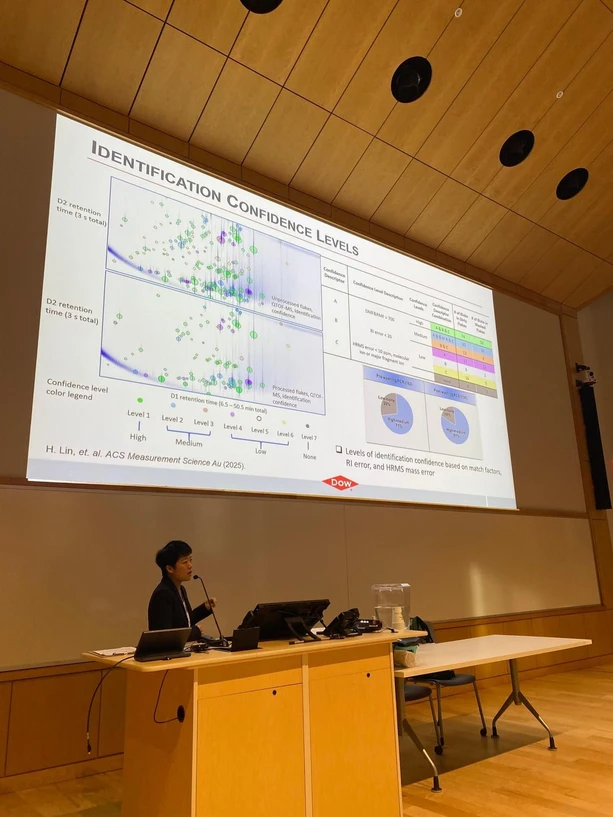 MDCW: 17th MDCW 2026 (Day 2): KL-3 Multidimensional chromatography for chemical analysis – from small molecules to synthetic polymers (Peilin Yang, Dow Chemical)
9:30 – 10:00 AM KL-4 Multidimensional gas chromatography for plastic waste pyrolysis
- Hilal Ezgi Toraman (Penn State University)
Accurate characterization of pyrolysis products is essential for developing reliable kinetic models and advancing both non-catalytic and catalytic plastic recycling. This presentation will first compare one-dimensional gas chromatography (GC) with two-dimensional gas chromatography (GC×GC) for analyzing complex pyrolysis oils. 1D-GC often cannot resolve overlapping mixtures of olefins, paraffins, and aromatics, limiting mechanistic interpretation. In contrast, GC×GC provides orthogonal separation and substantially enhanced resolution, identifying up to 5 times more compounds across various pyrolysis products. This comparison underscores why GC×GC is essential for comprehensive product deconvolution and accurate assessment of reaction pathways.
Building on this analytical capability, I will then demonstrate how coupling micropyrolysis with GC×GC–FID/TOF-MS enables verification of intrinsic-kinetic conditions for non-catalytic pyrolysis. Using design of experiments (DOE) and multivariate data analysis, we quantified the effects of particle size, sample size, temperature, and carrier gas flow rate on primary and secondary reactions.
Finally, we extend this framework to catalytic co-pyrolysis by integrating GC×GC with splitgas capture for simultaneous quantification of light gases and higher hydrocarbons. Using HZSM-5, we show that plastic mixtures, such as LDPE and PET, exhibit distinct optimal catalytic operating conditions and synergistic behaviors, emphasizing the importance of polymer-specific process design.
By leveraging the advanced separation capabilities of GC×GC, this talk highlights its critical role in elucidating both catalytic and non-catalytic processes and reaction mechanisms, thereby enabling resilient plastic-recycling solutions by deepening our understanding of pyrolysis chemistry, ensuring process adaptability, and reinforcing the foundations of a strong economy.
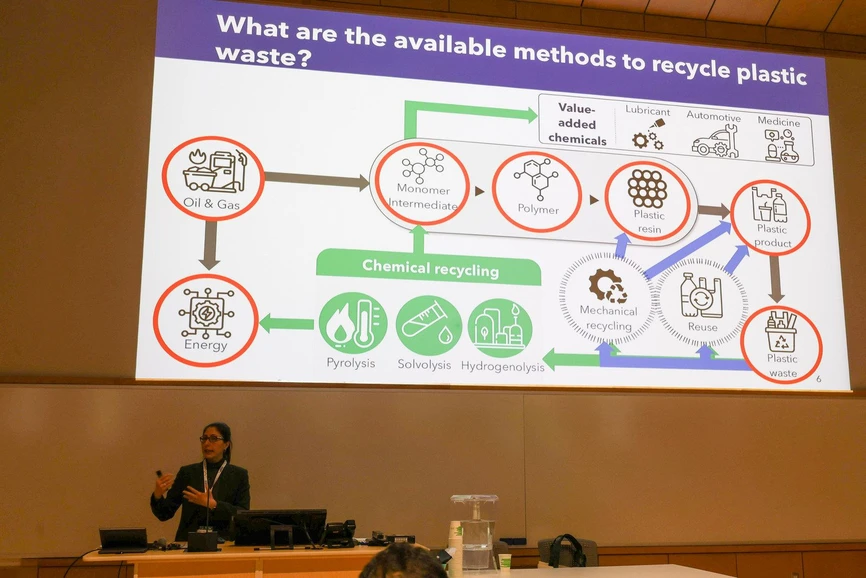 MDCW: 17th MDCW 2026 (Day 2): KL-4 Multidimensional gas chromatography for plastic waste pyrolysis (Hilal Ezgi Toraman, Penn State University)
10:00 – 10:20 AM O-10 GcDUO: automating GC×GC-MS data analysis via PARAFAC and PARAFAC2
- Maria Llambrich (Institut d’Investigació Sanitària Pere Virgili)
Multidimensional chromatography-mass spectrometry (MS) is a powerful analytical technique that integrates two or more chromatographic separations with MS, offering superior resolution, increased signal-to-noise, and selectivity for complex sample analysis. Despite its potential, its adoption remains limited due to data complexity and processing challenges. Chemometric approaches, particularly multiway models like Parallel Factor Analysis (PARAFAC), have proven effective in addressing these challenges by enabling the extraction of meaningful chemical information from multidimensional datasets. However, traditional PARAFAC is constrained by its assumption of data tri-linearity, which may not be valid in all cases, where data have misalignments. To overcome these limitations, we present GcDUO, an open-source data processing software that enables annotation, deconvolution, and analysis of batch GC×GC-MS data. GcDUO, implemented in R, accepts non-vendor-specific standardized CDF files, and rearranges the data into fourdimensional tensor structures, preserving the GC×GC-MS data structure. GcDUO integrates advanced chemometric methods, including PARAFAC and PARAFAC2, for a more accurate and comprehensive analysis. PARAFAC is particularly useful for deconvoluting overlapping peaks and extracting pure chemical signals, while PARAFAC2 relaxes the tri-linearity constraint, allowing batch analysis for samples. GcDUO achieves both high-resolution peak detection and robust quantification across complex GC×GC-MS datasets. The software was validated against the gold-standard software for comprehensive GC, demonstrating a high correlation (R² = 0.9) in peak area measurements, confirming its effectiveness and reliability. GcDUO provides a valuable, open-source platform in the comprehensive chromatography field, enabling more accessible and customizable data analysis.
 MDCW: 17th MDCW 2026 (Day 2): O-10 GcDUO: automating GC×GC-MS data analysis via PARAFAC and PARAFAC2 (Maria Llambrich, Institut d’Investigació Sanitària Pere Virgili)
10:30 – 11:00 AM Coffee Break
11:00 – 11:20 AM O-11 LEVERAGING 2D-LC TO IMPROVE METHOD UNDERSTANDING AND ROBUSTNESS FOR THERAPEUTIC BIOMOLECULES
- Chad Pickens (AbbVie)
Two-Dimensional Liquid Chromatography (2D-LC) has emerged as a powerful tool for the separation and analysis of complex mixtures in biopharmaceutical development. Common use cases for 2D-LC applied to the biopharmaceutical pipeline will be discussed, primarily focused on the heart-cutting analysis mode. These case studies include the MS identification of chromatographic peaks stemming from a non MS-compatible method in the first dimension, assessing the molecule in different states based on the selection of the 2D method conditions. Additionally, a peak purity assessment can be conducted to understand the potential presence of co-eluting species. Throughout the talk, demonstration of 2D-LC as a tool to improve our understanding and robustness of methods used in the QC environment will be highlighted, in addition to situations where a single chromatographic separation is inadequate.
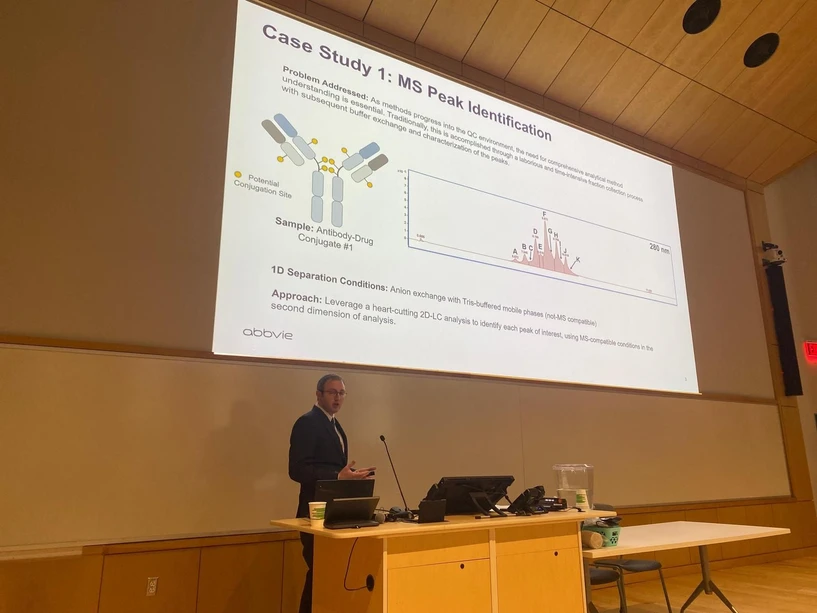 MDCW: 17th MDCW 2026 (Day 2): O-11 LEVERAGING 2D-LC TO IMPROVE METHOD UNDERSTANDING AND ROBUSTNESS FOR THERAPEUTIC BIOMOLECULES (Chad Pickens, AbbVie)
11:20 – 11:40 AM O-12 Leveraging mechanistic and machine learning models to simplify 2D-LC method development for peak purity analysis
- Jane Kawakami (Pfizer)
Due to safety and quality considerations, regulatory requirements necessitate both achiral and chiral purity analysis of a small molecule human drug. For the final drug substances and drug products, this characterization process typically consists of two separate sets of method development efforts: one via achiral LC separation and one via chiral SFC or LC separation. Although such workflows are well established in analytical labs in the pharmaceutical industry, it can be a time-consuming process. In contrast, 2DLC can achieve both achiral and chiral peak purity assessment in a single shot and further increase automation and efficiency in method development. However, the usage of 2DLC systems has largely been limited due to the complexity in method development, partly associated with the number of parameters and settings involved. Particularly, unlike RPLC achiral separation in which chromatographic retention can be predicted with reasonable accuracy via certain theories such as LSS, it is well known that chiral separation is difficult to predict using retention models and requires screen of columns and mobile phases to arrive at an initial condition. Further optimization would require additional efforts. Our work demonstrated that 2DLC method development can be simplified and made more efficient through a combination of mechanistic and machine learning modeling.
 MDCW: 17th MDCW 2026 (Day 2): O-12 Leveraging mechanistic and machine learning models to simplify 2D-LC method development for peak purity analysis (Jane Kawakami, Pfizer)
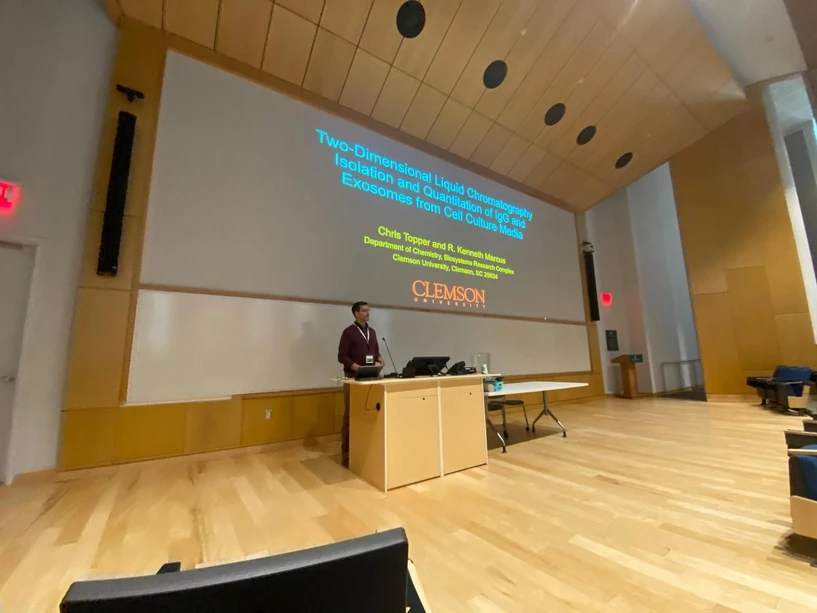
11:40 – 12:00 PM O-13 Two-dimensional liquid chromatography isolation and quantification of immunoglobulin G and exosomes from cell culture media
- Chris Topper (Clemson University)
Extracellular vesicles (EVs) are small membrane-bound particles that are naturally released by cells into the extracellular environment. Exosomes constitute a subset of EVs with a characteristic size range of 30 – 150 nm. Exosomes are produced by nearly every cell type in the body and can be found in virtually all biological fluids. They share the same integral membrane proteins as their originating cell and thus can be used as biomarkers to identify and monitor disease.
Monoclonal antibodies (mAbs) such as IgG are primarily produced by culturing Chinese hamster ovary (CHO) cells and then passing the culture media through a Protein A (ProA) affinity chromatography column to isolate the antibodies. The waste effluent from this process, however, contains valuable EVs that are ultimately discarded. Therefore, the isolation of exosomes from CHO cell waste streams presents an opportunity for by-product valorization.
We describe a two-dimensional liquid chromatography platform employing columns packed with capillary-channeled polymer (C-CP) fibers to isolate both IgG and exosomes from CHO cell supernatant. The first dimension utilizes ProA to isolate and quantify IgG, while hydrophobic interaction chromatography (HIC) is used in the second dimension to isolate and quantify exosomes from the 1D effluent. Thus, we demonstrate a convenient framework for characterizing any CHO cell culture into both its IgG and exosome production traits, providing practical insights into the co-production of these two, disparate biotherapeutics, as well as a means for extracting valuable EVs during the production of mAbs, converting waste into dollars.
 MDCW: 17th MDCW 2026 (Day 2): O-13 Two-dimensional liquid chromatography isolation and quantification of immunoglobulin G and exosomes from cell culture media (Chris Topper, Clemson University)
12:00 – 12:20 PM O-14 2D-LC-MS applications in pharmaceutical development
- Matt Sorensen (Eli Lilly and Company)
12:20 – 1:20 PM Lunch
 MDCW: 17th MDCW 2026 (Day 2): 2026 Silver Sponsors and Awards & Media
1:30 – 1:50 PM O-15 Development of hardware and software approaches to comprehensive capillary 2D-LC
- Deklin Parker (Rowan University)
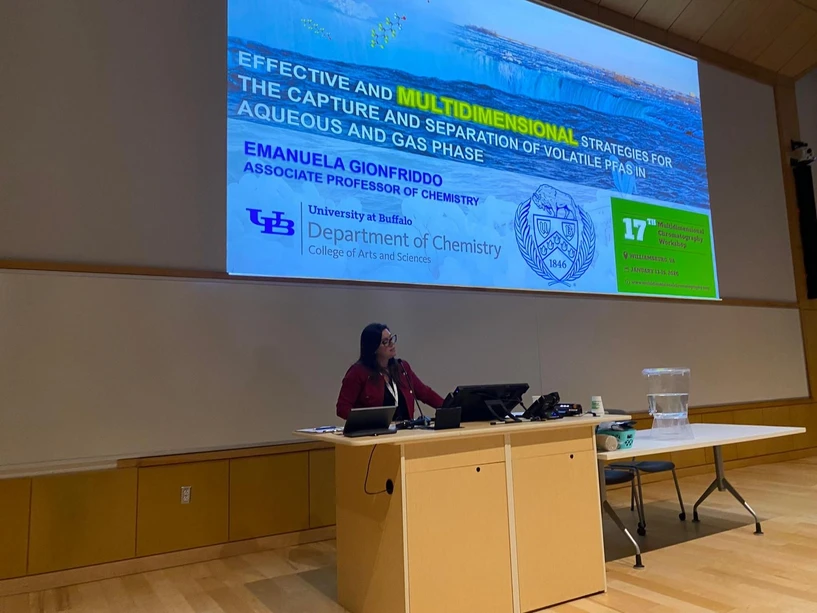
1:50 – 2:10 PM O-19 Effective (and multidimensional) strategies for the capture and separation of volatile PFAS in aqueous and gas phase
- Emanuela Gionfriddo (University of Buffalo)
Per- and polyfluoroalkyl substances (PFAS) are environmentally persistent and toxic synthetic compounds. Volatile and neutral PFAS, used in products such as firefighting foams and non-stick coatings, act as precursors to persistent acids like PFOS and PFOA, making their accurate monitoring essential. While analytical methods for legacy ionic PFAS in water are well established, there is a critical gap in efficient strategies for neutral, volatile PFAS. The main challenge consists in their effective capture and preconcentration from the gas phase and their efficient introduction into the analytical instrument. The complexity of realworld samples further complicates analysis by introducing matrix interferences that can mask the presence of these low-level contaminants. This work highlights how Solid-Phase Microextraction (SPME), coupled with comprehensive two-dimensional gas chromatography (GC×GC) and time-of-flight mass spectrometry (ToF/MS), provides a powerful platform for volatile PFAS analysis in both air and water. The workflow enables highly sensitive quantitation at sub-part-per-billion levels, advancing environmental monitoring and risk assessment. SPME Arrow devices with diverse sorbent chemistries were evaluated to compare preconcentration efficiencies. The optimized method was applied to monitor emissions from paint samples, revealing the presence of several classes of fluorinated compounds. For such complex mixtures, the orthogonal separation capacity of GC×GC proved indispensable, resolving co-eluting peaks and enabling confident analyte identification. This workflow enhances both preconcentration efficiency and molecular specificity, enabling reliable quantitation of volatile PFAS alongside the discovery of previously unrecognized species. Together, these advances provide a critical foundation for addressing current gaps in PFAS monitoring strategies.
 MDCW: 17th MDCW 2026 (Day 2): O-19 Effective (and multidimensional) strategies for the capture and separation of volatile PFAS in aqueous and gas phase (Emanuela Gionfriddo, University of Buffalo)
2:10 – 2:30 PM O-20 Optimization of direct thermal extraction parameters for analysis of high-water-content samples using GC×GC
- Jenna Diefenderfer (Arizona State University)
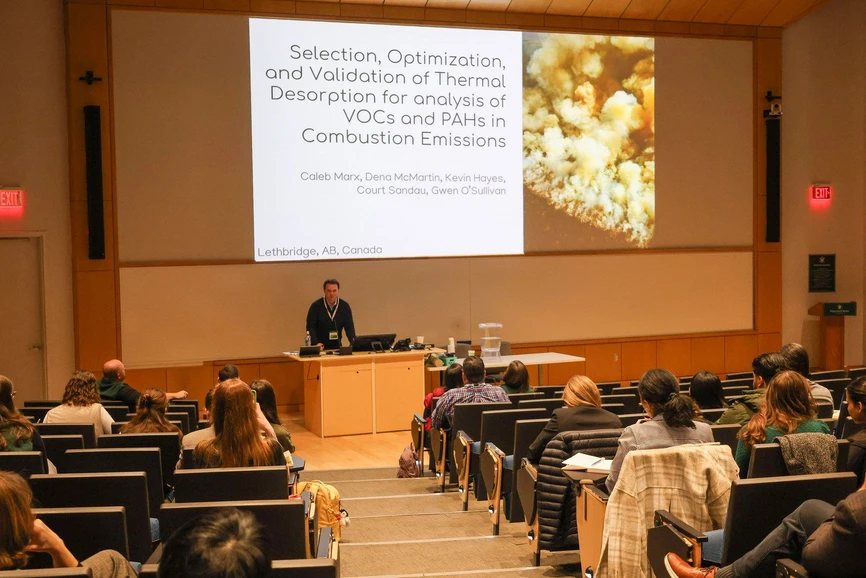
2:30 – 2:50 PM O-21 Selection, optimization, and validation of thermal desorption for analysis of VOCs and PAHs in combustion smoke
- Caleb Marx (University of Lethbridge)
Smoke from fires releases large quantities of hazardous chemicals into the atmosphere causing poor air quality at local, regional, and global scales. Due to the complexity of smoke emissions, the health impacts from inhalation and dermal exposure vary with fuel type and combustion conditions. Accurate emissions characterization data is critical for understanding health risks associated with smoke exposure. To date, smoke characterization has been predominately conducted utilizing filter extracts and standard GC-MS. This method has several limitations including lengthy extraction times, excessive use of toxic solvents, and cluttered chromatograms resulting in peak coelution. The use of thermal desorption (TD) combined with two-dimensional gas chromatography offers an appealing alternative to traditional methods by improving recovery, eliminating solvent use, and enhancing chromatographic clarity through second dimension separation. However, limited work has been published optimizing these techniques for smoke emissions.
This research sought to optimize sorbent bed selection and TD method parameters to allow non targeted analysis of smoke emissions. We explored the application of 6 unique sorbent bed combinations to optimize analyte retention of smoke compounds with varying polarity and volatility. Following sorbent selection, a design of experiment approach was applied to optimize the analytical desorption parameters (time, temperature, and flow) and conditioning methodology (time, temperature). The method was validated using smoke collected from lab-scale combustion chamber under controlled conditions. This study establishes a strong analytical foundation to improve our understanding of both primary and secondary smoke emissions, supporting more accurate risk assessment and informing public health and environmental policy.
 MDCW: 17th MDCW 2026 (Day 2): O-21 Selection, optimization, and validation of thermal desorption for analysis of VOCs and PAHs in combustion smoke (Caleb Marx, University of Lethbridge)
3:00 – 4:00 PM Coffee Break, Poster Session, Lab Tours
Wednesday Poster List
P-2 Non-target analysis of waste plastic pyrolysis oils (WPPO) by GC×GC-HRTOFMS
- Liz Humston-Fulmer (LECO Corporation)
P-6 Enhancing TD–GC×GC–TOF MS workflows for the reliable identification of malodours in recycled plastics
- Kenneth Hellstern (Markes International)
P-8 Identifying non-biological variance in untargeted analysis in breath VOCs
- Darakshan Zabin (Arizona State University)
P-10 Archeological clue characterization using GC×GC–MS and multivariate analysis
- Pierre-Hugues Stefanuto (Université de Liège)
P-11 What do we do with all that data? Complementary data processing methods for two-dimensional gas chromatography and mass spectrometry
- Robert Cody (JEOL USA, Inc.)
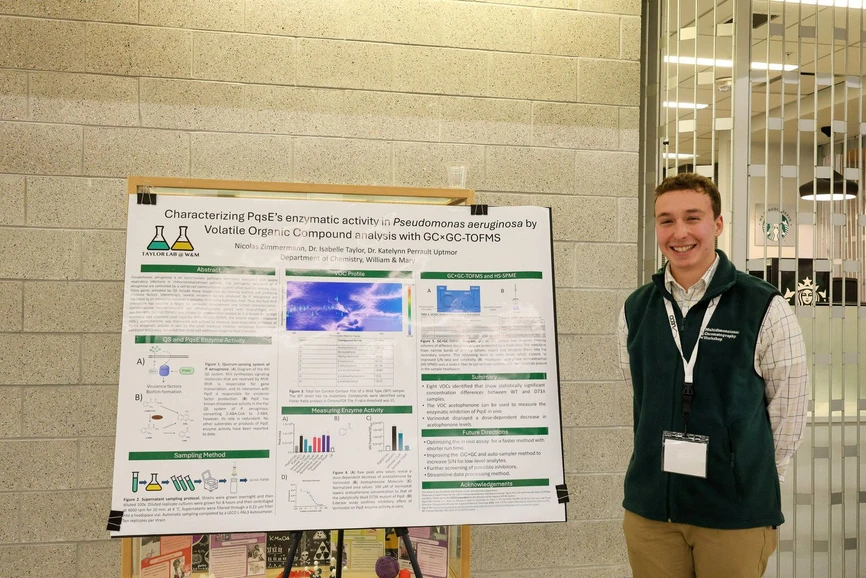
P-12 Characterizing PQSE's enzymatic activity in Pseudomonas aeruginosa by volatile organic compound analysis with GC×GC-TOFMS
- Nicolas Zimmerman (William & Mary)
 MDCW: 17th MDCW 2026 (Day 2): P-12 Characterizing PQSE's enzymatic activity in Pseudomonas aeruginosa by volatile organic compound analysis with GC×GC-TOFMS (Nicolas Zimmerman, William & Mary)
P-13 A sustainable approach to nontargeted analysis using hydrogen as a carrier gas for GC×GC
- Kira Fisher (William & Mary)
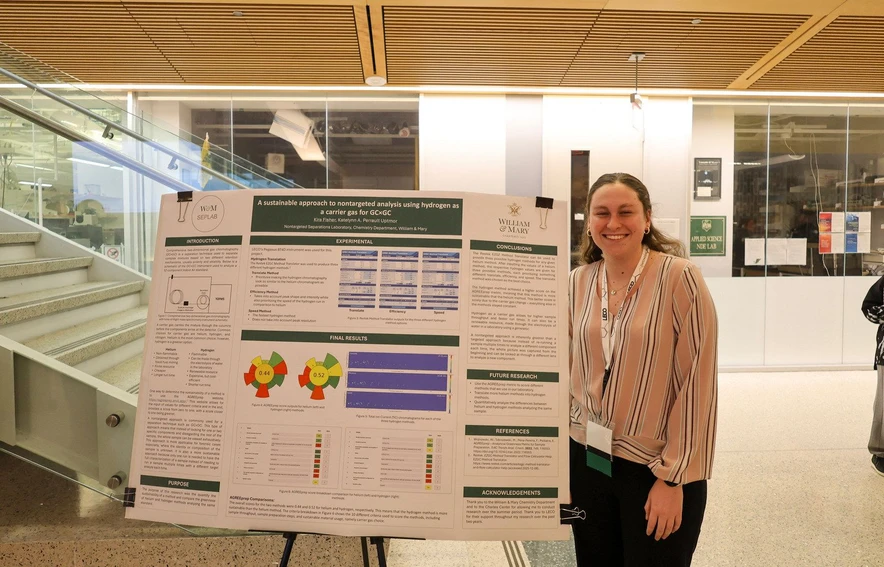 MDCW: 17th MDCW 2026 (Day 2): P-13 A sustainable approach to nontargeted analysis using hydrogen as a carrier gas for GC×GC (Kira Fisher, William & Mary)
P-20 Painting a clearer picture: Untargeted perfluoroalkyl substance detection in household paints using solid phase microextraction and two-dimensional gas chromatography
- Madison L. Williams (The State University at Buffalo New York)
P-21 Alignment and filtering tools for enhanced differencing of two-dimensional chromatograms
- Zhanpin Wu (GC Image)
P-23 The effect of using low-bleed columns in the first dimension for comprehensive two-dimensional gas chromatographic analyses
- Jackson Webb (William & Mary)
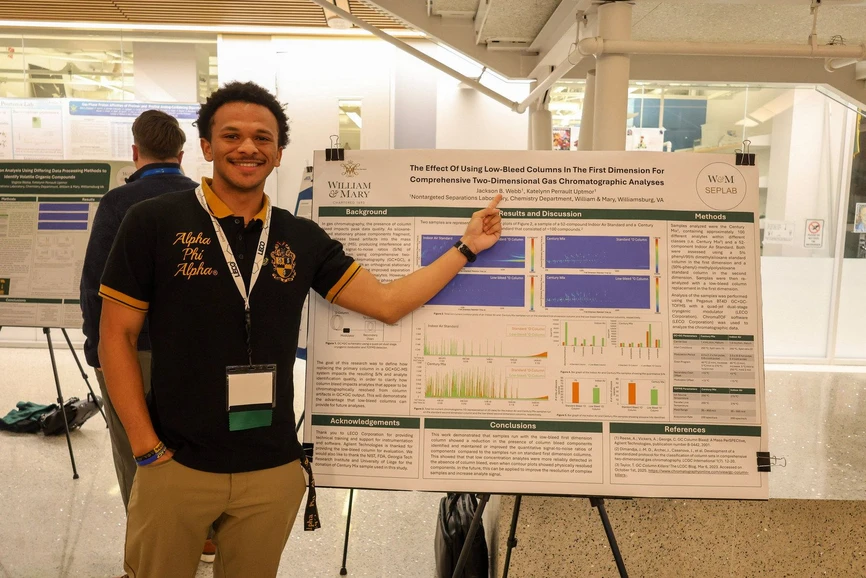 MDCW: 17th MDCW 2026 (Day 2): P-23 The effect of using low-bleed columns in the first dimension for comprehensive two-dimensional gas chromatographic analyses (Jackson Webb, William & Mary)
P-24 The characterization of poly(1-butene) via pyrolytic conversion using comprehensive two-dimensional gas chromatography high-resolution time-of-flight mass spectrometry
- Bryan Katzenmeyer (JEOL)
P-25 Decomposition analysis using differing data processing methods to identify volatile organic compounds
- Virginia Weina (William & Mary)
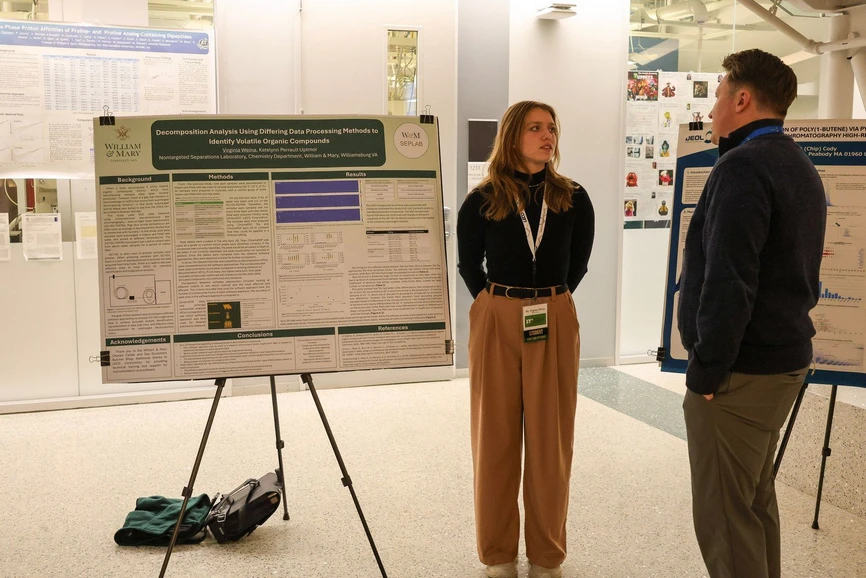 MDCW: 17th MDCW 2026 (Day 2): P-25 Decomposition analysis using differing data processing methods to identify volatile organic compounds (Virginia Weina, William & Mary)
P-26 Effect of column length on the resolving power of separations of non-ionic surfactants by two-dimensional liquid chromatography
- Laney Hillman (Gustavus Adolphus College)
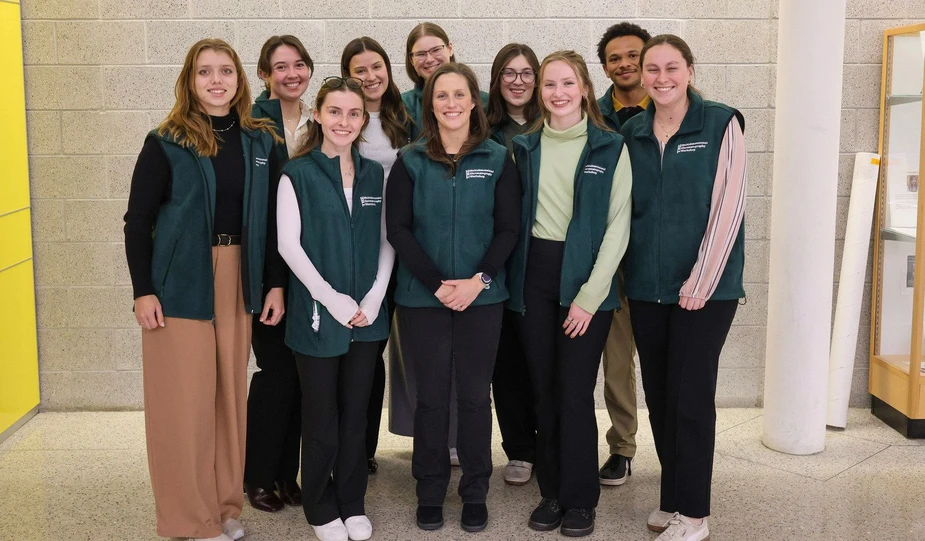 MDCW: 17th MDCW 2026 (Day 2): Katelynn Perrault Uptmor’s Research Group
4:00 – 5:00 PM Speed Mentoring Session
 MDCW: 17th MDCW 2026 (Day 2): Speed Mentoring Session
 MDCW: 17th MDCW 2026 (Day 2): Speed Mentoring Session
-Workshop-LOGO_s.webp)