Scientists have found that summer heat significantly increases the release of flame retardants in cars

RECETOX: Scientists have found that summer heat significantly increases the release of flame retardants in cars
In a newly published study in Environmental Science: Advances, researchers from RECETOX demonstrated that temperature and seasonal changes significantly influence the amount of flame retardants released from materials inside car interiors. The study is the first of its kind to simultaneously measure the concentrations of these substances in air, dust, and the interior materials themselves. The results show that some chemicals, such as phosphate flame retardant TCEP, reach concentrations up to 700 times higher in summer car air than in winter.
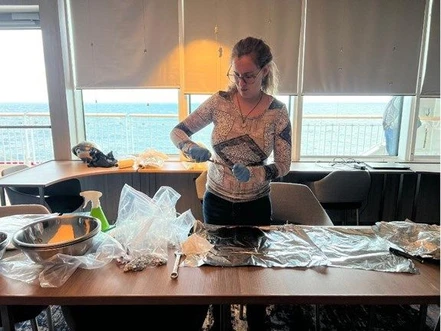
 RECETOX: Samples from the examined car, shown in the photo, included seat foam, soft plastic from the upper dashboard, and hard plastic from various parts of the vehicle (lower dashboard, center console, and doors). The samples were collected in a way that ensured sufficient material for extraction and analysis, while avoiding any functional or visible damage to the vehicle.
Flame retardants, which are used to reduce the flammability of plastics, foams, and textiles, are commonly found not only in furniture and electronics, such as in sofas, but also in car interiors. Unlike our homes, however, cars are exposed to extreme conditions: in summer, the temperature inside a parked car in the sun can be 20–50 °C higher than outside. These substances can be released from materials into the surrounding environment, accumulate in dust that we come into contact with, or remain in the air we breathe. Although the use of flame retardants is based on safety requirements to reduce flammability, growing evidence shows that some of these chemicals may harm human health and the environment.
 RECETOX: A polyurethane foam disk used for air sampling at the end of the car's heat exposure period and sunlight.
“This study found clear seasonal differences in the chemical concentrations in air inside a car. In summer, the levels of some phosphate flame retardants were up to 700× higher than in winter. Temperature has a clear influence the behavior of these substances and their release rate from the car interior materials (seat fabrics, foams and plastics). The highest concentrations can be expected in summer, especially in the first moments of car use. An interesting finding, however, was that temperature did not have such a strong effect on dust concentrations, which remained high even during winter and therefore better reflect what we are exposed to in cars in the long term,” explains the lead author of the study Petra Svobodová.
 RECETOX: Dust collected after the car was exposed to heat and sunlight (using a specialized forensic sampling head), with the sample taken from multiple locations inside the vehicle.
Simultaneous measurement of air, dust, and the interior materials themselves made it possible to better understand chemical sources. For example, TCIPP, another phosphate flame retardant which was also elevated in summer air, was measured at the highest concentrations in the dashboard material, where temperatures under direct sunlight can reach up to 80 °C.
 RECETOX: A thermometer recording temperatures during the experiment, which were later compared with outdoor temperatures (this one during the winter experiment).
We recommend several measures to reduce exposure to these chemicals in cars: proper ventilation before driving, not only in summer months, regular cleaning of the interior (vacuuming, dust wiping), protecting car interior from high temperatures, keeping the air conditioning in good condition, and also washing hands after using the car.
The original article
Investigation of seasonal changes in flame retardant concentrations in car interiors
Petra Svobodová, Simona Rozárka Jílková, Jiří Kohoutek, Ondřej Audy
and Lisa MelymukEnviron. Sci.: Adv., 2025, 4, 2027
10.1039/d5va00228a
licensed under CC-BY 4.0
Selected sections from the article follow. Formats and hyperlinks were adapted from the original.
We investigated how temperature influences flame retardant levels in vehicle air and dust, and analyzed vehicle interior materials to identify major sources. Airborne concentrations of flame retardants varied dramatically, with some compounds increasing over 50 000-fold at elevated summer temperatures compared to winter temperatures. In contrast, dust levels were more stable but consistently high, reflecting substantial flame retardant content in interior materials. All sampled vehicle materials contained more than 1 mg g−1 of three chlorinated organophosphate flame retardants. The combination of high material concentrations and temperature-driven emissions suggests that individuals who spend an extended time in vehicles may face elevated exposure to these chemicals, particularly during warmer conditions.
2.3 Extraction and analysis
Complete information on dust sample extraction, clean-up and analysis has been published previously25 and is given in detail in the SI in Texts S1 and S2. Dust samples with filters were ground using a ball mill and weighed. Dust and car material samples (plastic and foam) were divided into two aliquots for separate extraction of OPEs and BDE 209. For OPE analysis, samples were extracted by ultrasonic extraction in methanol and analysed by LC-MS. For BDE-209 analysis, samples were extracted by ultrasonic extraction in 1 : 1 hexane:acetone and analyzed by GC-HRMS. PUFs were cut into two fractions and extracted by Soxhlet extraction, using methanol for OPE analysis, and dichloromethane for BDE 209 analysis. BDE 209 and 14 OPEs (TCEP, TCIPP, TDCIPP, TBOEP, TPhP, oTMPP, CDP, TDBPP, TnPP, ip-TPP, TEHP, TEP, TBP and EHDPP) were analysed.