From Lab Building to Fingerprint Aging: Dr. Petr Vozka on Advanced Chromatography
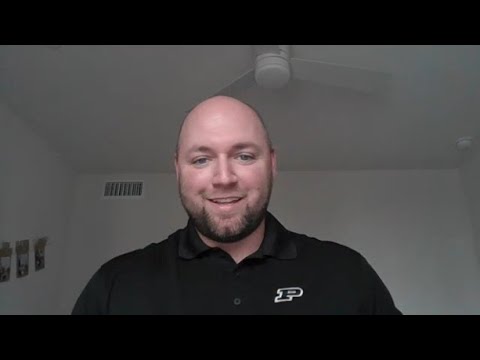
- Photo: Concentrating on Chromatography: From Lab Building to Fingerprint Aging: Dr. Petr Vozka on Advanced Chromatography
- Video: Concentrating on Chromatography: From Lab Building to Fingerprint Aging: Dr. Petr Vozka on Advanced Chromatography
In this episode of Concentrating on Chromatography, host David Oliva interviews Dr. Petr Vozka, Assistant Professor at California State University, Los Angeles, about his journey establishing the Complex Chemical Composition Analysis Lab (C³AL).
Dr. Vozka shares how he built his research facility during the pandemic, focusing on creating opportunities for first-generation and underrepresented undergraduate students. Learn about the groundbreaking LECO-C³AL partnership that provides students with hands-on experience using advanced comprehensive two-dimensional gas chromatography (GC×GC) instrumentation.
The conversation explores:
- Building a cutting-edge analytical chemistry lab during challenging circumstances
- Creating research opportunities for underrepresented undergraduate students
- The innovative fingerprint aging research in collaboration with the Hertzberg-Davis Forensic Science Center
- How multidimensional chromatography enables detection of thousands of compounds in complex mixtures
- The workflow for analyzing fingerprint samples using GC×GC-TOFMS
- The advantages of nitrogen generators in laboratory settings
Dr. Vozka also discusses the upcoming 17th Multidimensional Chromatography Workshop (MDCW), a FREE conference taking place January 13-15, 2026, in Williamsburg, VA, bringing together experts in multidimensional separation techniques.
Video Transcription
- David: Hi Peter, thanks for joining us today. I was hoping you could talk about what led to establishing your laboratory and how it’s evolved since its inception.
- Peter: Hi David, thanks for having me – it’s a pleasure.
My lab is called the Complex Chemical Composition Analysis Lab – we sometimes just call it “the lab.” I joined the university in 2020, right at the beginning of the pandemic. Everything was online, I couldn’t get onto campus, and even my prospective students couldn’t come in.
I had lab space, but no instruments. So I spent that time writing proposals and looking for funding to actually build a lab from scratch. The first key instrument I was able to secure funding for was a GC–FID system, later upgraded to a GC–MS/FID with a split flow to two detectors. It’s a simple single-quadrupole system that I still use today for teaching and some research.
Because I’m passionate about applying analytical chemistry to real-world problems, it was obvious early on that I’d need to build a network and connect with both academic researchers and industry partners who share similar interests. That’s how the lab identity and our outreach really began – I created a website, started doing outreach, and tried to lay the groundwork for collaboration.
Our lab is a bit different from what some people might expect: we work mostly with undergraduate students. Many of them are from underrepresented and economically challenged backgrounds, and most are first-generation college students. That’s something I can personally relate to – I’m a first-generation student myself and I don’t come from a wealthy background.
A lot of our students come from families where English isn’t spoken fluently at home. But what’s really special is how much those families value education. They know that if their child gets a degree and a good job, it can change not just that one life, but the trajectory of the whole family. That really resonated with me, and I kept asking myself: What more can I do to support these students?
That’s when we partnered with LECO Corporation, a company that genuinely cares about supporting research and training in challenging environments. With LECO’s support, we were able to acquire an advanced GC–MS and a comprehensive two-dimensional GC×GC–MS system.
At that point we established what we now call the LECO–Complex Chemical Composition Analysis Lab – a one-of-a-kind research facility focusing on comprehensive 2D gas chromatography. The goal is not just to use these instruments for research, but also to train undergraduates, graduate students, and even faculty in advanced analytical techniques.
Because LECO placed their instruments here on the West Coast, we can host and train people, and in return they get hands-on experience with the latest technology. When we officially announced the partnership in October 2023, things really took off – it opened a lot of doors for students to get real, hands-on training that’s not common at the undergraduate level.
Most undergrads don’t get to run complex instruments; maybe they see them in teaching labs, but they rarely maintain or troubleshoot them. In our lab, they do everything: sampling, method development, troubleshooting, maintenance.
My goal is for this lab to act as a pipeline:
- Into industry, where they arrive with practical experience that makes them immediately useful.
- And into PhD programs, where they already have GC×GC experience and can save their future advisors months or even years of training time.
Over time we’ve also brought in additional partnerships – for example, with VICI DBS for gas generators and NXT Power for backup power solutions. Their support has made the lab more sustainable and reliable. That’s the short story of how the lab was built and how it’s evolving.
- David: Speaking of partnerships, I’d love to get your honest review of the VICI Mistral Evo 35 generator – how has it worked for you and how user-friendly has it been?
- Peter: Great question. We opened the lab in October 2023, and we already had the generator installed at that point.
We use the generator to supply both of our instruments – the GC×GC–FID and the GC×GC–MS. So one generator supports two systems. The instruments themselves are powered on 24/7, even though we don’t run samples all the time.
So far, we’ve only needed to do routine maintenance once: changing filters and following the manual. It’s not complicated, it’s not expensive, and it’s something you do roughly once a year (don’t quote me on the exact interval, but it’s infrequent).
Is the generator a bit loud? Yes – but they all are. We’ve considered putting it in a hallway or a side room and running lines through the wall. For now, if we have group meetings, we simply close one of the doors and it’s fine.
From a usability standpoint, it was straightforward:
- We opened the box,
- Rolled it into place (it’s on wheels),
- Connected it, turned it on,
- And basically haven’t had to worry about it since.
The generator was generously provided by VICI DBS, and so far it’s been very reliable. We also have an FID Tower system for hydrogen, which similarly eliminates the need for hydrogen cylinders.
This is important because, like many people, I have experience hauling gas cylinders around. At Purdue, I used to push nitrogen tanks from one building to another – and that was not a short distance. In summer it was extremely hot, in winter there was snow and ice. Back then I was still doing powerlifting, so I was physically able to handle it, but it’s not something everyone can or should be doing.
At our current campus, access is easier, but we still had situations where the elevator broke, and suddenly you couldn’t easily get cylinders to the lab. So moving away from cylinders to generators has been a big step forward in safety, sustainability, and convenience – exactly what we wanted.
- David: I’d like to transition into what your lab is doing with fingerprint aging models. You have a great lab website with a lot of detail, but could you explain how your chemical analysis approach differs from older techniques?
- Peter: Sure. First, thanks for the kind words about the website – I take that seriously.
I’ve realized how important it is to maintain a good web presence: a clear lab website, up-to-date Google Scholar, being active on LinkedIn, and so on. It’s not just about me; it’s primarily for my students.
When they graduate and move elsewhere, it really helps if future employers or advisors can quickly see what our lab does. I’ve seen amazing mentors in the Czech Republic who are extremely strong scientists, but if they don’t have a visible online presence, it can be harder for their students to show where they come from and what they’ve done. So a lot of my effort there is for my students’ benefit.
Now, about fingerprint aging. Our current approach isn’t replacing earlier methods; it’s building on them. The big difference is the level of detail we can now achieve thanks to GC×GC combined with time-of-flight or high-resolution mass spectrometry, and now also with more sensitive detectors like BTX-optimized MS systems.
For very faint fingerprints, higher sensitivity is crucial because the volatile compounds we’re interested in might be present at extremely low concentrations. With modern GC×GC–MS, we can detect compounds present at very low levels that older methods would miss.
The core idea behind fingerprint aging is to:
- Identify a set of marker compounds – both volatile and less volatile.
- Track how their concentrations and ratios change over time.
By studying these patterns, we aim to develop models that can estimate how long ago a fingerprint was deposited at a crime scene. It’s a very complex challenge, but the potential forensic value is huge.
Another exciting aspect is the collaboration driving this project. On campus, we have a Forensic Science Center that houses the actual crime labs of the Los Angeles County Sheriff’s Department and the LAPD. Real cases are being worked on downstairs, in the same building.
The university then built a second floor for the Master’s program in Forensic Science. Students in that program:
- Get trained on advanced instruments like GC×GC,
- And can then literally go downstairs and see how their knowledge applies to real cases.
Several of my students move into that forensic science program and stay involved in our research. It’s a very tight collaboration between research and practice, and it’s a great example of bringing academic methods into real forensic workflows.
- David: Could you walk through the workflow you use for fingerprint analysis – from sample preparation through GC×GC?
- Peter: Absolutely.
Our process is designed to mirror real crime scene procedures as closely as possible, while still giving us the analytical flexibility we need in the lab.
- Fingerprint deposition
We start by placing fingerprints on clean microscope slides. These serve as controlled surfaces so we can compare samples more reliably. - Extraction
We then extract the chemical compounds from the fingerprint residue using a protocol similar to what crime scene investigators might use. The main difference is that we introduce a specific solvent to recover a broad range of compounds – both volatile and semi-volatile. - Solvent removal – nitrogen blowdown
After extraction, we’re left with a solvent containing the chemical signature of the fingerprint. Before we can inject it into GC×GC–MS, we need to remove that solvent without losing the analytes. - Reconstitution and internal standard
Once the solvent is removed, we reconstitute the residue in a controlled solvent system and add an internal standard for quantification and QC. - GC×GC–MS analysis
Finally, we inject the sample into our GC×GC–MS or GC×GC–FID system. This gives us a detailed chemical fingerprint – essentially a high-resolution map of the compounds present in the fingerprint residue. - Data analysis and modeling
That’s where the real work begins: we analyze the chromatograms, track how specific compound profiles change over time, and feed that information into aging models.
This is where the Organomation MicroVap system comes in. It allows us to evaporate the solvent very quickly and efficiently under nitrogen, minimizing the risk of losing target compounds. It speeds up our workflow and improves reproducibility.
It sounds simple when described like this, but every step is carefully optimized to preserve as much chemical information as possible. Sometimes the smallest detail – a very minor compound – can be crucial when you’re trying to estimate fingerprint age or link it back to a person or circumstance.
We also test different conditions – for example, one of my students is graduating soon and has been studying how different lighting conditions affect compound ratios over time.
- David: You’re using a lot of cutting-edge technology. Most labs I talk to mention GC–MS or LC–MS, but you’re deeply invested in GC×GC. How are these newer technologies helping you do more than older techniques would allow?
- Peter: I could talk about GC×GC all day, but I’ll try to keep it concise.
GC×GC has really opened the door to analyzing highly complex mixtures. Almost everything we study – human breath, ambient air, fuels, plastic-derived oils – is a complex mixture of hundreds or thousands of compounds.
With 1D GC, there’s a hard limit to how much separation you can achieve in a reasonable run time. To get the same separation power as GC×GC using 1D GC, you’d need something like a 100-meter column and a run time on the order of a year – obviously impossible.
GC×GC gives you:
- Two dimensions of separation,
- The ability to resolve hundreds or thousands of peaks in a single run,
- And a much clearer picture of the chemical landscape.
I first fell in love with GC×GC during my PhD at Purdue, where I worked on alternative aviation fuels in collaboration with the U.S. Navy. Jet fuel is made of thousands of compounds, and GC×GC was the only realistic way to resolve them in detail.
Now, in my current lab, we apply GC×GC to:
- Fuels made from plastic waste,
- Complex hydrocarbon mixtures containing large numbers of olefins in addition to paraffins and aromatics,
- And forensic and environmental samples.
One of our ongoing projects is developing methods to quantify olefins in great detail – by carbon number and type. That level of detail would have been nearly impossible just a few years ago.
At the same time, we’re very conscious of accessibility. Time-of-flight MS is powerful, but also expensive. So we put a lot of effort into developing methods that can be transferred to GC×GC–FID, which is far more affordable and widely available.
The idea is that you don’t need a million-dollar setup to benefit from multidimensional chromatography – with smart method design, labs equipped only with FID can still leverage much of the separation power of GC×GC.
- David: For people interested in learning more, what would you like them to know about the Multidimensional Chromatography Workshop (MDCW) you’re involved with?
- Peter: The Multidimensional Chromatography Workshop is honestly my favorite conference in the GC×GC world.
It’s held annually, and thanks to our sponsors, registration is completely free. It typically runs for three days and includes:
- Free registration,
- Lunch each day,
- Dinner, coffee, and networking events.
We alternate locations between Europe and the U.S., so wherever you’re based, it will likely be near you at some point.
The workshop covers:
- Comprehensive 2D GC,
- Multidimensional LC,
- And more recently, supercritical fluid chromatography.
So it’s not just GC×GC – it’s a broad platform for multidimensional separation science.
What really makes MDCW special is the atmosphere: it’s welcoming, supportive, and collaborative. People genuinely root for each other. Many long-term collaborations and projects have started over coffee or poster sessions there.
We’re also committed to accessibility of content. Talks and posters are recorded (where presenters agree) and hosted online via the LabRulez platform, so the content is available even after the event. It’s as close to an open-access conference as we can make it.
The next MDCW is scheduled for January 13–15, 2026 in Williamsburg, Virginia, and I’m really looking forward to it.
- David: Is there anything we missed about your lab that you’d like people to know?
- Peter: A couple of things.
First, like many public institutions, our university is facing budget cuts, which makes things challenging. If any alumni or supporters are interested in helping, even small donations can make a big difference for our students and our lab.
Second, we’re always looking for motivated students and collaborators. The GC×GC and multidimensional chromatography community is still relatively small, but it’s growing and the research is very exciting.
If you’re in California or considering working with GC×GC, separations, or complex mixtures – whether as a student, postdoc, or collaborator – feel free to reach out. We’re always happy to talk, share ideas, and explore new projects.
This text has been automatically transcribed from a video presentation using AI technology. It may contain inaccuracies and is not guaranteed to be 100% correct.
Concentrating on Chromatography Podcast
Dive into the frontiers of chromatography, mass spectrometry, and sample preparation with host David Oliva. Each episode features candid conversations with leading researchers, industry innovators, and passionate scientists who are shaping the future of analytical chemistry. From decoding PFAS detection challenges to exploring the latest in AI-assisted liquid chromatography, this show uncovers practical workflows, sustainability breakthroughs, and the real-world impact of separation science. Whether you’re a chromatographer, lab professional, or researcher you'll discover inspiring content!
You can find Concentrating on Chromatography Podcast in podcast apps:
and on YouTube channel