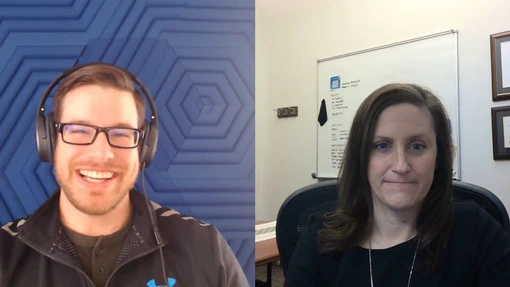
Unraveling Coffee's Potato Taste Defect: Insights from 2D Gas Chromatography

- Photo: Concentrating on Chromatography: Unraveling Coffee's Potato Taste Defect: Insights from 2D Gas Chromatography
- Video: Concentrating on Chromatography: Unraveling Coffee's Potato Taste Defect: Insights from 2D Gas Chromatography
Dr. Caitlin Cain discusses her groundbreaking research on potato taste defect (PTD) in coffee using comprehensive two-dimensional gas chromatography (GC×GC). Learn how this advanced technique revealed 359 class-distinguishing analytes related to PTD, providing unprecedented insights into this complex flavor issue.
Key points covered:
- Advantages of GC×GC over traditional one-dimensional GC for complex samples
- Optimization of headspace solid-phase microextraction for coffee volatile analysis
- Surprising findings from the comprehensive volatile profile of PTD-affected coffee
- Implications for coffee farmers and the industry in combating PTD
Discover how this research is advancing our understanding of coffee chemistry and potentially improving coffee quality worldwide.
Video Transcription
Interviewer: Caitlyn, congratulations on being recognized as a Rising Star in Separation Science. How did it feel to receive the Outstanding Achievement in Gas Chromatography award?
Caitlyn: Thank you! It was a huge honor. The award essentially recognized the full five years of my PhD in GC. I’ve since moved from GC into LC for my postdoc, so seeing my PhD work acknowledged like that was really special. I cared deeply about those projects, and it was gratifying that others saw their value.
Interviewer: Had you come across Organomation or used nitrogen evaporators before this?
Caitlyn: No—this was my first exposure to the company. In my GC sample prep we didn’t do much with evaporation-based extractions, so the award actually prompted me to learn more about that side of sample preparation.
Interviewer: Big-picture question: it feels like many applications are moving from GC to LC. What’s your take?
Caitlyn: I don’t see it as LC “replacing” GC. Both are excellent but target different application spaces. GC shines in areas like petrochemical/fuels and many food analyses; LC is great for metabolomics and even proteomics. I’m passionate about bringing GC and LC together—looking at volatile and nonvolatile sides of the same problem.
Interviewer: What initially drew you to analytical chemistry and chromatography?
Caitlyn: I’ve always loved chemistry—my mom is a high-school chemistry teacher. As an undergrad, I worked with Dr. Saron and Dr. Maryann Collinson on LC stationary-phase gradients and column modifications. They treated me like a grad student: my own project, my own milestones. Watching peaks emerge and seeing a modification succeed (or not) hooked me on chromatography. That led to my PhD and now my postdoc.
Interviewer: Advice for early-career scientists who want to contribute meaningfully in analytical chemistry?
Caitlyn: Zoom out and connect ideas. It’s fine to focus on an application or a single technique (GC or LC), but ask what concepts transfer across techniques. A lot of exciting science happens at the intersections. And embrace failure—I have plenty of bad ideas. Treat setbacks as learning opportunities on the twisty research path.
Interviewer: What innovations might shape separation science over the next few years?
Caitlyn: We’ll keep chasing higher resolution and peak capacity. On the instrument side: new column chemistries, moving to smaller-ID/capillary formats in LC, and on the GC side further chemistry refinements and multidimensional separations (a major focus in my PhD). On the computational side: non-targeted analysis, stronger math and statistics to extract meaningful analytes, and growing roles for machine learning and AI—areas I’m beginning to explore.
Interviewer: Let’s talk about your 2024 publication on “potato taste defect” (PTD) in coffee. How did that project start?
Caitlyn: Through collaboration. An ethical coffee roaster sourcing from African regions asked researchers at Seattle University (a primarily undergraduate institution) to investigate. They began by quantifying a known PTD biomarker—2-isopropyl-3-methoxypyrazine (IPMP)—and quickly saw coffee’s complexity: hundreds of peaks, with hints that more than IPMP might be changing. They then approached my PhD lab at the University of Washington because we specialize in comprehensive two-dimensional gas chromatography (GC×GC) and non-targeted discovery.
Interviewer: For readers new to GC×GC—how does it improve on one-dimensional GC for complex matrices?
Caitlyn: In 1D GC, separation is mainly by boiling point on a single column before detection (MS, FID, etc.). In GC×GC, effluent from the first column is periodically “sliced” by a modulator and re-injected into a second column with complementary selectivity. The continuous 1D→2D process boosts selectivity and greatly increases peak capacity—turning unresolved 1D “humps” into resolved features in 2D space.
Interviewer: How did you optimize headspace SPME for coffee volatiles, and what were the hurdles?
Caitlyn: Seattle University had an initial HS-SPME method tuned for IPMP, but it required 60 minutes at low temperature—not ideal when you want to run hundreds of samples by GC×GC. I balanced analyte signal against throughput by optimizing extraction temperature and time. By increasing temperature and halving extraction time, we maintained comparable analyte signal while improving overall throughput.
Interviewer: Your study reported 359 class-distinguishing analytes related to PTD. What stood out most?
Caitlyn: Three things:
- We confirmed IPMP changes between PTD and clean coffee—but found ~358 additional volatile features shifting as well.
- Roughly 300 analytes showed higher signal in clean coffee and dropped in PTD samples. Many of these (e.g., pyrazines, furans) drive desirable aroma—cocoa, nutty, roasted notes. Their depletion in PTD samples erases pleasant flavors, which amplifies the earthy, moldy, “potato-like” perception.
- Among analytes elevated in PTD samples, we saw more phenols and phenol derivatives formed during roasting (often linked to chlorogenic acid degradation). Other coffee studies suggest microbial activity can raise chlorogenic acids in green beans; after roasting that could explain higher phenolic products—potentially connecting microbial infestation with the PTD profile we observed.
Interviewer: Why does potato taste defect matter?
Caitlyn: Nobody wants coffee that tastes like potatoes—and with PTD you also lose the good flavors. It’s a double hit: the off-note increases while positive aroma compounds decline.
Interviewer: How can your findings help farmers and the coffee industry?
Caitlyn: PTD is under-studied; causes and mechanisms aren’t well established. Our comprehensive volatile profile shows what’s happening in the beans, giving farmers and roasters a data-driven baseline to develop interventions. Ideally this helps direct resources toward mitigating the Antestia bug (linked to PTD in some regions) and toward biochemical studies to connect insect damage to volatile outcomes. Ultimately, the goal is practical solutions that protect quality and help African farmers command better prices.
Interviewer: Anything we didn’t cover?
Caitlyn: That’s the gist. GC×GC was a particularly powerful tool here. And thank you again—to you and to Organomation for sponsoring the award.
Key takeaways
- GC and LC are complementary, not competing; integrating both offers fuller chemical insight (volatiles + nonvolatiles).
- GC×GC dramatically increases peak capacity and resolves complex matrices like coffee headspace.
- Optimized HS-SPME (higher T, shorter time) maintained signal while improving throughput.
- PTD impacts hundreds of volatiles: it removes desirable aromas (pyrazines, furans) and raises phenolic products—consistent with microbial influences and roasting chemistry.
- Future drivers: new column chemistries, multidimensional separations, and ML/AI for non-targeted discovery.
This text has been automatically transcribed from a video presentation using AI technology. It may contain inaccuracies and is not guaranteed to be 100% correct.
Concentrating on Chromatography Podcast
Dive into the frontiers of chromatography, mass spectrometry, and sample preparation with host David Oliva. Each episode features candid conversations with leading researchers, industry innovators, and passionate scientists who are shaping the future of analytical chemistry. From decoding PFAS detection challenges to exploring the latest in AI-assisted liquid chromatography, this show uncovers practical workflows, sustainability breakthroughs, and the real-world impact of separation science. Whether you’re a chromatographer, lab professional, or researcher you'll discover inspiring content!
You can find Concentrating on Chromatography Podcast in podcast apps:
and on YouTube channel