GCMS
More information
WebinarsAbout usContact usTerms of use
LabRulez s.r.o. All rights reserved. Content available under a CC BY-SA 4.0 Attribution-ShareAlike
Author
LabRulez
LabRulez
Everything from the world of analytical chemistry in one place. We connect people in solving their problems. At Labrulez you will find all the necessary information easily, quickly and clearly. Stop searching and start finding.
Tags
Scientific article
Science and research
LinkedIn Logo

Emissions of Halomethanes from Bioweathered Lopingian Kupferschiefer Black Shale (Fore-Sudetic Monocline, SW Poland)
Mo, 4.8.2025
| Original article from: Environ. Sci. Technol. Lett. 2025
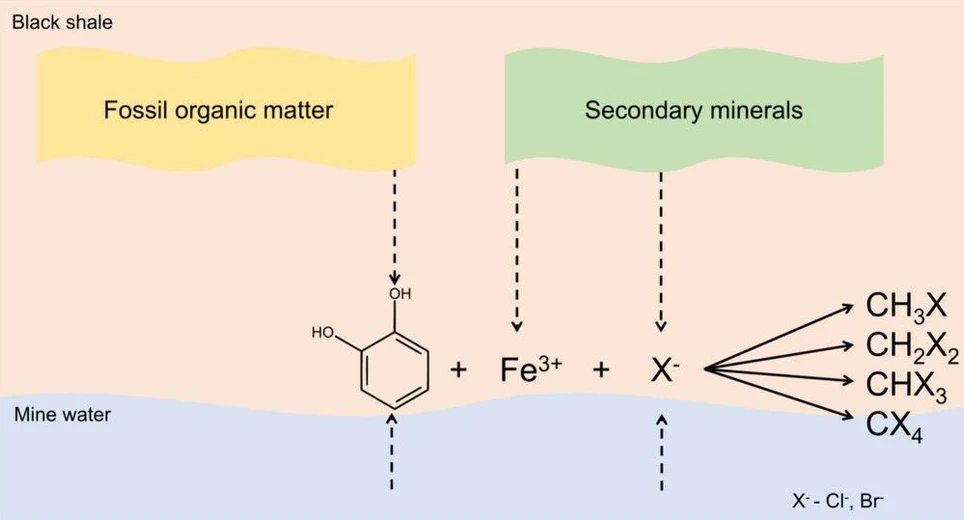
Kupferschiefer black shale in SW Poland emits halomethanes, including tetrachloromethane, via Fe³⁺-catalyzed abiotic reactions, revealing a previously unknown natural source.
<p><strong>Environ. Sci. Technol. Lett. 2025:</strong> Graphical abstract</p>

Environ. Sci. Technol. Lett. 2025: Graphical abstract

Halomethanes (HMs) are key contributors to ozone depletion and climate forcing, yet their natural sources remain undercharacterized. This study examines bioweathered Lopingian Kupferschiefer black shale in SW Poland as a potential source of HM emissions. Rich in fossil organic matter (FOM) and iron-bearing minerals, the shale was found to emit various chlorinated and brominated mono- to tetrahalomethanes.

Using gas chromatography, the researchers propose a mechanism involving Fe³⁺-catalyzed abiotic reactions with organic precursors and halides. The findings identify a previously unrecognized deep subsurface source of halomethanes and report, for the first time, natural emission of tetrachloromethane.

The original article

Emissions of Halomethanes from Bioweathered Lopingian Kupferschiefer Black Shale (Fore-Sudetic Monocline, SW Poland)

Michał Zalesko*, Robert Stasiuk, Renata Matlakowska

Environ. Sci. Technol. Lett. 2025, XXXX, XXX, XXX-XXX

https://doi.org/10.1021/acs.estlett.5c00593

licensed under CC-BY 4.0

Selected sections from the article follow. Formats and hyperlinks were adapted from the original.

Halogenated methane derivatives (halomethanes, HMs) are significant sources of atmospheric halogens, which play an important role in ozone depletion and contribute to radiative forcing. (1,2) The most abundant HM in the atmosphere is chloromethane, which is responsible for 16.9% of tropospheric chlorine. (2) In addition to anthropogenic sources, several natural sources of HMs have been described. (3,4) However, the amount of naturally produced HMs appears to be underestimated. (2) Bahlmann et al. (2019) suggest the existence of a major missing source of atmospheric chloromethane. (5)

Therefore, it is worth considering what other natural sources exist. Studies by Keppler et al. (2000) indicate that HMs were formed from natural organic matter through abiotic processes that were catalyzed by Fe3+. (6,7) In 2009, Huber et al. presented the mechanism of trihalomethane formation from dihydroxylated monocyclic aromatic hydrocarbons (DMAHs) in the presence of Fe3+ and (H2O2). The organic compound is oxidized and simultaneously halogenated by halide radicals in the presence of reactive oxygen species (ROS), both arising from a Fenton-like reaction between H2O2, Fe3+, and halides. (8−10)

In our studies, we consider whether iron-catalyzed HM formation processes can occur in highly mineralized deposits of fossil organic matter (FOM). It is worth noting that FOM, in the form of kerogen, is considered to be the largest reservoir of organic carbon on Earth. It is estimated that kerogen contains ∼15,000,000 Gt of fossil organic carbon, an amount that significantly exceeds the amount (∼4,130 Gt) found in fossil fuels (such as gas, oil and coal). (11)

This study focuses on the organic-rich deep black shale environment, represented by the Kupferschiefer black shale (BS), which contains both FOM (1–30 wt %, average 6 wt %, corresponding to type II kerogen) and Fe-containing minerals. (12−14) The extractable fraction of FOM consists of long-chain saturated and unsaturated hydrocarbons, polycyclic aromatic hydrocarbons (PAHs), and acid esters. (15) The ore minerals in BS are mainly represented by bornite [Cu5FeS4], chalcocite [Cu2S], digenite [Cu9S5], chalcopyrite [CuFeS2], pyrite [FeS2], sphalerite [ZnS], galena [PbS], covellite [CuS], and minerals from the tennantite–tetrahedrite series [(Cu, Fe)12As4S13–(Cu, Fe)12Sb4S13]. (16)

Previous studies indicate colonization by microorganisms and the bioweathering of outcropped Kupferschiefer BS profiles. (15) This study confirmed that FOM underwent enzymatic oxidation, mediated primarily by chemoorganoheterotrophic bacteria. Furthermore, the dissimilative enzymatic oxidation of primary sulfidic minerals by chemolithotrophic bacteria was detected.

This study aims to investigate whether bioweathered BS can be a source of HM emissions. In addition, we attempted to predict potential substrates and factors of HM formation. As sources of these substrates and factors, we considered BS bioweathering products and mine water (MW) (Figure SI1/1): (1) as potential substrates, we indicated monocyclic aromatic hydrocarbons (MAHs) formed by FOM bioweathering; (2) as a halogenation factor, we indicated Fe3+ arising from the oxidation of primary Fe2+-containing minerals; (3) as a source of halides, we indicated high saline MW and secondary minerals on the surface of weathered BS.

In order to achieve these objectives, we studied bioweathered BS covered by secondary minerals and MW. The following studies were conducted: (1) detection and identification of HMs; (2) prediction of MAHs in FOM extracted from bioweathered BS and MW; (3) detection of Fe and halides in bioweathered BS and MW; and (4) Fe3+ and halide detection in secondary minerals present on the surface of bioweathered BS.

This experimental approach has enabled us to propose a hypothetical mechanism of HM formation in deep underground environments and reveal a previously unknown natural source of HMs.

Methods and Materials

Extraction of Volatile Organic Compounds

Volatile organic compounds were extracted using a modified EPA Method 5021A (2014). (17) A hundred grams of BS were placed in 100 mL bottles with septa, and 50 mL of methanol was added. The mixture was incubated at 50 °C for 72 h. For analysis, gas samples were collected using a gastight syringe (Hamilton Company, USA), or solid-phase microextraction (SPME, 65 μm, PDMS/DVB, Supelco, USA) was used. (18) More detailed information is provided in SI1.

Extraction of Bituminous and Dissolved Organic Compounds

Organic compounds were extracted from BS and MW using a mixture of dichloromethane/methanol with an automatic Soxhlet apparatus (SER 158, Velp, Italy) and chloroform in a separatory funnel, respectively. More detailed information is provided in SI1.

Gas Chromatography with Mass Spectrometry (GC-MS) and Electron Capture Detector (GC-ECD)

Volatile compounds were analyzed using GC-MS (Agilent GC 7890A, MS 5975c, Agilent Technologies, USA) and GC-ECD (GC 7890A, μECD, Agilent Technologies, USA), both equipped with a FS CAP VOCOL column (60 m × 0.25 mm I.D., 1.5 μm film thickness, Supelco, USA) according to modified EPA Method 8260(1986). (19) Commercial solutions of CH3Cl (Restek, Germany), CHCl2, and CHCl3 (VWR Chemicals, USA), as well as the VOA Stock Mix 8260B MegaMix Calibration Mix (Restek, Germany), were used as external standards.

Compounds extracted from BS and MW were analyzed by GC-MS (Agilent GC 7890A, MS 5975c) using an HP5-MS column (30 m × 0.25 mm I.D., 0.25 μm film thickness, Agilent Technologies, USA). The obtained mass spectra were compared with the Wiley 3.2 database (The Wiley Registry of Mass Spectral Data, eighth edition). More details are provided in SI1.

Inductively Coupled Plasma with Mass Spectrometry (ICP-MS)

The elemental analysis of the weathered BS and MW was determined by ACME Analytical Laboratories Ltd. (Vancouver, BC, Canada). LF202 Total Whole Rock Characterization with AQ200 add-on (LF302 + LF100-EXT) and SO200 – ICP-MS Analysis of Natural Waters were conducted on BS and MW samples, respectively.

X-ray Fluorescence (XRF)

Detection of Fe, Cl, and Br in BS was performed by using a Bruker S1 Titan Hand-held ED-XRF Analyzer.

Scanning Electron Microscopy (SEM) with Energy Dispersive X-ray Spectroscopy (EDS)

Analysis was performed using backscattered and secondary electron techniques with a JEOL JSM-6380LA SEM instrument (JEOL Co., Japan). The chemical composition was determined by using a CAMECA SX100 microprobe (CAMECA, France). More details are provided in SI1.

X-ray Powder Diffraction (XRD) Analyses

XRD analyses of powdered samples were conducted using a PHILIPS X’PERT PRO diffractometer (PANalytical B.V., The Netherlands). The samples were manually ground in an agate mortar, mounted on a standard metal holder, and irradiated with CoKα radiation. Data was collected over a 2Θ range of 2.505° to 95.996° in step-scan mode, with a step size of 0.001° 2Θ and a count time of 1 s per step.

Results and Discussion

Identification of HM Emitted from the Weathered BS

Using GC-MS with the headspace extraction method, chloromethane and dichloromethane were identified in all BS samples analyzed with high probability (86–94%) (Figure 1; Figure SI2/1). HMs were identified in all GC-ECD analyses. Using SPME, bromodichloromethane, dibromochloromethane, dichloromethane, tetrachloromethane, and trichloromethane were identified in all BS samples. Chloromethane was detected in all BS samples, except BS2, while dibromomethane was present exclusively in BS2. Relative abundance (z-score) analyses indicate higher emissions of HM from samples collected at site TS2 (Figure 1).

Environ. Sci. Technol. Lett. 2025: Figure 1. A relative abundance of HMs found in BSs through SPME extraction and GC-ECD analysis. An asterisk indicates compounds identified by GC-MS. GC-ECD chromatograms, a detailed list, and mass spectra of the identified HMs can be found in SI2 (Table SI2/1–2; Figures SI2/1–8). GC-ECD chromatograms of standards and controls can be found in SI2 (Figures SI2/9–11).Environ. Sci. Technol. Lett. 2025: Figure 1. A relative abundance of HMs found in BSs through SPME extraction and GC-ECD analysis. An asterisk indicates compounds identified by GC-MS. GC-ECD chromatograms, a detailed list, and mass spectra of the identified HMs can be found in SI2 (Table SI2/1–2; Figures SI2/1–8). GC-ECD chromatograms of standards and controls can be found in SI2 (Figures SI2/9–11).

Environ. Sci. Technol. Lett. 2025: Figure SI2/7. Chromatograms of the volatile phase obtained from methanol extracts of TS1 (GC-ECD, SPME).Environ. Sci. Technol. Lett. 2025: Figure SI2/7. Chromatograms of the volatile phase obtained from methanol extracts of TS1 (GC-ECD, SPME).

Prediction of Potential Organic Substrates for HM Formation in Bioweathered BS and MW

Potential organic substrates were predicted with Level 2 confidence according to Koelmel et al. 2022. (20) In the extractable fraction of BSs several MAHs are present: benzoic acid and 1,2-dicarboxybenzene derivatives (Figure 2). The MAH compounds may undergo enzymatic oxidation through microbial dioxygenases and monooxygenases to DMAHs, such as protocatechuate and catechol. (15) Esters of 1,2-dicarboxybenzene acids can be deesterified by bacterial esterases. (21) In MWs, the diversity of 1,2-dicarboxybenzene derivatives is higher, which may indicate the ongoing degradation and transformation of organic matter (Figure 2). The presence of dioxygenases, monooxygenases and esterases was previously confirmed in a metagenome and metaproteome of microbiocenoses that inhabit the bioweathered BS. (15)
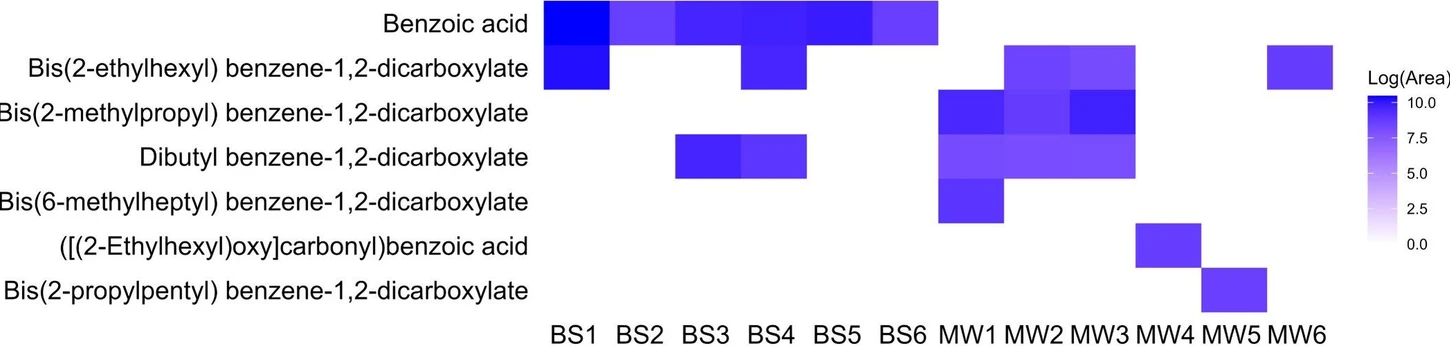
Environ. Sci. Technol. Lett. 2025: Figure 2. The abundance of benzoic acid and 1,2-dicarboxylic acid derivatives predicted with Level 2 confidence in BSs and MWs. Mass spectra of the predicted organic compounds are provided in SI3.Environ. Sci. Technol. Lett. 2025: Figure 2. The abundance of benzoic acid and 1,2-dicarboxylic acid derivatives predicted with Level 2 confidence in BSs and MWs. Mass spectra of the predicted organic compounds are provided in SI3.

LabRulez
LinkedIn Logo
 

Related content

Analysis of Aroma Components in Apples Using the Smart Aroma Database

Applications
| 2026 | Shimadzu
Instrumentation
GC/MSD, GC/SQ, HeadSpace
Manufacturer
Shimadzu
Industries
Food & Agriculture

Analysis of Acetaldehyde and Limonene in Recycled PET Using an HS-GCMS System (Carrier Gas: H2)

Applications
| 2026 | Shimadzu
Instrumentation
GC/MSD, GC/SQ, HeadSpace
Manufacturer
Shimadzu
Industries
Energy & Chemicals

What Causes GC Capillary Column Performance Degradation, and How Can I Prevent It?

Technical notes
| 2026 | Agilent Technologies
Instrumentation
Consumables, GC columns
Manufacturer
Agilent Technologies
Industries
Other

Aromatic Component Analysis of Gasoline According to ASTM D5580 Using the Brevis GC- 2050 Gas Chromatograph

Applications
| 2025 | Shimadzu
Instrumentation
GC
Manufacturer
Shimadzu
Industries
Energy & Chemicals

Micro GC Analysis of Permanent Gas Impurities in PEM Fuel Cell-Grade Hydrogen

Applications
| 2025 | Agilent Technologies
Instrumentation
GC
Manufacturer
Agilent Technologies
Industries
Energy & Chemicals
 

Related articles

JUNIOR STAR Grants at UCT Prague: Two talented women from abroad driving innovation in science
Article | Scientists

JUNIOR STAR Grants at UCT Prague: Two talented women from abroad driving innovation in science

Two outstanding early-career researchers at UCT Prague, Filipa Oliveira and Stella Gonsales, received prestigious GAČR JUNIOR STAR grants for innovative research in materials science and sustainable chemistry.
UCT Prague
tag
share
more
Revealing hidden chemicals at sea
Article | Health

Revealing hidden chemicals at sea

Flame retardants were found throughout cruise ship interiors, with some areas showing much higher levels. A new RECETOX and NIVA study explores potential exposure risks for crew and passengers.
RECETOX - Centrum pro výzkum toxických látek v prostředí
tag
share
more
News from LabRulezGCMS Library - Week 06, 2026
Article | Application

News from LabRulezGCMS Library - Week 06, 2026

This week we bring you technical note by Agilent Technologies and application notes by BaySpec, Metrohm and Shimadzu!
LabRulez
tag
share
more
Research from IOCB Prague reveals a previously unknown mechanism of genetic transcription
Article | Science and research

Research from IOCB Prague reveals a previously unknown mechanism of genetic transcription

Scientists at IOCB Prague reveal a previously unknown mechanism that initiates gene transcription. Using cryo-EM, they uncover how alarmone molecules enable RNA synthesis under stress.
Institute of Organic Chemistry and Biochemistry of the Czech Academy of Sciences
tag
share
more
 

Related content

Analysis of Aroma Components in Apples Using the Smart Aroma Database

Applications
| 2026 | Shimadzu
Instrumentation
GC/MSD, GC/SQ, HeadSpace
Manufacturer
Shimadzu
Industries
Food & Agriculture

Analysis of Acetaldehyde and Limonene in Recycled PET Using an HS-GCMS System (Carrier Gas: H2)

Applications
| 2026 | Shimadzu
Instrumentation
GC/MSD, GC/SQ, HeadSpace
Manufacturer
Shimadzu
Industries
Energy & Chemicals

What Causes GC Capillary Column Performance Degradation, and How Can I Prevent It?

Technical notes
| 2026 | Agilent Technologies
Instrumentation
Consumables, GC columns
Manufacturer
Agilent Technologies
Industries
Other

Aromatic Component Analysis of Gasoline According to ASTM D5580 Using the Brevis GC- 2050 Gas Chromatograph

Applications
| 2025 | Shimadzu
Instrumentation
GC
Manufacturer
Shimadzu
Industries
Energy & Chemicals

Micro GC Analysis of Permanent Gas Impurities in PEM Fuel Cell-Grade Hydrogen

Applications
| 2025 | Agilent Technologies
Instrumentation
GC
Manufacturer
Agilent Technologies
Industries
Energy & Chemicals
 

Related articles

JUNIOR STAR Grants at UCT Prague: Two talented women from abroad driving innovation in science
Article | Scientists

JUNIOR STAR Grants at UCT Prague: Two talented women from abroad driving innovation in science

Two outstanding early-career researchers at UCT Prague, Filipa Oliveira and Stella Gonsales, received prestigious GAČR JUNIOR STAR grants for innovative research in materials science and sustainable chemistry.
UCT Prague
tag
share
more
Revealing hidden chemicals at sea
Article | Health

Revealing hidden chemicals at sea

Flame retardants were found throughout cruise ship interiors, with some areas showing much higher levels. A new RECETOX and NIVA study explores potential exposure risks for crew and passengers.
RECETOX - Centrum pro výzkum toxických látek v prostředí
tag
share
more
News from LabRulezGCMS Library - Week 06, 2026
Article | Application

News from LabRulezGCMS Library - Week 06, 2026

This week we bring you technical note by Agilent Technologies and application notes by BaySpec, Metrohm and Shimadzu!
LabRulez
tag
share
more
Research from IOCB Prague reveals a previously unknown mechanism of genetic transcription
Article | Science and research

Research from IOCB Prague reveals a previously unknown mechanism of genetic transcription

Scientists at IOCB Prague reveal a previously unknown mechanism that initiates gene transcription. Using cryo-EM, they uncover how alarmone molecules enable RNA synthesis under stress.
Institute of Organic Chemistry and Biochemistry of the Czech Academy of Sciences
tag
share
more
 

Related content

Analysis of Aroma Components in Apples Using the Smart Aroma Database

Applications
| 2026 | Shimadzu
Instrumentation
GC/MSD, GC/SQ, HeadSpace
Manufacturer
Shimadzu
Industries
Food & Agriculture

Analysis of Acetaldehyde and Limonene in Recycled PET Using an HS-GCMS System (Carrier Gas: H2)

Applications
| 2026 | Shimadzu
Instrumentation
GC/MSD, GC/SQ, HeadSpace
Manufacturer
Shimadzu
Industries
Energy & Chemicals

What Causes GC Capillary Column Performance Degradation, and How Can I Prevent It?

Technical notes
| 2026 | Agilent Technologies
Instrumentation
Consumables, GC columns
Manufacturer
Agilent Technologies
Industries
Other

Aromatic Component Analysis of Gasoline According to ASTM D5580 Using the Brevis GC- 2050 Gas Chromatograph

Applications
| 2025 | Shimadzu
Instrumentation
GC
Manufacturer
Shimadzu
Industries
Energy & Chemicals

Micro GC Analysis of Permanent Gas Impurities in PEM Fuel Cell-Grade Hydrogen

Applications
| 2025 | Agilent Technologies
Instrumentation
GC
Manufacturer
Agilent Technologies
Industries
Energy & Chemicals
 

Related articles

JUNIOR STAR Grants at UCT Prague: Two talented women from abroad driving innovation in science
Article | Scientists

JUNIOR STAR Grants at UCT Prague: Two talented women from abroad driving innovation in science

Two outstanding early-career researchers at UCT Prague, Filipa Oliveira and Stella Gonsales, received prestigious GAČR JUNIOR STAR grants for innovative research in materials science and sustainable chemistry.
UCT Prague
tag
share
more
Revealing hidden chemicals at sea
Article | Health

Revealing hidden chemicals at sea

Flame retardants were found throughout cruise ship interiors, with some areas showing much higher levels. A new RECETOX and NIVA study explores potential exposure risks for crew and passengers.
RECETOX - Centrum pro výzkum toxických látek v prostředí
tag
share
more
News from LabRulezGCMS Library - Week 06, 2026
Article | Application

News from LabRulezGCMS Library - Week 06, 2026

This week we bring you technical note by Agilent Technologies and application notes by BaySpec, Metrohm and Shimadzu!
LabRulez
tag
share
more
Research from IOCB Prague reveals a previously unknown mechanism of genetic transcription
Article | Science and research

Research from IOCB Prague reveals a previously unknown mechanism of genetic transcription

Scientists at IOCB Prague reveal a previously unknown mechanism that initiates gene transcription. Using cryo-EM, they uncover how alarmone molecules enable RNA synthesis under stress.
Institute of Organic Chemistry and Biochemistry of the Czech Academy of Sciences
tag
share
more
 

Related content

Analysis of Aroma Components in Apples Using the Smart Aroma Database

Applications
| 2026 | Shimadzu
Instrumentation
GC/MSD, GC/SQ, HeadSpace
Manufacturer
Shimadzu
Industries
Food & Agriculture

Analysis of Acetaldehyde and Limonene in Recycled PET Using an HS-GCMS System (Carrier Gas: H2)

Applications
| 2026 | Shimadzu
Instrumentation
GC/MSD, GC/SQ, HeadSpace
Manufacturer
Shimadzu
Industries
Energy & Chemicals

What Causes GC Capillary Column Performance Degradation, and How Can I Prevent It?

Technical notes
| 2026 | Agilent Technologies
Instrumentation
Consumables, GC columns
Manufacturer
Agilent Technologies
Industries
Other

Aromatic Component Analysis of Gasoline According to ASTM D5580 Using the Brevis GC- 2050 Gas Chromatograph

Applications
| 2025 | Shimadzu
Instrumentation
GC
Manufacturer
Shimadzu
Industries
Energy & Chemicals

Micro GC Analysis of Permanent Gas Impurities in PEM Fuel Cell-Grade Hydrogen

Applications
| 2025 | Agilent Technologies
Instrumentation
GC
Manufacturer
Agilent Technologies
Industries
Energy & Chemicals
 

Related articles

JUNIOR STAR Grants at UCT Prague: Two talented women from abroad driving innovation in science
Article | Scientists

JUNIOR STAR Grants at UCT Prague: Two talented women from abroad driving innovation in science

Two outstanding early-career researchers at UCT Prague, Filipa Oliveira and Stella Gonsales, received prestigious GAČR JUNIOR STAR grants for innovative research in materials science and sustainable chemistry.
UCT Prague
tag
share
more
Revealing hidden chemicals at sea
Article | Health

Revealing hidden chemicals at sea

Flame retardants were found throughout cruise ship interiors, with some areas showing much higher levels. A new RECETOX and NIVA study explores potential exposure risks for crew and passengers.
RECETOX - Centrum pro výzkum toxických látek v prostředí
tag
share
more
News from LabRulezGCMS Library - Week 06, 2026
Article | Application

News from LabRulezGCMS Library - Week 06, 2026

This week we bring you technical note by Agilent Technologies and application notes by BaySpec, Metrohm and Shimadzu!
LabRulez
tag
share
more
Research from IOCB Prague reveals a previously unknown mechanism of genetic transcription
Article | Science and research

Research from IOCB Prague reveals a previously unknown mechanism of genetic transcription

Scientists at IOCB Prague reveal a previously unknown mechanism that initiates gene transcription. Using cryo-EM, they uncover how alarmone molecules enable RNA synthesis under stress.
Institute of Organic Chemistry and Biochemistry of the Czech Academy of Sciences
tag
share
more
Other projects
LCMS
ICPMS
Follow us
More information
WebinarsAbout usContact usTerms of use
LabRulez s.r.o. All rights reserved. Content available under a CC BY-SA 4.0 Attribution-ShareAlike