
GCMS
More information
WebinarsAbout usContact usTerms of use
LabRulez s.r.o. All rights reserved. Content available under a CC BY-SA 4.0 Attribution-ShareAlike
Author
Phenomenex
Phenomenex
Phenomenex is a global technology leader committed to developing novel analytical chemistry solutions that solve the separation and purification challenges of researchers in industrial, government and academic laboratories.
Tags
Article
Academy
Video
LinkedIn Logo

Sample Pre-treatment Procedures for Bioanalytical Samples
We, 30.7.2025
| Original article from: Phenomenex
Bioanalytical samples often need pretreatment before SPE. Each matrix presents challenges like protein removal, red blood cell lysis, glucuronide hydrolysis, or tissue homogenization.
Video placeholder
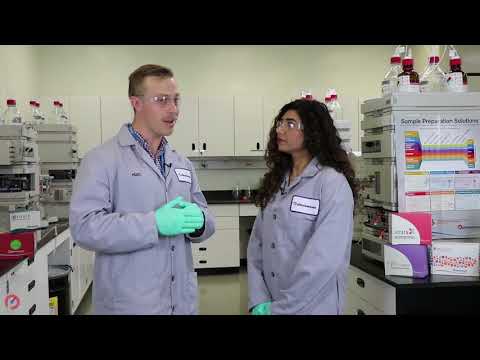
  • Photo: Phenomenex: Sample Pre-treatment Procedures for Bioanalytical Samples
  • Video: Phenomenex: Solid Phase Extraction (SPE) Tutorial

Due to their nature, bioanalytical samples often require a pretreatment step prior to further cleanup by solid phase extraction (SPE). Each sample matrix poses its own unique challenges such as the removal of proteins from plasma and serum, the disruption of red blood cells in whole blood, hydrolysis of glucuronidated analytes in urine, and homogenization of tissue samples. This technical note outlines common sample pre-treatment procedures for bioanalytical samples.

Plasma/Serum

Plasma and serum pre-treatments are analyte dependent. If the analyte of interest is an acid, 2 % phosphoric acid can be used (20 µL 85 % H3PO4 to 1 mL of plasma or serum) to disrupt the drug-protein interaction. If the analyte of interest is basic, 0.1 M sodium hydroxide can be used to disrupt the drug-protein interaction. After addition of acid or base, the sample should be vortexed for 20-30 seconds followed by centrifugation. The supernatant is now ready for further analysis.

Whole Blood

There are several pre-treatment strategies that can be followed for whole blood. If the target analyte is present in red blood cells, a hemolysis step is necessary

  • Hemolysis: To 0.2 mL whole blood (spiked with analytes and internal standard) in a 1.2 mL centrifuge tube, add 400 µL of 2 % zinc sulfate/80 % methanol. Vortex for 10-20 seconds followed by centrifugation at 14,000 rpm for 10 minutes. Collect the supernatant for further analysis.
    Preparation of zinc sulfate/methanol: Into a 100 mL volumetric flask add 20 mL water and 3.6 g ZnSO4, 7H2O. After the solution is clear and the salt crystals have dissolved, add 100 % methanol. Refrigerate the solution at 2-8 °C for 7 days.
  • Osmotic breakdown: To 1 mL of whole blood add internal standard and 4 mL of distilled water. Mix/vortex and let stand for 5 minutes. Centrifuge at 670 g for 10 minutes and discard the pellet. Adjust the pH of the supernatant accordingly with the addition of a buffer solution.
  • Sonication: Sonicate 1 mL whole blood for 15 minutes at room temperature. Add 3-6 mL of an appropriate pH buffer (such as potassium phosphate buffer). Mix/vortex. Let stand for 5 minutes. Centrifuge at 670 g for 15 minutes. Analyze supernatant.

Note: A comparison of the above pre-treatment techniques for whole blood was performed for acidic, basic, and neutral drugs. Recoveries were generally the highest when the whole blood sample was diluted with buffer and subjected to physical denaturing (sonication) rather than chemical means. In fact, the sonication process disrupts the cell membranes to the extent that no clogging was observed when the procedure listed above was followed.1

Saliva

No hydrolysis is required for oral fluids and the generic protocol used for plasma/serum pre-treatment may be followed.

Urine

Enzymatic hydrolysis is necessary in case of conjugated forms (sulfated or glucuronide form) of the analyte present. Enzymatic hydrolysis requires specific pH (pH 4-5) and temperature ranges. An acid or base hydrolysis can be performed as well, depending on the stability of the compound.

  1. Enzymatic hydrolysis: To 500 µL sample (spiked with analyte and internal standard) add 100 µL acidic buffer (see below) and 20 µL beta-glucuronidase. Vortex for 5-6 seconds. Incubate in a water bath at 63 °C for 30 minutes. Transfer sample to a 96-well collection plate or autosampler vial. Seal and centrifuge for 10 minutes at 2,000 rpm.
    Preparation of acidic buffer (1.0 M acetate buffer, pH 4.0): Dissolve 3.0 g of glacial acetic acid and 4.1g of sodium acetate in a 1 L volumetric flask.
  2. Base hydrolysis: To 1 mL urine (spiked with analyte and internal standard) add 100 µL 10 N KOH. Mix, vortex, and hydrolyze for 20 minutes at 60 ˚C. Cool and adjust pH to 3.5- 4.0 (by adding 200 µL glacial acetic acid).
  3. Acid hydrolysis: To 1 mL urine add 0.25 mL HCl in a screw capped test tube. Screw the tube top on loosely and heat in a boiling water bath for 60 minutes. Adjust to pH 7 (or as needed) with 1.0 N NaOH.

Tissue

Homogenize with organic or aqueous solvent depending upon analyte solubility. Settle, decant, centrifuge or filter supernatant. Perform direct Matrix Solid Phase Dispersion (MSPD) extraction on tissue.

Phenomenex
LinkedIn Logo
 

Related content

Analysis of Aroma Components in Apples Using the Smart Aroma Database

Applications
| 2026 | Shimadzu
Instrumentation
GC/MSD, GC/SQ, HeadSpace
Manufacturer
Shimadzu
Industries
Food & Agriculture

Analysis of Acetaldehyde and Limonene in Recycled PET Using an HS-GCMS System (Carrier Gas: H2)

Applications
| 2026 | Shimadzu
Instrumentation
GC/MSD, GC/SQ, HeadSpace
Manufacturer
Shimadzu
Industries
Energy & Chemicals

What Causes GC Capillary Column Performance Degradation, and How Can I Prevent It?

Technical notes
| 2026 | Agilent Technologies
Instrumentation
Consumables, GC columns
Manufacturer
Agilent Technologies
Industries
Other

Aromatic Component Analysis of Gasoline According to ASTM D5580 Using the Brevis GC- 2050 Gas Chromatograph

Applications
| 2025 | Shimadzu
Instrumentation
GC
Manufacturer
Shimadzu
Industries
Energy & Chemicals

Micro GC Analysis of Permanent Gas Impurities in PEM Fuel Cell-Grade Hydrogen

Applications
| 2025 | Agilent Technologies
Instrumentation
GC
Manufacturer
Agilent Technologies
Industries
Energy & Chemicals
 

Related articles

How to Protect Your GC Column - Part 2
Article | Academy

How to Protect Your GC Column - Part 2

How can you extend GC column lifetime and prevent contamination? Part 2 focuses on using liners with glass wool and proper column bake-out to maintain separation performance.
Phenomenex
tag
share
more
Discovery analysis for GCxGC trends using alteration and 2D correlation (Chris Freye, MDCW 2026)
Presentation | Video

Discovery analysis for GCxGC trends using alteration and 2D correlation (Chris Freye, MDCW 2026)

Advanced chemometric methods reveal subtle, statistically significant changes in complex GC×GC-MS and LC-MS data. Learn how Alteration Analysis and 2D correlation turn massive datasets into actionable insights.
The Multidimensional Chromatography Workshop
tag
share
more
News from LabRulezGCMS Library - Week 07, 2026
Article | Application

News from LabRulezGCMS Library - Week 07, 2026

This week we bring you technical note by Agilent Technologies, presentation by MDCW/University of Copenhagen and application notes by Shimadzu and Thermo Fisher Scientific!
LabRulez
tag
share
more
Current sensors are not good enough. Scientists propose a new way to monitor plant health
Article | Science and research

Current sensors are not good enough. Scientists propose a new way to monitor plant health

Researchers present printable, low-cost sensor technologies using smart materials to enable real-time plant health monitoring and advance smart agriculture solutions.
CATRIN
tag
share
more
 

Related content

Analysis of Aroma Components in Apples Using the Smart Aroma Database

Applications
| 2026 | Shimadzu
Instrumentation
GC/MSD, GC/SQ, HeadSpace
Manufacturer
Shimadzu
Industries
Food & Agriculture

Analysis of Acetaldehyde and Limonene in Recycled PET Using an HS-GCMS System (Carrier Gas: H2)

Applications
| 2026 | Shimadzu
Instrumentation
GC/MSD, GC/SQ, HeadSpace
Manufacturer
Shimadzu
Industries
Energy & Chemicals

What Causes GC Capillary Column Performance Degradation, and How Can I Prevent It?

Technical notes
| 2026 | Agilent Technologies
Instrumentation
Consumables, GC columns
Manufacturer
Agilent Technologies
Industries
Other

Aromatic Component Analysis of Gasoline According to ASTM D5580 Using the Brevis GC- 2050 Gas Chromatograph

Applications
| 2025 | Shimadzu
Instrumentation
GC
Manufacturer
Shimadzu
Industries
Energy & Chemicals

Micro GC Analysis of Permanent Gas Impurities in PEM Fuel Cell-Grade Hydrogen

Applications
| 2025 | Agilent Technologies
Instrumentation
GC
Manufacturer
Agilent Technologies
Industries
Energy & Chemicals
 

Related articles

How to Protect Your GC Column - Part 2
Article | Academy

How to Protect Your GC Column - Part 2

How can you extend GC column lifetime and prevent contamination? Part 2 focuses on using liners with glass wool and proper column bake-out to maintain separation performance.
Phenomenex
tag
share
more
Discovery analysis for GCxGC trends using alteration and 2D correlation (Chris Freye, MDCW 2026)
Presentation | Video

Discovery analysis for GCxGC trends using alteration and 2D correlation (Chris Freye, MDCW 2026)

Advanced chemometric methods reveal subtle, statistically significant changes in complex GC×GC-MS and LC-MS data. Learn how Alteration Analysis and 2D correlation turn massive datasets into actionable insights.
The Multidimensional Chromatography Workshop
tag
share
more
News from LabRulezGCMS Library - Week 07, 2026
Article | Application

News from LabRulezGCMS Library - Week 07, 2026

This week we bring you technical note by Agilent Technologies, presentation by MDCW/University of Copenhagen and application notes by Shimadzu and Thermo Fisher Scientific!
LabRulez
tag
share
more
Current sensors are not good enough. Scientists propose a new way to monitor plant health
Article | Science and research

Current sensors are not good enough. Scientists propose a new way to monitor plant health

Researchers present printable, low-cost sensor technologies using smart materials to enable real-time plant health monitoring and advance smart agriculture solutions.
CATRIN
tag
share
more
 

Related content

Analysis of Aroma Components in Apples Using the Smart Aroma Database

Applications
| 2026 | Shimadzu
Instrumentation
GC/MSD, GC/SQ, HeadSpace
Manufacturer
Shimadzu
Industries
Food & Agriculture

Analysis of Acetaldehyde and Limonene in Recycled PET Using an HS-GCMS System (Carrier Gas: H2)

Applications
| 2026 | Shimadzu
Instrumentation
GC/MSD, GC/SQ, HeadSpace
Manufacturer
Shimadzu
Industries
Energy & Chemicals

What Causes GC Capillary Column Performance Degradation, and How Can I Prevent It?

Technical notes
| 2026 | Agilent Technologies
Instrumentation
Consumables, GC columns
Manufacturer
Agilent Technologies
Industries
Other

Aromatic Component Analysis of Gasoline According to ASTM D5580 Using the Brevis GC- 2050 Gas Chromatograph

Applications
| 2025 | Shimadzu
Instrumentation
GC
Manufacturer
Shimadzu
Industries
Energy & Chemicals

Micro GC Analysis of Permanent Gas Impurities in PEM Fuel Cell-Grade Hydrogen

Applications
| 2025 | Agilent Technologies
Instrumentation
GC
Manufacturer
Agilent Technologies
Industries
Energy & Chemicals
 

Related articles

How to Protect Your GC Column - Part 2
Article | Academy

How to Protect Your GC Column - Part 2

How can you extend GC column lifetime and prevent contamination? Part 2 focuses on using liners with glass wool and proper column bake-out to maintain separation performance.
Phenomenex
tag
share
more
Discovery analysis for GCxGC trends using alteration and 2D correlation (Chris Freye, MDCW 2026)
Presentation | Video

Discovery analysis for GCxGC trends using alteration and 2D correlation (Chris Freye, MDCW 2026)

Advanced chemometric methods reveal subtle, statistically significant changes in complex GC×GC-MS and LC-MS data. Learn how Alteration Analysis and 2D correlation turn massive datasets into actionable insights.
The Multidimensional Chromatography Workshop
tag
share
more
News from LabRulezGCMS Library - Week 07, 2026
Article | Application

News from LabRulezGCMS Library - Week 07, 2026

This week we bring you technical note by Agilent Technologies, presentation by MDCW/University of Copenhagen and application notes by Shimadzu and Thermo Fisher Scientific!
LabRulez
tag
share
more
Current sensors are not good enough. Scientists propose a new way to monitor plant health
Article | Science and research

Current sensors are not good enough. Scientists propose a new way to monitor plant health

Researchers present printable, low-cost sensor technologies using smart materials to enable real-time plant health monitoring and advance smart agriculture solutions.
CATRIN
tag
share
more
 

Related content

Analysis of Aroma Components in Apples Using the Smart Aroma Database

Applications
| 2026 | Shimadzu
Instrumentation
GC/MSD, GC/SQ, HeadSpace
Manufacturer
Shimadzu
Industries
Food & Agriculture

Analysis of Acetaldehyde and Limonene in Recycled PET Using an HS-GCMS System (Carrier Gas: H2)

Applications
| 2026 | Shimadzu
Instrumentation
GC/MSD, GC/SQ, HeadSpace
Manufacturer
Shimadzu
Industries
Energy & Chemicals

What Causes GC Capillary Column Performance Degradation, and How Can I Prevent It?

Technical notes
| 2026 | Agilent Technologies
Instrumentation
Consumables, GC columns
Manufacturer
Agilent Technologies
Industries
Other

Aromatic Component Analysis of Gasoline According to ASTM D5580 Using the Brevis GC- 2050 Gas Chromatograph

Applications
| 2025 | Shimadzu
Instrumentation
GC
Manufacturer
Shimadzu
Industries
Energy & Chemicals

Micro GC Analysis of Permanent Gas Impurities in PEM Fuel Cell-Grade Hydrogen

Applications
| 2025 | Agilent Technologies
Instrumentation
GC
Manufacturer
Agilent Technologies
Industries
Energy & Chemicals
 

Related articles

How to Protect Your GC Column - Part 2
Article | Academy

How to Protect Your GC Column - Part 2

How can you extend GC column lifetime and prevent contamination? Part 2 focuses on using liners with glass wool and proper column bake-out to maintain separation performance.
Phenomenex
tag
share
more
Discovery analysis for GCxGC trends using alteration and 2D correlation (Chris Freye, MDCW 2026)
Presentation | Video

Discovery analysis for GCxGC trends using alteration and 2D correlation (Chris Freye, MDCW 2026)

Advanced chemometric methods reveal subtle, statistically significant changes in complex GC×GC-MS and LC-MS data. Learn how Alteration Analysis and 2D correlation turn massive datasets into actionable insights.
The Multidimensional Chromatography Workshop
tag
share
more
News from LabRulezGCMS Library - Week 07, 2026
Article | Application

News from LabRulezGCMS Library - Week 07, 2026

This week we bring you technical note by Agilent Technologies, presentation by MDCW/University of Copenhagen and application notes by Shimadzu and Thermo Fisher Scientific!
LabRulez
tag
share
more
Current sensors are not good enough. Scientists propose a new way to monitor plant health
Article | Science and research

Current sensors are not good enough. Scientists propose a new way to monitor plant health

Researchers present printable, low-cost sensor technologies using smart materials to enable real-time plant health monitoring and advance smart agriculture solutions.
CATRIN
tag
share
more
Other projects
LCMS
ICPMS
Follow us
More information
WebinarsAbout usContact usTerms of use
LabRulez s.r.o. All rights reserved. Content available under a CC BY-SA 4.0 Attribution-ShareAlike