News from LabRulezGCMS Library - Week 28, 2025

LabRulez: News from LabRulezGCMS Library - Week 28, 2025
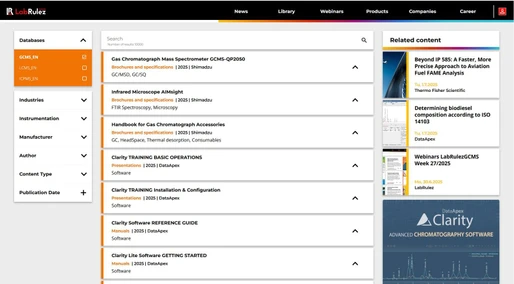
Our Library never stops expanding. What are the most recent contributions to LabRulezGCMS Library in the week of 7th July 2025? Check out new documents from the field of the gas phase, especially GC and GC/MS techniques!
👉 SEARCH THE LARGEST REPOSITORY OF DOCUMENTS ABOUT GCMS AND RELATED TECHNIQUES
👉 Need info about different analytical techniques? Peek into LabRulezLCMS or LabRulezICPMS libraries.
This week we bring you posters by Agilent Technologies / ASMS, Shimadzu / ASMS, presentation by Liège University / MDCW and technical note by Thermo Fisher Scientific!
1. Agilent Technologies / ASMS: Analysis of Allergens in Fragrance Samples Using a Comprehensive GCxGC in Combination with a High-Resolution Mass Spectrometry
- Poster
- Full PDF for download
Fragrances are highly complex mixtures that combine natural and synthetic components. Analytical separation of these samples on a single GC column results in coelution of isomers and structurally similar compounds which produce similar spectral fragmentation patterns. This significantly complicates identification and quantitative analysis of individual components of the fragrances. Here we demonstrate a power of a comprehensive GCxGC approach combined with high resolution MS for identification and quantitative analysis of 64 allergens in fragrances. With added confidence in compound identification provided by accurate mass, this approach also streamlines a non-targeted analysis of the fragrances to determine their composition.
Experimental
The samples were separated on an 8890 GC using a comprehensive GCxGC configuration with a reverse flow modulator (RFM). The non-polar/mid-polar column set was used and comprised of a 20m x 0.1mm x 0.1um DB-1ms column (100% Dimethylpolysiloxane) coupled to a 5m x 0.25mm x 0.15um DB-17ms column (equivalent to (50%-phenyl)- methylpolysiloxane). Optimized instrumental parameters are shown in Table 1.
The data were acquired using the high-resolution 7250 GC/Q-TOF at data rate of 50 Hz. For compound identification the Unknown Analysis tool of MassHunter Quantitative Analysis software version 12.1 and the GC Image software version 2024 R3 were used. The linear retention indices (RIs) were used to increase confidence in compound identification. Statistical analysis was performed in Mass Profiler Professional (MPP) software version 15.1.
Results and Discussion
GCxGC Configuration
A GCxGC RFM method was developed to achieve an optimal chromatographic separation of all the allergens while also ensuring adequate sensitivity and carrier gas flow to the MS. GCxGC RFM setup included two detectors: the Q-TOF MS and the FID. The configuration provided an optimal flow to the MS of 1.3 mL/min (11.8% of total flow) maintaining a constant split between FID and MS throughout the entire oven temperature ramp. The configuration is shown in Figure 2.
Conclusions
- Allergens in fragrance samples have been analyzed using comprehensive GCxGC combined with the highresolution GC/Q-TOF and RFM.
- Fragrances with different types of aroma were analyzed using the GCxGC/HRMS combined with statistical analysis to identify the major differentiating compounds that may contribute to the particular type of scent.
2. Liège University / MDCW: Coupling of Vac-HS-SPME and GC×GC-qMS for simultaneous 5-HMF quantification and volatile profiling in honey
- Presentation
- Full PDF for download
The presentation by D. Eggermont et al. explores a novel analytical approach for assessing honey quality and authenticity. The method focuses on the simultaneous quantification of 5-hydroxymethylfurfural (5-HMF)—a key marker of honey freshness, heat exposure, and compliance with EU regulations—and the untargeted profiling of semi-volatile organic compounds (sVOCs).
The core of the method is vacuum-assisted headspace solid-phase microextraction (Vac-HS-SPME), which improves extraction efficiency for low and semi-volatiles by reducing gas-phase resistance and accelerating mass transfer. This is followed by comprehensive two-dimensional gas chromatography coupled with quadrupole mass spectrometry (GC×GC-qMS), enabling high-resolution separation and detection of both derivatised 5-HMF and various sVOCs such as benzaldehyde, furfuralcohol, phenylethanol, and menthofuran.
Instrumentation used in the method includes:
- SPME fiber: DVB/CAR/PDMS (1 cm)
- Thermal desorption and focusing: Markes and SepSolve
- GC×GC system: Shimadzu platform with apolar × polar column set
- Mass spectrometer: Quadrupole MS operated in SIM mode for targeted 5-HMF quantification and full scan for volatile profiling
The method was rigorously validated (LoQ 4.7 µg/g, LoD 1.6 µg/g, recovery 98%, precision RSD 21%) and compared against HPLC-UV as the official method, showing comparable results with lower sample amounts and fewer preparation steps. Additionally, the technique aligns with green analytical chemistry principles due to its miniaturization, low solvent use, and energy efficiency. This makes it a promising tool for routine honey analysis and food quality control.
3. Shimadzu / ASMS: Advancing PFAS Detection in Drinking Water: GC-MS as a Complementary Technique to LC-MS for Closing PFAS Mass Balance
- Poster
- Full PDF for download
Analysis of per- and polyfluoroalkyl substances (PFAS) in the environment is pivotal. There are several standardized PFAS methods, such as EPA 533, 537.1 8327, 1633, OTM-45 and OTM 50. Most of these methods are based on Liquid Chromatography/Mass Spectrometry (LC/MS) techniques. However, LC/MS is not suitable to analyze all PFAS compounds because of the diverse physico-chemical properties of chemicals within the PFAS family. Gas Chromatography/Mass Spectrometry (GC/MS) as a complementary technique can address volatile PFAS compounds that are challenging to analyze by LC/MS. In this study, a Head-Space Solid Phase Microextraction Triple Quadrupole Gas Chromatography/Mass Spectrometry analytical method is used to analyze PFAS in drinking water. This technique has advantages of analyzing volatile PFAS in water with minimum sample preparation procedure.
Methods
A volatile PFAS analysis method was developed on a Shimadzu GCMS-TQ8040 NX with an AOC-6000 Plus multifunctional autosampler equipped with a solid phase microextraction (SPME) module (Figure 1).
Thirteen PFAS target compounds were included in the Multiple Reaction Monitoring (MRM) method. The PFAS chemical classes were perfluoroalkyl iodides (PFIs), (n:2) fluorotelomer iodides (FTIs), (n:2) fluorotelomer acrylates (FTACs), (n:2) fluorotelomer methacrylates (FTMACs), (n:2) fluorotelomer alcohols (FTOHs) and perfluoroalkane sulfonamides (FASAs). Internal standards (IS) FTOHs, FASAs and FTAC mass-labelled compounds were added to each vial prior to extraction. Concentrations of the target compounds were calculated using isotope dilution.
An internal calibration curve was prepared in 10 mL of reagent water at concentrations of 2000, 1000, 500, 100, 50, 10, 2.5 and 1 ng/L. The IS were spiked at 100 ng/L to each calibrator. Sodium Chloride (NaCl) was added to each vial to achieve a final salinity concentration of 2% NaCl (w/v). These calibrators were vortex for 30 seconds and then placed on the AOC-6000 Plus autosampler rack for analysis.
The optimized parameters of the HSSPME GC/MS method for the targeted PFAS are listed in table 1. Quantifier and qualifier ions for each PFAS target are listed in table 2. The associated internal standard used for each compound is also listed in table 2.
A laboratory control sample (LCS) was analyzed to determine the general performance of the method in a clean matrix. Drinking water analyzed in the study were from a private well and an utility with surface water as its source.
Conclusion
This study demonstrated the satisfactory performance of a HS-SPME GC/MS/MS method to measure PFAS in drinking water. The PFAS family is vast, comprising thousands of different compounds across various chemical classes. Due to this diversity, multiple analytical instruments are necessary to effectively analyze PFAS. While LC-MS is widely recognized for its ability to analyze many PFAS compounds, it is not always practical for measuring certain PFAS. This has led to a gap in the environmental mass balance, especially when it comes to measuring volatile PFAS compounds. Fortunately, unlike LC-MS, GC-MS is well-suited for analyzing volatile PFAS compounds. GC-MS complements LC-MS-based PFAS methods, providing a more comprehensive analytical solution. By expanding the PFAS target list, GC-MS helps close gaps in the PFAS environmental mass balance. The method used in this study demonstrated quantitative capability in analyzing nanogram per liter PFAS compounds in an LCS and matrix influenced drinking water samples.
4. Thermo Fisher Scientific: Method transfer to the EXTREVA ASE Accelerated Solvent Extractor
- Technical note (White paper)
- Full PDF for download
The Thermo Scientific™ EXTREVA™ ASE™ Accelerated Solvent Extractor (Figure 1) is a system based on many proprietary technologies including gas-assisted solvent extraction and parallel accelerated solvent extraction. This fully automated system combines the extraction and evaporation capabilities in one instrument, and it can be conveniently used for extracting and concentrating/evaporating extracts from up to 16 solid and semi-solid samples per batch (i.e., 4 sequences of 4 sample cells in parallel). The EXTREVA ASE system combines elevated temperatures and pressurized gas with liquid solvents to achieve fast and efficient collection of analytes from various matrices. The system can use up to six different extraction solvents (or mixtures of them) and extract up to four cells in parallel. The gas-assisted solvent extraction comprises delivering a mixture of extraction solvents and nitrogen gas to the stainless-steel cell to reach the working pressure of 200 psi (~14 bar). The combined effect of temperature and pressure greatly increases the efficiency of the extraction process, significantly reducing the amount of time and solvent required for extraction when compared to traditional techniques such as Soxhlet. The enrichment/concentration process starts immediately after the completion of the extraction step without any analyst interaction, if no offline cleanup of extract needed. The extracts can be evaporated to dryness or concentrated in 2 mL vials to volumes as low as 0.3 mL, with the final volume controlled by artificial intelligence machine vision (Figure 2). Succinctly, the EXTREVA ASE system automates extraction, in-cell clean up, and evaporation, which frees up the analyst’s time for other, more demanding tasks.
A schematic diagram of the EXTREVA ASE Accelerated Solvent Extractor is shown in Figure 2. This white paper describes the method transfer from a Thermo Scientific™ Dionex™ ASE 350 Accelerated Solvent Extractor to the EXTREVA ASE system, and provides instructions for new EXTREVA ASE system methods.
Which options to choose for a particular application?
The EXTREVA ASE system workflows comprise three main options: extraction only, evaporation only, or extraction and evaporation combined (integrated) depending on the option of the instrument.
1. Extraction only: No evaporation. After extraction, the analyst may perform an offline cleanup, and, subsequently, perform sample enrichment. If evaporation is performed after cleanup, the analyst needs to manually load cells and evaporation bottles back onto the EXTREVA ASE system as per the evaporation workflow below.
2. Evaporation only: Evaporation has two modes of operation: evaporation to dryness or evaporation to a fixed volume. When evaporating to a fixed volume, the minimum and maximum volumes are 0.3 and 1.6 mL, respectively. When evaporating to dryness, automatic end point detection is not available; therefore, the analyst needs to optimize evaporation conditions, such as temperature, vacuum and nitrogen gas flow, in order to complete this process in the minimum amount of time while meeting analysis requirements.
3. Extraction and evaporation combined (integrated): Extraction followed by evaporation either to dryness (such as fat extraction) or fixed volume (such as PAH, OCP, and PCB) can be pursued based on the need of a particular application or target analytes.