GCMS
More information
WebinarsAbout usContact usTerms of use
LabRulez s.r.o. All rights reserved. Content available under a CC BY-SA 4.0 Attribution-ShareAlike
Author
Institute of Organic Chemistry and Biochemistry of the Czech Academy of Sciences
The Institute of Organic Chemistry and Biochemistry of the Czech Academy of Sciences (IOCB Prague) is a leading scientific institution in the Czech Republic, recognized internationally. Its primary mission is basic research in the fields of chemical biology and medicinal chemistry, organic and material oriented chemistry, chemistry of natural compounds, biochemistry and molecular biology, physical chemistry, theoretical chemistry, and analytical chemistry.
Tags
Article
Health
Video
LinkedIn Logo

New molecules from IOCB Prague decrease appetite and protect the brain against Alzheimer’s-type diseases
Mo, 26.8.2024
| Original article from: IOCB Prague
Scientists from Dr. Lenka Maletinska's team have developed a new substance that may help to solve the health limitations of obesity and Alzheimer's disease.
Video placeholder
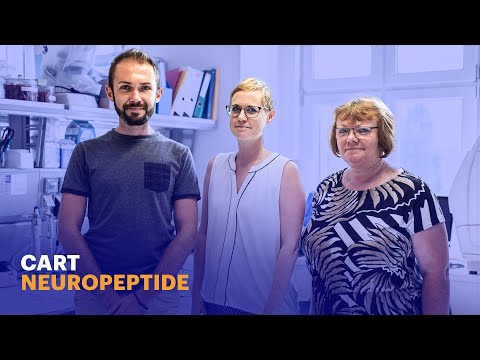
  • Photo: IOCB Prague/Tomáš Belloň: From the left: Vilém Charvát, Dr Andrea Pačesová, Dr Lenka Maletínská, head of the Pathophysiological Mechanisms of Food Intake Regulation group at IOCB Prague

  • Video: IOCB Prague - New molecules from IOCB Prague decrease appetite, protect the brain against Alzheimer disease

Scientists on the team of Dr Lenka Maletínská have developed a promising new compound derived from one of the peptides naturally occurring in the brain. Its application may contribute to the addressing of two major health challenges of the modern days: obesity and Alzheimer's disease. The neuropeptide CART is primarily associated with the regulation of food intake. Its modified version, created at the Institute of Organic Chemistry and Biochemistry of the Czech Academy of Sciences, shows better stability and is more effective. It suppresses appetite and protects the brain by reducing the pathogenicity of the tau protein, which is associated with the dreaded Alzheimer's disease. The results of the research have been published in the European Journal of Pharmacology.

The new compound has successfully passed tests in both cell culture and animal models. Mice that were obese and prone to diabetes lost weight after its administration, and it turned out that they also exhibited reduced pathology of the dangerous tau protein, one of the main symptoms of Alzheimer's disease, in their brains. The modified molecule is effective in the body thanks to a process called lipidization. This means that the scientists have bound various fatty acids to the natural peptide CART and found that the modified peptide is able to cross the blood-brain barrier. This is a crucial precondition for the drug to work properly in the brain.

„We have found that when a lipidized analogue of the CART peptide is applied subcutaneously, it then passes into the brain, where it acts by suppressing appetite and, if administered for a long time, also has a neuroprotective effect. It could therefore work in the treatment or prevention of neurodegenerative diseases," explains the first author of the study Vilém Charvát.

The CART (cocaine- and amphetamine-regulated transcript) peptide itself was discovered in 1998 by the Danish pharmaceutical company Novo Nordisk. It has emerged that the peptide is abundant in the hypothalamus and that it has a relatively complex structure containing three disulfide bridges. However, what receptor in the body it binds to remains to be determined. Efforts to find out have so far not met with success. This is also the main goal in the sights of the principal author of the current study conducted at IOCB Prague, Dr Andrea Pačesová, who states: “We have a potentially successful anti-obesity drug in hands that also appears to reduce the risk of Alzheimer's disease. To develop this potential to its fullest, we need to know why the substance works the way it does. If, however, we want to describe the mechanism of its action, we must first decipher how the peptide gets to the brain. We know that it works. What is left to do is to identify the right receptors.”

IOCB Prague:  Modified peptide derived from the natural CART peptide. After repeated administration to mice suffering from obesity and prediabetes, the mice began to eat less, lost weight, and their metabolism improved. Their brains showed reduced Tau protein pathology, and new nerve cells also began to form in their brains.IOCB Prague: Modified peptide derived from the natural CART peptide. After repeated administration to mice suffering from obesity and prediabetes, the mice began to eat less, lost weight, and their metabolism improved. Their brains showed reduced Tau protein pathology, and new nerve cells also began to form in their brains.

Research into peptides potentially useful in the development of anti-obesity drugs at IOCB Prague is led by Dr Lenka Maletínská. A few years ago, she achieved the conclusion of a licensing agreement for a promising substance with the pharmaceutical company Novo Nordisk. She herself has long assumed that anorexigenic (appetite-lowering) peptides might also be used for the prevention and treatment of neurodegenerative diseases. “We already know, contrary to what was originally assumed, that new neurons are formed even in adulthood. This regenerative process is supported by several anorexigenic peptides, which can thus help repair damaged brain tissue,” says Dr Maletínská, adding that: “If Alzheimer's disease can be diagnosed early on, in a phase called mild cognitive impairment, the chances of it being cured appear to be quite high.”

Resources

Charvát, V.; Strnadová, A.; Myšková, A.; Sýkora, D.; Blechová, M.; Železná, B.; Kuneš, J.; Maletínská, L.; Pačesová, A. Lipidized analogues of the anorexigenic CART (cocaine – and amphetamine-regulated transcript) neuropeptide show anorexigenic and neuroprotective potential in mouse model of monosodium-glutamate induced obesity. Eur. J. Pharmacol. 2024, 980.
https://doi.org/10.1016/j.ejphar.2024.176864

Institute of Organic Chemistry and Biochemistry of the Czech Academy of Sciences
LinkedIn Logo
 

Related content

Quantitative Volatile PFAS Analysis in Textiles

Applications
| 2026 | Agilent Technologies
Instrumentation
GC/MSD, GC/MS/MS, GC/QQQ
Manufacturer
Agilent Technologies
Industries
Materials Testing

Effectiveness of the MonoTrap Collection Method for VOC Analysis in Exhaled Breath Using GC-MS

Applications
| 2026 | Shimadzu
Instrumentation
GC/MSD, Thermal desorption, GC/SQ
Manufacturer
Shimadzu
Industries
Clinical Research

Rapid analysis of organochlorine pesticides (OCPs) in soil samples using the EXTREVA ASE accelerated solvent extractor

Applications
| 2026 | Thermo Fisher Scientific
Instrumentation
Sample Preparation, GC
Manufacturer
Thermo Fisher Scientific
Industries
Environmental

Total Hydrocarbon Impurity Analysis in PEM Fuel Cell Grade Hydrogen Using the Agilent 8890 GC-FID System

Applications
| 2026 | Agilent Technologies
Instrumentation
GC
Manufacturer
Agilent Technologies
Industries
Energy & Chemicals

Analysis of Aroma Components in Apples Using the Smart Aroma Database

Applications
| 2026 | Shimadzu
Instrumentation
GC/MSD, GC/SQ, HeadSpace
Manufacturer
Shimadzu
Industries
Food & Agriculture
 

Related articles

The Effect of Needle Gauge and Flow Rate on Evaporation Rate
Article | Science and research

The Effect of Needle Gauge and Flow Rate on Evaporation Rate

The study evaluates how needle gauge, nitrogen flow rate, and needle design influence solvent evaporation rate during sample concentration and provides practical optimization guidance.
Organomation
tag
share
more
News from LabRulezGCMS Library - Week 11, 2026
Article | Application

News from LabRulezGCMS Library - Week 11, 2026

This week we bring you application notes by Agilent Technologies, Shimadzu and Thermo Fisher Scientific and poster by MDCW / C³AL!
LabRulez
tag
share
more
CATRIN researchers offer a “greener” way to make supercapacitors
Article | Science and research

CATRIN researchers offer a “greener” way to make supercapacitors

CATRIN scientists show that green solvents Cyrene and Tamisolve can replace toxic NMP in supercapacitor production while maintaining high electrochemical performance and enabling more sustainable manufacturing.
CATRIN
tag
share
more
Teaching Separation Science in High School
Interview | Scientists

Teaching Separation Science in High School

This interview explores how high school students learn separation science through filtration, gravimetric analysis, and chromatography, building the foundations for future chemistry studies.
Organomation
tag
share
more
 

Related content

Quantitative Volatile PFAS Analysis in Textiles

Applications
| 2026 | Agilent Technologies
Instrumentation
GC/MSD, GC/MS/MS, GC/QQQ
Manufacturer
Agilent Technologies
Industries
Materials Testing

Effectiveness of the MonoTrap Collection Method for VOC Analysis in Exhaled Breath Using GC-MS

Applications
| 2026 | Shimadzu
Instrumentation
GC/MSD, Thermal desorption, GC/SQ
Manufacturer
Shimadzu
Industries
Clinical Research

Rapid analysis of organochlorine pesticides (OCPs) in soil samples using the EXTREVA ASE accelerated solvent extractor

Applications
| 2026 | Thermo Fisher Scientific
Instrumentation
Sample Preparation, GC
Manufacturer
Thermo Fisher Scientific
Industries
Environmental

Total Hydrocarbon Impurity Analysis in PEM Fuel Cell Grade Hydrogen Using the Agilent 8890 GC-FID System

Applications
| 2026 | Agilent Technologies
Instrumentation
GC
Manufacturer
Agilent Technologies
Industries
Energy & Chemicals

Analysis of Aroma Components in Apples Using the Smart Aroma Database

Applications
| 2026 | Shimadzu
Instrumentation
GC/MSD, GC/SQ, HeadSpace
Manufacturer
Shimadzu
Industries
Food & Agriculture
 

Related articles

The Effect of Needle Gauge and Flow Rate on Evaporation Rate
Article | Science and research

The Effect of Needle Gauge and Flow Rate on Evaporation Rate

The study evaluates how needle gauge, nitrogen flow rate, and needle design influence solvent evaporation rate during sample concentration and provides practical optimization guidance.
Organomation
tag
share
more
News from LabRulezGCMS Library - Week 11, 2026
Article | Application

News from LabRulezGCMS Library - Week 11, 2026

This week we bring you application notes by Agilent Technologies, Shimadzu and Thermo Fisher Scientific and poster by MDCW / C³AL!
LabRulez
tag
share
more
CATRIN researchers offer a “greener” way to make supercapacitors
Article | Science and research

CATRIN researchers offer a “greener” way to make supercapacitors

CATRIN scientists show that green solvents Cyrene and Tamisolve can replace toxic NMP in supercapacitor production while maintaining high electrochemical performance and enabling more sustainable manufacturing.
CATRIN
tag
share
more
Teaching Separation Science in High School
Interview | Scientists

Teaching Separation Science in High School

This interview explores how high school students learn separation science through filtration, gravimetric analysis, and chromatography, building the foundations for future chemistry studies.
Organomation
tag
share
more
 

Related content

Quantitative Volatile PFAS Analysis in Textiles

Applications
| 2026 | Agilent Technologies
Instrumentation
GC/MSD, GC/MS/MS, GC/QQQ
Manufacturer
Agilent Technologies
Industries
Materials Testing

Effectiveness of the MonoTrap Collection Method for VOC Analysis in Exhaled Breath Using GC-MS

Applications
| 2026 | Shimadzu
Instrumentation
GC/MSD, Thermal desorption, GC/SQ
Manufacturer
Shimadzu
Industries
Clinical Research

Rapid analysis of organochlorine pesticides (OCPs) in soil samples using the EXTREVA ASE accelerated solvent extractor

Applications
| 2026 | Thermo Fisher Scientific
Instrumentation
Sample Preparation, GC
Manufacturer
Thermo Fisher Scientific
Industries
Environmental

Total Hydrocarbon Impurity Analysis in PEM Fuel Cell Grade Hydrogen Using the Agilent 8890 GC-FID System

Applications
| 2026 | Agilent Technologies
Instrumentation
GC
Manufacturer
Agilent Technologies
Industries
Energy & Chemicals

Analysis of Aroma Components in Apples Using the Smart Aroma Database

Applications
| 2026 | Shimadzu
Instrumentation
GC/MSD, GC/SQ, HeadSpace
Manufacturer
Shimadzu
Industries
Food & Agriculture
 

Related articles

The Effect of Needle Gauge and Flow Rate on Evaporation Rate
Article | Science and research

The Effect of Needle Gauge and Flow Rate on Evaporation Rate

The study evaluates how needle gauge, nitrogen flow rate, and needle design influence solvent evaporation rate during sample concentration and provides practical optimization guidance.
Organomation
tag
share
more
News from LabRulezGCMS Library - Week 11, 2026
Article | Application

News from LabRulezGCMS Library - Week 11, 2026

This week we bring you application notes by Agilent Technologies, Shimadzu and Thermo Fisher Scientific and poster by MDCW / C³AL!
LabRulez
tag
share
more
CATRIN researchers offer a “greener” way to make supercapacitors
Article | Science and research

CATRIN researchers offer a “greener” way to make supercapacitors

CATRIN scientists show that green solvents Cyrene and Tamisolve can replace toxic NMP in supercapacitor production while maintaining high electrochemical performance and enabling more sustainable manufacturing.
CATRIN
tag
share
more
Teaching Separation Science in High School
Interview | Scientists

Teaching Separation Science in High School

This interview explores how high school students learn separation science through filtration, gravimetric analysis, and chromatography, building the foundations for future chemistry studies.
Organomation
tag
share
more
 

Related content

Quantitative Volatile PFAS Analysis in Textiles

Applications
| 2026 | Agilent Technologies
Instrumentation
GC/MSD, GC/MS/MS, GC/QQQ
Manufacturer
Agilent Technologies
Industries
Materials Testing

Effectiveness of the MonoTrap Collection Method for VOC Analysis in Exhaled Breath Using GC-MS

Applications
| 2026 | Shimadzu
Instrumentation
GC/MSD, Thermal desorption, GC/SQ
Manufacturer
Shimadzu
Industries
Clinical Research

Rapid analysis of organochlorine pesticides (OCPs) in soil samples using the EXTREVA ASE accelerated solvent extractor

Applications
| 2026 | Thermo Fisher Scientific
Instrumentation
Sample Preparation, GC
Manufacturer
Thermo Fisher Scientific
Industries
Environmental

Total Hydrocarbon Impurity Analysis in PEM Fuel Cell Grade Hydrogen Using the Agilent 8890 GC-FID System

Applications
| 2026 | Agilent Technologies
Instrumentation
GC
Manufacturer
Agilent Technologies
Industries
Energy & Chemicals

Analysis of Aroma Components in Apples Using the Smart Aroma Database

Applications
| 2026 | Shimadzu
Instrumentation
GC/MSD, GC/SQ, HeadSpace
Manufacturer
Shimadzu
Industries
Food & Agriculture
 

Related articles

The Effect of Needle Gauge and Flow Rate on Evaporation Rate
Article | Science and research

The Effect of Needle Gauge and Flow Rate on Evaporation Rate

The study evaluates how needle gauge, nitrogen flow rate, and needle design influence solvent evaporation rate during sample concentration and provides practical optimization guidance.
Organomation
tag
share
more
News from LabRulezGCMS Library - Week 11, 2026
Article | Application

News from LabRulezGCMS Library - Week 11, 2026

This week we bring you application notes by Agilent Technologies, Shimadzu and Thermo Fisher Scientific and poster by MDCW / C³AL!
LabRulez
tag
share
more
CATRIN researchers offer a “greener” way to make supercapacitors
Article | Science and research

CATRIN researchers offer a “greener” way to make supercapacitors

CATRIN scientists show that green solvents Cyrene and Tamisolve can replace toxic NMP in supercapacitor production while maintaining high electrochemical performance and enabling more sustainable manufacturing.
CATRIN
tag
share
more
Teaching Separation Science in High School
Interview | Scientists

Teaching Separation Science in High School

This interview explores how high school students learn separation science through filtration, gravimetric analysis, and chromatography, building the foundations for future chemistry studies.
Organomation
tag
share
more
Other projects
LCMS
ICPMS
Follow us
FacebookX (Twitter)LinkedInYouTube
More information
WebinarsAbout usContact usTerms of use
LabRulez s.r.o. All rights reserved. Content available under a CC BY-SA 4.0 Attribution-ShareAlike