Author
LabRulez
LabRulez
Everything from the world of analytical chemistry in one place. We connect people in solving their problems. At Labrulez you will find all the necessary information easily, quickly and clearly. Stop searching and start finding.
Tags
Scientific article
Science and research
LinkedIn Logo

Experimental Design-Based Dispersive Liquid–Liquid Microextraction with GC-FID for Determination of Polycyclic Aromatic Hydrocarbons in Surface Water
Mo, 6.7.2026
| Original article from: ACS Omega 2026, 11, 21, 31418–31431
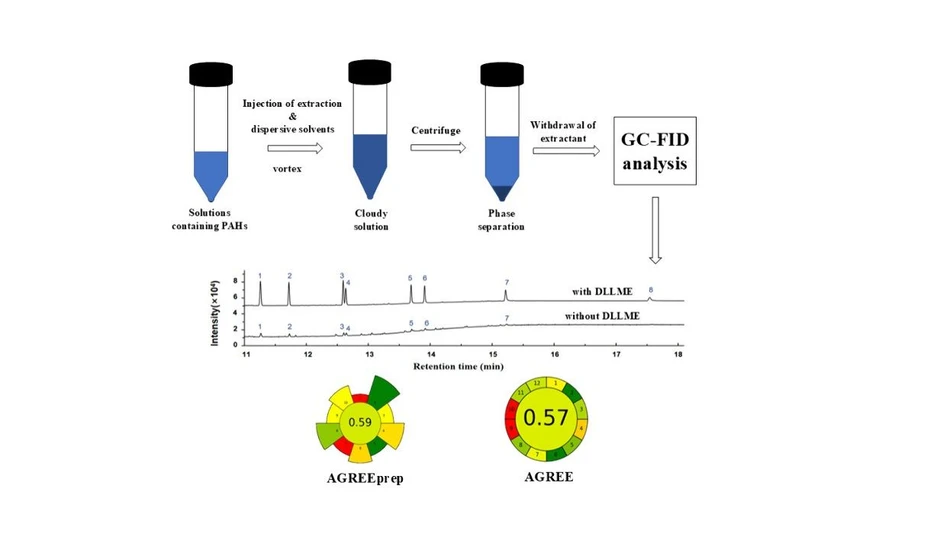
This study develops an experimentally optimized DLLME-GC-FID method for efficient extraction and analysis of PAHs in surface waters.
<p>ACS Omega 2026, 11, 21, 31418–31431: Graphical abstract</p>

ACS Omega 2026, 11, 21, 31418–31431: Graphical abstract

This study presents an optimized dispersive liquid–liquid microextraction (DLLME) method coupled with GC-FID for the determination of eight priority polycyclic aromatic hydrocarbons in surface waters. Experimental design approaches, including fractional factorial and Box–Behnken designs, were used to optimize extraction conditions and maximize analytical performance.

The validated method achieved rapid chromatographic separation, low detection limits, good precision, and high enrichment factors while maintaining favorable green analytical characteristics. Successful application to wastewater, lake, river, and drain water samples demonstrates its suitability for routine environmental monitoring of PAHs.

The original article

Experimental Design-Based Dispersive Liquid–Liquid Microextraction with GC-FID for Determination of Polycyclic Aromatic Hydrocarbons in Surface Water

Chen Minghong, Song Peiyu, Tien Ping Lee, Garret Chan Zhe Ming, Philip J. Marriott, and Yong Foo Wong*

ACS Omega 2026, 11, 21, 31418–31431

https://doi.org/10.1021/acsomega.6c01489

licensed under CC-BY 4.0

Selected sections from the article follow. Formats and hyperlinks were adapted from the original.

Polycyclic aromatic hydrocarbons (PAHs) are organic pollutants containing two or more fused benzene rings and are widely associated with carcinogenic, teratogenic, and mutagenic properties. (1) These hydrophobic substances can bioaccumulate with long environmental half-lives and are classified as high priority ecotoxicants of the first danger class. (1,2) Anthropogenic activities (e.g., fossil fuel combustion, industrial processes, biomass burning, and others) are predominantly recognized as the primary sources of PAHs in most environmental compartments. (3−6) In the present work, the hydrophobic nature of PAHs facilitates adsorption onto suspended particulate matter and organic material in aquatic systems, followed by deposition into underlying sediments. (7) These persistent organic pollutants have been reported in surface waters as well as estuarine and coastal environments and can potentially disrupt ecosystem functioning. (7,8)

From a public health perspective, PAHs exposure via upon ingestion, has been linked to a spectrum of adverse health effects such as cancer and reduced fertility. (2,9) Sixteen unsubstituted PAHs have been designated as priority pollutants by the United States Environmental Protection Agency (USEPA). (10) The International Agency for Research on Cancer (IARC) has classified benzo(a)pyrene (BaP) in Group 1 (carcinogen to humans) and other PAHs in Group 2A (possible human carcinogens). (10,11) The maximum permissible concentrations of benzo(a)pyrene (0.00001 mg/L) in water intended for drinking water is regulated by the European Union (EU). The EU limits the total content of polyaromatic compounds in drinking water to <0.1 μg/L. (12) In heavily polluted waterways, PAH concentrations have been reported to reach 10 μg/mL. (13) Epidemiological evidence also suggests a positive relationship between increased cancer incidence in human populations that are having high exposure to organic ecotoxins. (14) For these reasons, quantitative assessments of PAH occurrence and distribution in surface waters remain important and fertile research topics. (15,16)

PAHs in water and environmental matrices are routinely analyzed using either gas chromatography (GC) and/or liquid chromatography (LC) with various detection modalities. (17,18) The coupling of chromatography to mass spectrometry has been the preferred technique, owing to the distinct selectivity and sensitivity, particularly when operated in selected ion monitoring (SIM) or multiple reaction monitoring (SRM) modes. (19) Additionally, LC coupled with fluorescence detection is also extensively utilized for PAH analysis. (20,21) As PAHs typically occur at trace to ultratrace levels in complex real-world matrices, sample pretreatment and/or preconcentration is generally required prior to instrumental analysis. (22,23) Conventional approaches such as liquid–liquid extraction and solid-phase extraction are widely used but are often solvent-intensive and laborious and generate substantial hazardous waste. More recently, microextraction techniques (e.g., dispersive microsolid phase extraction, dispersive liquid–liquid microextraction (DLLME), solid phase microextraction, etc.) have emerged as attractive alternatives, providing advantages such as speed and simplicity and requiring substantially lower volumes of hazardous solvents. (24−26)

DLLME has shown good efficiency for extracting and preconcentrating hydrophobic PAHs from aqueous matrixes. (24,27) Briefly, DLLME involves rapid injection of a small volume of an extraction solvent (immiscible with water) and dispersive solvent into the aqueous sample. (24) Target analytes partition into the microdroplets and are subsequently recovered in a minimal volume of the organic phase after centrifugation. The large interfacial contact area between the two phases enhances mass transfer, leading to fast attainment of extraction equilibrium with high enrichment factors. (28,29) DLLME has been applied to a wide range of matrices, including environmental samples, (25,30) milk and dairy products, (31) honey, (32) and others. (33) Optimization of DLLME conditions for targeted solutes is often performed using a one-factor-at-a-time approach, which is time-consuming, labor-intensive, and may inadequately take into account interaction between or among variables. (34) In contrast, multivariate experimental design methodologies accommodate simultaneous variation of multiple extraction variables, facilitating identification of interaction effects and development of statistically robust models. (35−37)

Over the past decade, multivariate design of experiments (DOE) has become an important optimization strategy for process development. Compared with traditional one-factor-at-a-time approaches, DOE can reduce time, effort, and resource consumption while extracting meaningful information from a relatively small number of experimental analyses. (37−40) Among the DOE frameworks, the Box-Behnken design (BBD), an economical variant of response surface methodology, has been widely used for process optimization, offering high statistical efficiency and good predictive performance when tuning experimental variables in analytical and industrial applications. (35,39,41−45) This study evaluates the applicability of using RSM to optimize DLLME conditions for selective extraction and preconcentration of acenaphthene, fluorene, anthracene, phenanthrene, fluoranthene, pyrene, benzo(a)anthracene, and benzo(a)pyrene. A fractional factorial design (FrFD) was initially used to screen and identify statistically significant DLLME variables. The selected factors were then optimized using the BBD to construct quadratic models and generate response surface plots for determining optimal extraction conditions. The optimized DLLME-GC-FID method was validated, and AGREEprep and AGREE were used to quantify ‘greenness’ metric scores. Analytical practicability of the validated method was demonstrated by determining the targeted PAHs in several surface water samples.

2. Experimental Section

2.4. GC-FID Analysis

All experiments were performed using an Agilent 7890B GC system equipped with a G4513A autosampler and a split–splitless inlet (Agilent Technologies; Santa Clara, CA, USA). Chromatographic separation was effected by using a DB-5HT column (Agilent Technologies, Santa Clara, CA, USA; 30 m × 0.25 mm I.D. × 0.25 μm film thickness). Injection mode and oven temperature programming were optimized to achieve baseline separation of all target PAHs. Helium (99.999%) was used as the carrier gas at a constant flow rate of 1 mL/min. Splitless mode with a splitless time of 2.1 min was used, with a 1 μL injection volume. The injector temperature was maintained at 300 °C. The oven temperature program was 70 °C (hold for 3.3 min) and ramped to 300 °C (hold 5 min) at a rate of 25 °C/min. The FID temperature was set to 300 °C.

3. Results and Discussion

The initial GC-FID conditions were adopted from Hor et al. for the determination of BAP, BAA, BBF, and chrysene in tocotrienol concentrates. (52) Under those chromatographic conditions, baseline separation of all the targeted PAHs could not be achieved (Flt, Pyr, BaA, and BaP). Hence, GC conditions, particularly the oven temperature program, were briefly optimized to obtain baseline separation of all the targeted PAHs (Figure 1A).

ACS Omega 2026, 11, 21, 31418–31431: Figure 1. Chromatograms of (Ai) standard mixture (100 μg/L) before DLLME; (Aii) standard mixture (100 μg/L) after DLLME; (B) lake water sample spiked with PAHs (10 μg/L); and (C) wastewater sample. 1, Ace; 2, Flu; 3, Ant; 4, Phe; 5, Flt; 6, Pyr; 7, BaA; 8, BaP.ACS Omega 2026, 11, 21, 31418–31431: Figure 1. Chromatograms of (Ai) standard mixture (100 μg/L) before DLLME; (Aii) standard mixture (100 μg/L) after DLLME; (B) lake water sample spiked with PAHs (10 μg/L); and (C) wastewater sample. 1, Ace; 2, Flu; 3, Ant; 4, Phe; 5, Flt; 6, Pyr; 7, BaA; 8, BaP.

3.1. Evaluation of the Type of Extractants and Dispersants for DLLME

Extraction performance in DLLME is strongly influenced by the choice of extraction solvent (i.e., that which is sedimented), which controls the solutes’ partitioning behavior between the aqueous and organic phases. (24) Five extraction solvents of different polarity, namely, dichloromethane (DCM, dielectric constant (ε): 8.93 (53)), chloroform (ε: 4.81 (54)), carbon tetrachloride (ε: 2.24 (55)), chlorobenzene (ε: 5.62 (56)), and cyclohexane (ε: 2.02 (57)), were evaluated. Based on the overall response (i.e., peak areas), dichloromethane outperformed the other chlorinated solvents (Figure 2). This might be attributed to the stronger partitioning of PAHs into DCM, which exhibited the highest polarity among the tested extractants. (58) Therefore, DCM was selected as the extraction solvent. It is known that the dispersive solvent serves as a “bridge” between the aqueous sample and the water-immiscible extractant, and its selection is therefore crucial to DLLME performance. Five dispersive solvents (methanol, ε: 33; (59) ethanol, ε: 24.5; (60) isopropanol, ε: 20.1; (61) acetone, ε: 20.7; (62) acetonitrile, ε: 36 (63)) of different polarities were studied. Among these, ACN having the highest polarity provided the highest extraction response. This might be attributed to the reduced interfacial tension, which promotes formation of smaller microdroplets, and increases interfacial area for partitioning process, thereby improving extraction efficiency. (64) Thus, DCM and ACN were selected as the extractant and dispersant, respectively, for subsequent FrFD and BBD experiments.
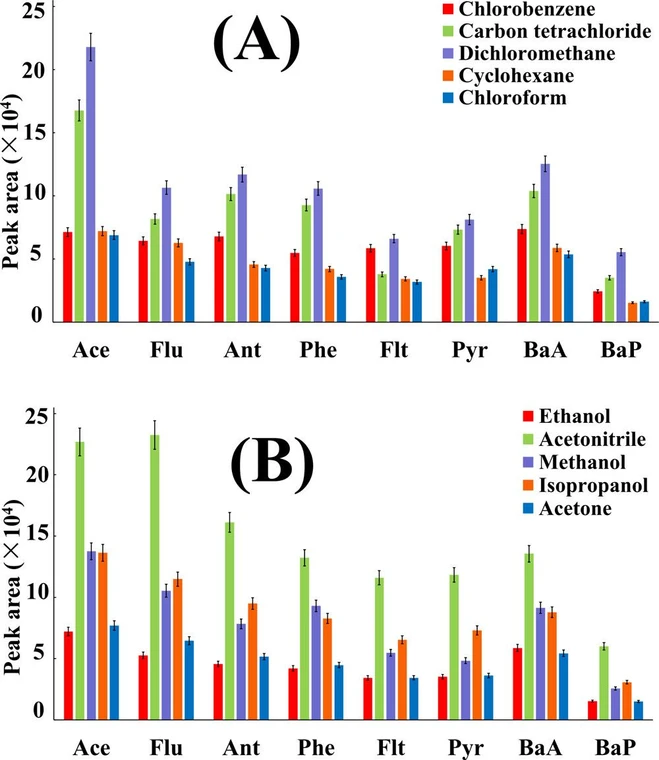
ACS Omega 2026, 11, 21, 31418–31431: Figure 2. Effect of (A) selection of extraction solvent; (B) selection of dispersive solvent.ACS Omega 2026, 11, 21, 31418–31431: Figure 2. Effect of (A) selection of extraction solvent; (B) selection of dispersive solvent.

4. Conclusion

An improved and environmentally friendly DLLME-GC-FID method was described for the quantitative analysis of PAHs in surface water. RSM was applied by first screening influential variables using a fractional factorial design, followed by the Box-Behnken design optimization of the DLLME parameters. In contrast to single-factor experimentation, the fitted model and 3D response surface plots showed factor interactions and their combined effects on extraction performance, facilitating near-optimal conditions to be identified with a limited number of experiments. Using the optimized conditions, low detection limits, good enrichment factors, acceptable reproducibility, and recoveries were achieved. The validated analytical features indicate that the proposed method is robust and cost-effective for the routine screening of PAHs in terrestrial water bodies.

LabRulez
LinkedIn Logo
 

Related content

Hydrogen Carrier Gas Method Translation in Comprehensive Two- Dimensional Gas Chromatography for Sustainable Nontargeted Analysis

Scientific articles
| 2026 | William & Mary
Instrumentation
GCxGC, GC/MSD, GC/MS/MS, GC/TOF, GC/HRMS
Manufacturer
LECO
Industries
Other

Novel data processing workflow including in-silico derivatization for integrated CI & EI MS data acquired with the GC-ecTOFinstrument

Posters
| 2026 | Bruker (ASMS)
Instrumentation
GC/MS/MS, GC/MSD, GC/TOF, GC/HRMS
Manufacturer
Bruker
Industries
Metabolomics

Is Your Next Sip Safe? A Simple, Rapid Method for Measuring volatile PFAS in Juices.

Posters
| 2026 | Shimadzu (ASMS)
Instrumentation
GC/MSD, GC/MS/MS, GC/QQQ, HeadSpace
Manufacturer
Shimadzu
Industries
Food & Agriculture

Thermo Scientific™ Orbitrap Exploris™ GC S Mass Spectrometer

Brochures and specifications
| 2026 | Thermo Fisher Scientific
Instrumentation
GC/MSD, GC/MS/MS, GC/Orbitrap, GC/HRMS
Manufacturer
Thermo Fisher Scientific
Industries
Other

Operational efficiency for your GC and GC/MS labs with the Agilent 8860B gas chromatography system

Brochures and specifications
| 2026 | Agilent Technologies
Instrumentation
GC
Manufacturer
Agilent Technologies
Industries
Other
 

Related articles

Introduction of a small volume ethyl acetate based liquid-liquid extraction procedure for analysis of polycyclic aromatic hydrocarbons in wastewater by atmospheric pressure gas chromatography-mass spectrometry and evaluation of method greenness
Scientific article | Environment

Introduction of a small volume ethyl acetate based liquid-liquid extraction procedure for analysis of polycyclic aromatic hydrocarbons in wastewater by atmospheric pressure gas chromatography-mass spectrometry and evaluation of method greenness

The goal of this study is to evaluate and validate a rapid, eco-friendly SVEA-LLE method with APGC-MS/MS for the sensitive and accurate analysis of 17 PAHs in water and wastewater.
LabRulez
tag
share
more
Natural deep eutectic solvent-based dispersive liquid-liquid microextraction of pesticides in drinking waters combined with GC-MS/MS detection
Scientific article | Science and research

Natural deep eutectic solvent-based dispersive liquid-liquid microextraction of pesticides in drinking waters combined with GC-MS/MS detection

The study develops a green DLLME-GC-MS/MS method using natural deep eutectic solvents to preconcentrate and detect pesticides in drinking water with optimized conditions.
LabRulez
tag
share
more
Green Ultrasound-Assisted Dispersive Liquid–Liquid Microextraction Coupled to GC–MS for Simultaneous Determination of Lipid-Peroxidation- and Maillard-Derived Carbonyl Compounds in Plant-Based Beverages
Scientific article | Science and research

Green Ultrasound-Assisted Dispersive Liquid–Liquid Microextraction Coupled to GC–MS for Simultaneous Determination of Lipid-Peroxidation- and Maillard-Derived Carbonyl Compounds in Plant-Based Beverages

Green UA-DLLME with GC–MS enables trace analysis of 12 carbonyl compounds in plant-based beverages, offering high sensitivity, accuracy, and sustainability.
LabRulez
tag
share
more
Protecting Europe's Waters: Reliable Sample Prep for Water Framework Directive Compliance
Article | Environment

Protecting Europe's Waters: Reliable Sample Prep for Water Framework Directive Compliance

Stringent Water Framework Directive requirements drive high analytical sensitivity. EQS limits, GC-MS determination of priority substances, and the critical role of sample preparation in practice.
Organomation
tag
share
more
 

Related content

Hydrogen Carrier Gas Method Translation in Comprehensive Two- Dimensional Gas Chromatography for Sustainable Nontargeted Analysis

Scientific articles
| 2026 | William & Mary
Instrumentation
GCxGC, GC/MSD, GC/MS/MS, GC/TOF, GC/HRMS
Manufacturer
LECO
Industries
Other

Novel data processing workflow including in-silico derivatization for integrated CI & EI MS data acquired with the GC-ecTOFinstrument

Posters
| 2026 | Bruker (ASMS)
Instrumentation
GC/MS/MS, GC/MSD, GC/TOF, GC/HRMS
Manufacturer
Bruker
Industries
Metabolomics

Is Your Next Sip Safe? A Simple, Rapid Method for Measuring volatile PFAS in Juices.

Posters
| 2026 | Shimadzu (ASMS)
Instrumentation
GC/MSD, GC/MS/MS, GC/QQQ, HeadSpace
Manufacturer
Shimadzu
Industries
Food & Agriculture

Thermo Scientific™ Orbitrap Exploris™ GC S Mass Spectrometer

Brochures and specifications
| 2026 | Thermo Fisher Scientific
Instrumentation
GC/MSD, GC/MS/MS, GC/Orbitrap, GC/HRMS
Manufacturer
Thermo Fisher Scientific
Industries
Other

Operational efficiency for your GC and GC/MS labs with the Agilent 8860B gas chromatography system

Brochures and specifications
| 2026 | Agilent Technologies
Instrumentation
GC
Manufacturer
Agilent Technologies
Industries
Other
 

Related articles

Introduction of a small volume ethyl acetate based liquid-liquid extraction procedure for analysis of polycyclic aromatic hydrocarbons in wastewater by atmospheric pressure gas chromatography-mass spectrometry and evaluation of method greenness
Scientific article | Environment

Introduction of a small volume ethyl acetate based liquid-liquid extraction procedure for analysis of polycyclic aromatic hydrocarbons in wastewater by atmospheric pressure gas chromatography-mass spectrometry and evaluation of method greenness

The goal of this study is to evaluate and validate a rapid, eco-friendly SVEA-LLE method with APGC-MS/MS for the sensitive and accurate analysis of 17 PAHs in water and wastewater.
LabRulez
tag
share
more
Natural deep eutectic solvent-based dispersive liquid-liquid microextraction of pesticides in drinking waters combined with GC-MS/MS detection
Scientific article | Science and research

Natural deep eutectic solvent-based dispersive liquid-liquid microextraction of pesticides in drinking waters combined with GC-MS/MS detection

The study develops a green DLLME-GC-MS/MS method using natural deep eutectic solvents to preconcentrate and detect pesticides in drinking water with optimized conditions.
LabRulez
tag
share
more
Green Ultrasound-Assisted Dispersive Liquid–Liquid Microextraction Coupled to GC–MS for Simultaneous Determination of Lipid-Peroxidation- and Maillard-Derived Carbonyl Compounds in Plant-Based Beverages
Scientific article | Science and research

Green Ultrasound-Assisted Dispersive Liquid–Liquid Microextraction Coupled to GC–MS for Simultaneous Determination of Lipid-Peroxidation- and Maillard-Derived Carbonyl Compounds in Plant-Based Beverages

Green UA-DLLME with GC–MS enables trace analysis of 12 carbonyl compounds in plant-based beverages, offering high sensitivity, accuracy, and sustainability.
LabRulez
tag
share
more
Protecting Europe's Waters: Reliable Sample Prep for Water Framework Directive Compliance
Article | Environment

Protecting Europe's Waters: Reliable Sample Prep for Water Framework Directive Compliance

Stringent Water Framework Directive requirements drive high analytical sensitivity. EQS limits, GC-MS determination of priority substances, and the critical role of sample preparation in practice.
Organomation
tag
share
more
 

Related content

Hydrogen Carrier Gas Method Translation in Comprehensive Two- Dimensional Gas Chromatography for Sustainable Nontargeted Analysis

Scientific articles
| 2026 | William & Mary
Instrumentation
GCxGC, GC/MSD, GC/MS/MS, GC/TOF, GC/HRMS
Manufacturer
LECO
Industries
Other

Novel data processing workflow including in-silico derivatization for integrated CI & EI MS data acquired with the GC-ecTOFinstrument

Posters
| 2026 | Bruker (ASMS)
Instrumentation
GC/MS/MS, GC/MSD, GC/TOF, GC/HRMS
Manufacturer
Bruker
Industries
Metabolomics

Is Your Next Sip Safe? A Simple, Rapid Method for Measuring volatile PFAS in Juices.

Posters
| 2026 | Shimadzu (ASMS)
Instrumentation
GC/MSD, GC/MS/MS, GC/QQQ, HeadSpace
Manufacturer
Shimadzu
Industries
Food & Agriculture

Thermo Scientific™ Orbitrap Exploris™ GC S Mass Spectrometer

Brochures and specifications
| 2026 | Thermo Fisher Scientific
Instrumentation
GC/MSD, GC/MS/MS, GC/Orbitrap, GC/HRMS
Manufacturer
Thermo Fisher Scientific
Industries
Other

Operational efficiency for your GC and GC/MS labs with the Agilent 8860B gas chromatography system

Brochures and specifications
| 2026 | Agilent Technologies
Instrumentation
GC
Manufacturer
Agilent Technologies
Industries
Other
 

Related articles

Introduction of a small volume ethyl acetate based liquid-liquid extraction procedure for analysis of polycyclic aromatic hydrocarbons in wastewater by atmospheric pressure gas chromatography-mass spectrometry and evaluation of method greenness
Scientific article | Environment

Introduction of a small volume ethyl acetate based liquid-liquid extraction procedure for analysis of polycyclic aromatic hydrocarbons in wastewater by atmospheric pressure gas chromatography-mass spectrometry and evaluation of method greenness

The goal of this study is to evaluate and validate a rapid, eco-friendly SVEA-LLE method with APGC-MS/MS for the sensitive and accurate analysis of 17 PAHs in water and wastewater.
LabRulez
tag
share
more
Natural deep eutectic solvent-based dispersive liquid-liquid microextraction of pesticides in drinking waters combined with GC-MS/MS detection
Scientific article | Science and research

Natural deep eutectic solvent-based dispersive liquid-liquid microextraction of pesticides in drinking waters combined with GC-MS/MS detection

The study develops a green DLLME-GC-MS/MS method using natural deep eutectic solvents to preconcentrate and detect pesticides in drinking water with optimized conditions.
LabRulez
tag
share
more
Green Ultrasound-Assisted Dispersive Liquid–Liquid Microextraction Coupled to GC–MS for Simultaneous Determination of Lipid-Peroxidation- and Maillard-Derived Carbonyl Compounds in Plant-Based Beverages
Scientific article | Science and research

Green Ultrasound-Assisted Dispersive Liquid–Liquid Microextraction Coupled to GC–MS for Simultaneous Determination of Lipid-Peroxidation- and Maillard-Derived Carbonyl Compounds in Plant-Based Beverages

Green UA-DLLME with GC–MS enables trace analysis of 12 carbonyl compounds in plant-based beverages, offering high sensitivity, accuracy, and sustainability.
LabRulez
tag
share
more
Protecting Europe's Waters: Reliable Sample Prep for Water Framework Directive Compliance
Article | Environment

Protecting Europe's Waters: Reliable Sample Prep for Water Framework Directive Compliance

Stringent Water Framework Directive requirements drive high analytical sensitivity. EQS limits, GC-MS determination of priority substances, and the critical role of sample preparation in practice.
Organomation
tag
share
more
 

Related content

Hydrogen Carrier Gas Method Translation in Comprehensive Two- Dimensional Gas Chromatography for Sustainable Nontargeted Analysis

Scientific articles
| 2026 | William & Mary
Instrumentation
GCxGC, GC/MSD, GC/MS/MS, GC/TOF, GC/HRMS
Manufacturer
LECO
Industries
Other

Novel data processing workflow including in-silico derivatization for integrated CI & EI MS data acquired with the GC-ecTOFinstrument

Posters
| 2026 | Bruker (ASMS)
Instrumentation
GC/MS/MS, GC/MSD, GC/TOF, GC/HRMS
Manufacturer
Bruker
Industries
Metabolomics

Is Your Next Sip Safe? A Simple, Rapid Method for Measuring volatile PFAS in Juices.

Posters
| 2026 | Shimadzu (ASMS)
Instrumentation
GC/MSD, GC/MS/MS, GC/QQQ, HeadSpace
Manufacturer
Shimadzu
Industries
Food & Agriculture

Thermo Scientific™ Orbitrap Exploris™ GC S Mass Spectrometer

Brochures and specifications
| 2026 | Thermo Fisher Scientific
Instrumentation
GC/MSD, GC/MS/MS, GC/Orbitrap, GC/HRMS
Manufacturer
Thermo Fisher Scientific
Industries
Other

Operational efficiency for your GC and GC/MS labs with the Agilent 8860B gas chromatography system

Brochures and specifications
| 2026 | Agilent Technologies
Instrumentation
GC
Manufacturer
Agilent Technologies
Industries
Other
 

Related articles

Introduction of a small volume ethyl acetate based liquid-liquid extraction procedure for analysis of polycyclic aromatic hydrocarbons in wastewater by atmospheric pressure gas chromatography-mass spectrometry and evaluation of method greenness
Scientific article | Environment

Introduction of a small volume ethyl acetate based liquid-liquid extraction procedure for analysis of polycyclic aromatic hydrocarbons in wastewater by atmospheric pressure gas chromatography-mass spectrometry and evaluation of method greenness

The goal of this study is to evaluate and validate a rapid, eco-friendly SVEA-LLE method with APGC-MS/MS for the sensitive and accurate analysis of 17 PAHs in water and wastewater.
LabRulez
tag
share
more
Natural deep eutectic solvent-based dispersive liquid-liquid microextraction of pesticides in drinking waters combined with GC-MS/MS detection
Scientific article | Science and research

Natural deep eutectic solvent-based dispersive liquid-liquid microextraction of pesticides in drinking waters combined with GC-MS/MS detection

The study develops a green DLLME-GC-MS/MS method using natural deep eutectic solvents to preconcentrate and detect pesticides in drinking water with optimized conditions.
LabRulez
tag
share
more
Green Ultrasound-Assisted Dispersive Liquid–Liquid Microextraction Coupled to GC–MS for Simultaneous Determination of Lipid-Peroxidation- and Maillard-Derived Carbonyl Compounds in Plant-Based Beverages
Scientific article | Science and research

Green Ultrasound-Assisted Dispersive Liquid–Liquid Microextraction Coupled to GC–MS for Simultaneous Determination of Lipid-Peroxidation- and Maillard-Derived Carbonyl Compounds in Plant-Based Beverages

Green UA-DLLME with GC–MS enables trace analysis of 12 carbonyl compounds in plant-based beverages, offering high sensitivity, accuracy, and sustainability.
LabRulez
tag
share
more
Protecting Europe's Waters: Reliable Sample Prep for Water Framework Directive Compliance
Article | Environment

Protecting Europe's Waters: Reliable Sample Prep for Water Framework Directive Compliance

Stringent Water Framework Directive requirements drive high analytical sensitivity. EQS limits, GC-MS determination of priority substances, and the critical role of sample preparation in practice.
Organomation
tag
share
more
Other projects
LCMS
ICPMS
Follow us
FacebookX (Twitter)LinkedInYouTube
More information
WebinarsAbout usContact usTerms of use
LabRulez s.r.o. All rights reserved. Content available under a CC BY-SA 4.0 Attribution-ShareAlike