Author
The Multidimensional Chromatography Workshop
The Multidimensional Chromatography (MDC) Workshop draws experts in this exciting field to share and discuss their research.
Tags
Presentation
Video
LinkedIn Logo

Flow-Modulated GCxGC-QMS Analysis Without Splitting Off the GC Flow (Kirk Jensen, MDCW 2026)
We, 3.6.2026
| Original article from: The Multidimensional Chromatography (MDC) Workshop
Discover how flow-modulated GC×GC coupled to a high-flow quadrupole MS enables complex sample analysis at carrier gas flows up to 50 mL/min without compromising identification performance.
Video placeholder
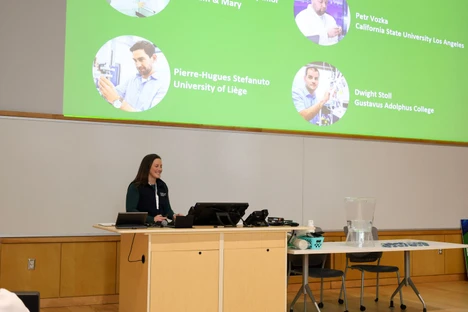
  • Photo: MDCW: Flow-Modulated GCxGC-QMS Analysis Without Splitting Off the GC Flow (Kirk Jensen, MDCW 2026)
  • Video: LabRulez: Kirk Jensen: No more split ends? Flow-modulated GC×GC-QMS w/o splitting off the GC flow (MDCW 2026)

🎤 Presenter: Kirk Jensen (JEOL USA, Inc., Peabody, USA)

💾 PDF presentation

Abstract

Flow-modulated two-dimensional gas chromatography (GCxGC) is an excellent solution for low-boiling point compounds that are difficult to separate by thermal modulation without cryogens. Pairing a quadrupole mass spectrometer (QMS) with GCxGC can offer better dynamic range, increased sensitivity, and lower cost to GCxGC applications, however, many MS instruments can not accept the high flow rate coming from flow-modulated GCxGC.

In this study, a flow modulator was installed in a QMS system designed to accept high GC flow rates, and tested using perfume and pesticide applications. Results detailing the sensitivity and effectiveness of the QMS system with high GCxGC flow input will be discussed, as well as a comparison to thermal modulation results from the same system.

Video Transcription

Comprehensive two-dimensional gas chromatography (GC×GC) has become a powerful tool for resolving highly complex samples that cannot be adequately separated by conventional one-dimensional GC. Traditionally, GC×GC systems rely on either thermal modulation or flow modulation, each offering distinct advantages and limitations.

In this presentation, Kirk Jensen (JEOL) explores the feasibility of coupling a flow-modulated GC×GC system directly to a high-flow quadrupole mass spectrometer. The work investigates whether modern quadrupole instruments can tolerate substantially higher carrier gas flows than traditionally accepted and what impact this has on chromatographic performance, spectral quality, and compound identification.

Fundamentals of GC×GC Modulation

Why GC×GC?

GC×GC employs:

  • A first-dimension separation column
  • A modulation system
  • A second-dimension separation column

The objective is to resolve compounds that co-elute in conventional GC by introducing a second, orthogonal separation mechanism.

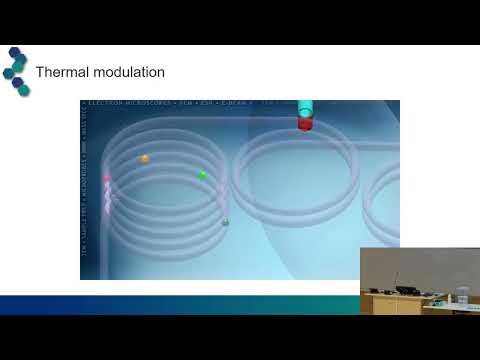
Thermal Modulation

In thermal modulation:

  1. Compounds eluting from the first column are cryogenically trapped.
  2. The trapped analytes are periodically released.
  3. Each release generates a narrow injection onto the second-dimension column.

Advantages include:

  • High sensitivity
  • Narrow peak widths
  • Intuitive operation
  • Excellent focusing of analytes

However, thermal modulation often requires cryogenic cooling and may present challenges for highly volatile compounds.

Flow Modulation

Flow modulation operates differently:

  1. Eluate from the first column fills a sampling loop.
  2. Valve switching occurs.
  3. Increased gas pressure transfers the sample to the second column.

Key advantages include:

  • No cryogenic cooling requirements
  • Compatibility with highly volatile analytes
  • Easier detector splitting (e.g., simultaneous FID and MS)
  • Potentially lower operating costs

The major challenge is the high carrier gas flow required by the modulator, which traditionally exceeds what many mass spectrometers can tolerate.

High-Flow Quadrupole MS Concept

Can a Mass Spectrometer Accept More Flow?

The study utilized:

The JMS-Q1600 is specified to accept up to approximately 20 mL/min of carrier gas into the mass spectrometer, making it a suitable platform for evaluating flow-modulated GC×GC.

Additional instrument capabilities include:

  • High scan speed
  • Broad dynamic range
  • Multiple ionization options:
    • Electron ionization (EI)
    • Photoionization (PI)
    • Chemical ionization (CI)

The system's pumping capacity was a critical factor enabling these experiments.

Experimental Configuration

Chromatographic Setup

The GC×GC configuration included:

  • First dimension: 5MS column
  • Second dimension: BP50 column
  • Carrier gas flow: 25 mL/min
  • Modulation period: 4.5 seconds
  • Oven ramp: 3 °C/min
  • Flush flow: 125 mL/min

The modulation conditions were designed to:

  • Fill approximately 75% of the sample loop
  • Achieve complete transfer onto the second column

Mass spectrometric conditions included:

  • Electron ionization (EI)
  • Mass range: m/z 35–505
  • Acquisition rate: 15 Hz

The relatively modest acquisition rate was selected to reduce spectral distortion previously observed during high-speed GC×GC operation.

Application 1: Multi-Residue Pesticide Analysis

Complex Test Mixture

A custom pesticide mixture containing:

  • 246 compounds
  • Multiple isomeric species

was used as a benchmark sample for system evaluation.

Separation Performance

The flow-modulated GC×GC system successfully generated:

  • Significant first-dimension separation
  • Additional second-dimension resolution
  • Improved visualization of closely eluting analytes

Three-dimensional chromatographic plots clearly demonstrated the added separation power of the second dimension.

Spectral Quality Assessment

An important concern was whether introducing 25 mL/min of helium directly into the mass spectrometer would compromise spectral fidelity.

Findings included:

  • Observable spectral skewing
  • Reduced NIST match factors
  • Highest match factor around 833
  • Only four compounds exceeded match factors of 800

However:

  • Probability-based identification scores remained above 95% for many compounds
  • Overall identification performance remained surprisingly robust despite spectral distortion

Approximately 120 compounds were correctly identified from the GC×GC dataset, comparable to previous one-dimensional GC-MS workflows.

Application 2: Fragrance Analysis

Simple Perfume Sample

An initially tested perfume was already largely separable by conventional GC.

While GC×GC successfully analyzed the sample, the benefits were limited because the sample complexity did not demand two-dimensional separation.

Complex Perfume Sample

A second fragrance sample presented a far more challenging matrix.

Results showed:

  • Large unresolved regions in 1D GC
  • Significant second-dimension separation
  • Resolution of compounds previously hidden within broad unresolved humps

This application clearly demonstrated the practical value of GC×GC for complex consumer product analysis.

Application 3: Petroleum Samples

Diesel Fuel

Diesel samples were evaluated as a traditional GC×GC test matrix.

Even without extensive optimization:

  • Clear structured chromatographic patterns were obtained
  • Meaningful separation was achieved
  • The system handled the high flow successfully

The presenter noted that further optimization should improve performance substantially.

Soy-Based Fuel Samples

Soy-derived fuel samples produced chromatographic profiles similar to diesel while revealing additional characteristic regions associated with bio-derived components.

These experiments further demonstrated the versatility of the approach for petrochemical and renewable fuel analysis.

Pushing the Limits: 50 mL/min into the MS

An Extreme Experiment

To explore the limits of the system, carrier gas flow was increased from:

  • 25 mL/min
    to
  • 50 mL/min

directly into the mass spectrometer.

Results

The mass spectrometer continued operating successfully.

Observations included:

  • Slightly degraded chromatographic performance
  • Increased helium load on the vacuum system
  • Surprisingly similar spectral quality compared to 25 mL/min operation

For representative compounds:

  • Match factors remained comparable
  • Spectral distortion did not increase dramatically

These findings suggest that the platform possesses substantial operational headroom beyond its nominal specifications.

Practical Lessons Learned

The presenter shared several important implementation insights:

Installation Complexity

Flow-modulated GC×GC systems are mechanically complex.

Key recommendations:

  • Use experienced installers whenever possible
  • Avoid underestimating setup requirements
  • Verify all pressure and column configuration settings carefully

Installation mistakes can result in extensive troubleshooting and significant delays.

Pressure Requirements

A 150 psi inlet is preferable to a 100 psi configuration because:

  • Additional pressure supports smaller-bore columns
  • Greater flexibility is available during optimization

Pressure limitations became one of the main constraints in the study.

Data Acquisition Considerations

The presenter noted that:

  • 15 Hz acquisition may be insufficient for fully optimized GC×GC
  • Faster acquisition rates should be investigated
  • Improved sampling density would likely enhance peak characterization

Future work will focus on these data collection parameters.

Future Directions

Areas identified for further study include:

  • Direct comparison with thermal modulation
  • Optimization of column geometries
  • Evaluation of hydrogen carrier gas
  • Evaluation of nitrogen carrier gas
  • Improved acquisition rates
  • Sensitivity characterization
  • Further refinement of flow conditions

The work remains at an early stage, but the initial results are highly encouraging.

Conclusions

This study demonstrates that flow-modulated GC×GC can be successfully coupled to a high-flow quadrupole mass spectrometer, even at carrier gas flows far above those traditionally considered practical.

Key findings include:

  • Successful operation at 25 mL/min and even 50 mL/min carrier gas flow
  • Effective two-dimensional separations for pesticides, fragrances, and fuels
  • Acceptable library-search performance despite some spectral skewing
  • Strong potential for future optimization and broader application

The work challenges conventional assumptions regarding carrier gas flow limitations in quadrupole GC-MS systems and opens new possibilities for simplified, cryogen-free GC×GC workflows.

This text has been automatically transcribed from a video presentation using AI technology. It may contain inaccuracies and is not guaranteed to be 100% correct.

The Multidimensional Chromatography Workshop
LinkedIn Logo
 

Related content

Thermo Scientific™ Orbitrap Exploris™ GC S Mass Spectrometer

Brochures and specifications
| 2026 | Thermo Fisher Scientific
Instrumentation
GC/MSD, GC/MS/MS, GC/Orbitrap, GC/HRMS
Manufacturer
Thermo Fisher Scientific
Industries
Other

Operational efficiency for your GC and GC/MS labs with the Agilent 8860B gas chromatography system

Brochures and specifications
| 2026 | Agilent Technologies
Instrumentation
GC
Manufacturer
Agilent Technologies
Industries
Other

Agilent 8890B Gas Chromatograph

Brochures and specifications
| 2026 | Agilent Technologies
Instrumentation
GC
Manufacturer
Agilent Technologies
Industries
Other

Agilent 8860B Gas Chromatograph

Brochures and specifications
| 2026 | Agilent Technologies
Instrumentation
GC
Manufacturer
Agilent Technologies
Industries
Other

Alcohol Determination of Sanitizer Gel Using Nexis GC-2060

Applications
| 2026 | Shimadzu
Instrumentation
GC
Manufacturer
Shimadzu
Industries
Pharma & Biopharma
 

Related articles

News from LabRulezGCMS Library - Week 2, 2025
Article | Application

News from LabRulezGCMS Library - Week 2, 2025

This week we bring you applications and other documents by Agilent Technologies, Thermo Fisher Scientific, and Shimadzu!
LabRulez
tag
share
more
17th MDCW 2026 (Day 3)
Article | Events

17th MDCW 2026 (Day 3)

Day 3 of MDCW 2026 focused on advanced GC×GC and 2D-LC innovations, from flow-modulated GC×GC-QMS and tensor decomposition to plastic pyrolysis, forensics, bioanalysis, and polymer separations.
The Multidimensional Chromatography Workshop
tag
share
more
News from LabRulezGCMS Library - Week 19, 2026
Article | Application

News from LabRulezGCMS Library - Week 19, 2026

This week we bring you application note by Shimadzu, presentation by MDCW / JEOL and technical note by Thermo Fisher Scientific!
LabRulez
tag
share
more
Identifying the transition from antemortem to post-mortem odor in cadavers cadavers in an outdoor environment (Darshil Patel, MDCW 2026)
Presentation | Video

Identifying the transition from antemortem to post-mortem odor in cadavers cadavers in an outdoor environment (Darshil Patel, MDCW 2026)

How does human odor transition after death? Darshil Patel explores early postmortem VOC evolution using GC×GC-TOFMS and reveals how these chemical changes may impact cadaver and rescue dog detection.
The Multidimensional Chromatography Workshop
tag
share
more
 

Related content

Thermo Scientific™ Orbitrap Exploris™ GC S Mass Spectrometer

Brochures and specifications
| 2026 | Thermo Fisher Scientific
Instrumentation
GC/MSD, GC/MS/MS, GC/Orbitrap, GC/HRMS
Manufacturer
Thermo Fisher Scientific
Industries
Other

Operational efficiency for your GC and GC/MS labs with the Agilent 8860B gas chromatography system

Brochures and specifications
| 2026 | Agilent Technologies
Instrumentation
GC
Manufacturer
Agilent Technologies
Industries
Other

Agilent 8890B Gas Chromatograph

Brochures and specifications
| 2026 | Agilent Technologies
Instrumentation
GC
Manufacturer
Agilent Technologies
Industries
Other

Agilent 8860B Gas Chromatograph

Brochures and specifications
| 2026 | Agilent Technologies
Instrumentation
GC
Manufacturer
Agilent Technologies
Industries
Other

Alcohol Determination of Sanitizer Gel Using Nexis GC-2060

Applications
| 2026 | Shimadzu
Instrumentation
GC
Manufacturer
Shimadzu
Industries
Pharma & Biopharma
 

Related articles

News from LabRulezGCMS Library - Week 2, 2025
Article | Application

News from LabRulezGCMS Library - Week 2, 2025

This week we bring you applications and other documents by Agilent Technologies, Thermo Fisher Scientific, and Shimadzu!
LabRulez
tag
share
more
17th MDCW 2026 (Day 3)
Article | Events

17th MDCW 2026 (Day 3)

Day 3 of MDCW 2026 focused on advanced GC×GC and 2D-LC innovations, from flow-modulated GC×GC-QMS and tensor decomposition to plastic pyrolysis, forensics, bioanalysis, and polymer separations.
The Multidimensional Chromatography Workshop
tag
share
more
News from LabRulezGCMS Library - Week 19, 2026
Article | Application

News from LabRulezGCMS Library - Week 19, 2026

This week we bring you application note by Shimadzu, presentation by MDCW / JEOL and technical note by Thermo Fisher Scientific!
LabRulez
tag
share
more
Identifying the transition from antemortem to post-mortem odor in cadavers cadavers in an outdoor environment (Darshil Patel, MDCW 2026)
Presentation | Video

Identifying the transition from antemortem to post-mortem odor in cadavers cadavers in an outdoor environment (Darshil Patel, MDCW 2026)

How does human odor transition after death? Darshil Patel explores early postmortem VOC evolution using GC×GC-TOFMS and reveals how these chemical changes may impact cadaver and rescue dog detection.
The Multidimensional Chromatography Workshop
tag
share
more
 

Related content

Thermo Scientific™ Orbitrap Exploris™ GC S Mass Spectrometer

Brochures and specifications
| 2026 | Thermo Fisher Scientific
Instrumentation
GC/MSD, GC/MS/MS, GC/Orbitrap, GC/HRMS
Manufacturer
Thermo Fisher Scientific
Industries
Other

Operational efficiency for your GC and GC/MS labs with the Agilent 8860B gas chromatography system

Brochures and specifications
| 2026 | Agilent Technologies
Instrumentation
GC
Manufacturer
Agilent Technologies
Industries
Other

Agilent 8890B Gas Chromatograph

Brochures and specifications
| 2026 | Agilent Technologies
Instrumentation
GC
Manufacturer
Agilent Technologies
Industries
Other

Agilent 8860B Gas Chromatograph

Brochures and specifications
| 2026 | Agilent Technologies
Instrumentation
GC
Manufacturer
Agilent Technologies
Industries
Other

Alcohol Determination of Sanitizer Gel Using Nexis GC-2060

Applications
| 2026 | Shimadzu
Instrumentation
GC
Manufacturer
Shimadzu
Industries
Pharma & Biopharma
 

Related articles

News from LabRulezGCMS Library - Week 2, 2025
Article | Application

News from LabRulezGCMS Library - Week 2, 2025

This week we bring you applications and other documents by Agilent Technologies, Thermo Fisher Scientific, and Shimadzu!
LabRulez
tag
share
more
17th MDCW 2026 (Day 3)
Article | Events

17th MDCW 2026 (Day 3)

Day 3 of MDCW 2026 focused on advanced GC×GC and 2D-LC innovations, from flow-modulated GC×GC-QMS and tensor decomposition to plastic pyrolysis, forensics, bioanalysis, and polymer separations.
The Multidimensional Chromatography Workshop
tag
share
more
News from LabRulezGCMS Library - Week 19, 2026
Article | Application

News from LabRulezGCMS Library - Week 19, 2026

This week we bring you application note by Shimadzu, presentation by MDCW / JEOL and technical note by Thermo Fisher Scientific!
LabRulez
tag
share
more
Identifying the transition from antemortem to post-mortem odor in cadavers cadavers in an outdoor environment (Darshil Patel, MDCW 2026)
Presentation | Video

Identifying the transition from antemortem to post-mortem odor in cadavers cadavers in an outdoor environment (Darshil Patel, MDCW 2026)

How does human odor transition after death? Darshil Patel explores early postmortem VOC evolution using GC×GC-TOFMS and reveals how these chemical changes may impact cadaver and rescue dog detection.
The Multidimensional Chromatography Workshop
tag
share
more
 

Related content

Thermo Scientific™ Orbitrap Exploris™ GC S Mass Spectrometer

Brochures and specifications
| 2026 | Thermo Fisher Scientific
Instrumentation
GC/MSD, GC/MS/MS, GC/Orbitrap, GC/HRMS
Manufacturer
Thermo Fisher Scientific
Industries
Other

Operational efficiency for your GC and GC/MS labs with the Agilent 8860B gas chromatography system

Brochures and specifications
| 2026 | Agilent Technologies
Instrumentation
GC
Manufacturer
Agilent Technologies
Industries
Other

Agilent 8890B Gas Chromatograph

Brochures and specifications
| 2026 | Agilent Technologies
Instrumentation
GC
Manufacturer
Agilent Technologies
Industries
Other

Agilent 8860B Gas Chromatograph

Brochures and specifications
| 2026 | Agilent Technologies
Instrumentation
GC
Manufacturer
Agilent Technologies
Industries
Other

Alcohol Determination of Sanitizer Gel Using Nexis GC-2060

Applications
| 2026 | Shimadzu
Instrumentation
GC
Manufacturer
Shimadzu
Industries
Pharma & Biopharma
 

Related articles

News from LabRulezGCMS Library - Week 2, 2025
Article | Application

News from LabRulezGCMS Library - Week 2, 2025

This week we bring you applications and other documents by Agilent Technologies, Thermo Fisher Scientific, and Shimadzu!
LabRulez
tag
share
more
17th MDCW 2026 (Day 3)
Article | Events

17th MDCW 2026 (Day 3)

Day 3 of MDCW 2026 focused on advanced GC×GC and 2D-LC innovations, from flow-modulated GC×GC-QMS and tensor decomposition to plastic pyrolysis, forensics, bioanalysis, and polymer separations.
The Multidimensional Chromatography Workshop
tag
share
more
News from LabRulezGCMS Library - Week 19, 2026
Article | Application

News from LabRulezGCMS Library - Week 19, 2026

This week we bring you application note by Shimadzu, presentation by MDCW / JEOL and technical note by Thermo Fisher Scientific!
LabRulez
tag
share
more
Identifying the transition from antemortem to post-mortem odor in cadavers cadavers in an outdoor environment (Darshil Patel, MDCW 2026)
Presentation | Video

Identifying the transition from antemortem to post-mortem odor in cadavers cadavers in an outdoor environment (Darshil Patel, MDCW 2026)

How does human odor transition after death? Darshil Patel explores early postmortem VOC evolution using GC×GC-TOFMS and reveals how these chemical changes may impact cadaver and rescue dog detection.
The Multidimensional Chromatography Workshop
tag
share
more
Other projects
LCMS
ICPMS
Follow us
FacebookX (Twitter)LinkedInYouTube
More information
WebinarsAbout usContact usTerms of use
LabRulez s.r.o. All rights reserved. Content available under a CC BY-SA 4.0 Attribution-ShareAlike