GCMS
More information
WebinarsAbout usContact usTerms of use
LabRulez s.r.o. All rights reserved. Content available under a CC BY-SA 4.0 Attribution-ShareAlike
Author
Thermo Fisher Scientific
A unique company dedicated to serving science helping our customers drive productivity and accelerate results. Through our premier brands – Thermo Scientific, Applied Biosystems, Invitrogen, Fisher Scientific and Unity Lab Services.
Tags
Article
Science and research
Product
LinkedIn Logo

Ask the Experts: Practical Answers to Today’s Biggest MOSH/MOAH Analysis Questions

Tu, 17.3.2026
| Original article from: Thermo Fisher Scientific / Petra Gerhards
Expert insights from Thermo Fisher and SampleQ on MOSH/MOAH analysis using LC-GC-FID and GC×GC-FID/MS. Practical guidance on sample preparation, ISO 20122, internal standards, and data workflows.
<p><strong>Thermo Fisher Scientific: </strong>Ask the Experts: Practical Answers to Today’s Biggest MOSH/MOAH Analysis Questions</p>

Thermo Fisher Scientific: Ask the Experts: Practical Answers to Today’s Biggest MOSH/MOAH Analysis Questions

Introduction

MOSH and MOAH analysis remains one of the most challenging and closely scrutinized areas in food and packaging safety testing. With evolving regulations, updated standards such as ISO 20122:2024, and increasing expectations for data quality and throughput, laboratories are under constant pressure to deliver accurate, reproducible, and compliant results.

To help laboratories navigate this complexity, Thermo Fisher Scientific and SampleQ hosted an Ask the Experts session focused entirely on MOSH/MOAH analysis using LC-GC-FID and GC×GC-FID/MS workflows. Analytical specialists addressed real-world questions from scientists and lab managers—covering sample preparation, quality control, internal standards, data processing, and system selection.

This blog brings together the most important expert insights and practical guidance from that session, providing a valuable reference for anyone responsible for MOSH/MOAH testing.

Why MOSH/MOAH analysis is so challenging

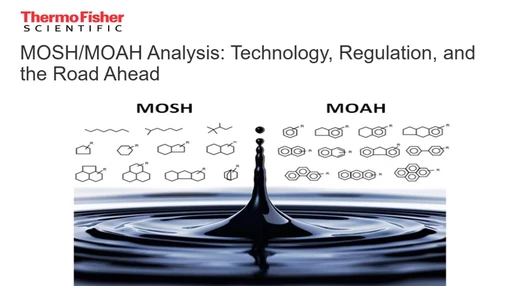
Mineral Oil Saturated Hydrocarbons (MOSH) and Mineral Oil Aromatic Hydrocarbons (MOAH) are complex mixtures rather than single compounds. Their broad carbon number distribution, co-elution with natural matrix components, and sensitivity to sample preparation steps make analysis technically demanding.

At the same time, regulatory scrutiny continues to increase, particularly for MOAH due to potential carcinogenicity. Laboratories must therefore balance:

  • Regulatory compliance
  • Robust quantification
  • Reliable identification of markers
  • High sample throughput

The Ask the Experts session focused on how modern, integrated workflows can help labs meet all these demands.

Are MOSH/MOAH sample preparation steps matrix dependent?

One of the most common questions from laboratories is whether MOSH/MOAH sample preparation can be standardized across all matrices.

The expert answer: it depends on the matrix—and validation is essential.

For fats and oils, certain steps are always required:

  • Saponification
  • Epoxidation

However, alumina (Alox) clean-up is matrix dependent. Practical comparisons show that:

  • Some matrices benefit from Alox clean-up
  • Others may suffer from analyte loss if Alox is applied unnecessarily

For non-fat matrices, sample preparation must be carefully selected, and method validation is critical to ensure accuracy and recovery.

Key takeaway: There is no universal sample prep recipe for MOSH/MOAH. Laboratories must adapt workflows to their matrices while staying aligned with ISO 20122 guidance.

Managing multiple sample prep options in a busy lab

Many labs analyze a wide variety of matrices daily. Running different sample prep workflows manually can be time-consuming and error-prone.

Experts highlighted how software-driven workflows help solve this challenge:

  • Multiple sample prep methods can run in the same sequence
  • Optional steps (such as Alox clean-up) can be toggled per sample
  • Overlapping methods maximize instrument utilization
  • Analysts only need to weigh samples and load reagents—automation handles the rest

E-workflows simplify method selection and ensure the correct prep is applied every time, reducing training requirements and minimizing human error.

For lab managers, this translates into:

  • Higher throughput
  • More consistent results
  • Less hands-on time for skilled analysts

Which internal standard is best for MOAH quantification?

Internal standard selection is critical for reliable MOAH quantification. The experts addressed this directly, referencing extensive comparative studies.

Three candidates were evaluated:

  • 1-Methylnaphthalene (1-MN)
  • 2-Methylnaphthalene (2-MN)
  • Tert-butylbenzene (TBB)

Based on repeatability, reproducibility, recovery, and accuracy, TBB emerged as the clear winner and is now specified in ISO 20122.

Why TBB?

  • More stable behavior across sample prep steps
  • Better overall performance in routine analysis
  • Improved consistency between laboratories

For labs updating or validating MOSH/MOAH methods, aligning internal standards with ISO recommendations is strongly advised.

How should ISO criteria for internal standard recovery be interpreted?

A frequent point of confusion is how to interpret internal standard recovery limits defined in ISO methods.

The experts clarified an important distinction:

  • Recovery criteria apply to direct injections of internal standards
  • All components should fall within 90–110% of the quantification standard
  • Perylene is allowed a slightly broader range (80–100%)

In real samples, internal standard recoveries can vary due to legitimate chemical effects:

  • Epoxidation may reduce perylene
  • Alox clean-up can reduce cholestane
  • Saponification may affect methylnaphthalenes
  • Some hydrocarbons may be naturally present in the matrix

Bottom line: Deviations in sample recoveries do not automatically indicate method failure. Understanding the chemistry behind each step is key to correct interpretation.

Do you still need LC-GC-FID if you have GC×GC-MS?

As GC×GC-MS becomes more accessible, many labs ask whether it can replace LC-GC-FID entirely.

According to current EURL guidance:

  • GC×GC is primarily intended for identification, not quantification
  • Quantification using GC×GC-FID is technically possible but not yet recommended
  • LC-GC-FID remains the reference technique for MOSH/MOAH quantification

GC×GC-MS plays a complementary role by:

  • Confirming the presence of aromatic markers and MOSH markers like hopanes, steranes and particular naphthenes
  • Differentiating mineral oil components from biogenic interferences
  • Supporting risk assessment and regulatory discussions

For now, the most robust approach is a combined workflow:

  • LC-GC-FID for quantification
  • GC×GC-FID/MS for confirmation and identification

Using specific ion masses for marker identification in GC×GC

GC×GC-MS offers powerful identification capabilities when used correctly.

Experts highlighted that:

  • The EURL provides recommended ion masses for key MOAH subgroups
  • Selective ion chromatograms (SICs) can be generated for markers such as:
    • Naphthalenes
    • Hopanes
    • Steranes
    • DIPNs

Using multiple SIC views alongside total ion chromatograms (TICs) allows:

  • Faster confirmation of markers
  • Clear differentiation from interferences
  • More confident reporting of MOAH presence

This approach significantly improves interpretability compared to relying on TICs alone.

How is GC×GC-MS data processed efficiently?

One concern with GC×GC-MS is the perceived complexity of data handling.

The experts demonstrated a streamlined workflow:

  • Instrument control and acquisition remain in Chromeleon S/W
  • Raw data are automatically exported for GC×GC processing
  • Templates are applied to identify known marker regions
  • Results are organized by vial, run, and detector channel

This structured approach ensures:

  • Consistent marker identification
  • Reduced manual data handling
  • Faster reporting despite large data volumes

For labs new to GC×GC, standardized templates and automated processing significantly reduce the learning curve.

Comparing FID and MS chromatograms: why it matters

Accurate comparison between FID and MS data is critical when combining quantification and identification.

Thanks to synchronized acquisition:

  • FID and MS chromatograms are recorded simultaneously
  • First-dimension retention times are identical
  • Second-dimension alignment is highly accurate

This enables:

  • Direct correlation of quantified FID regions with identified MS markers
  • Greater confidence in results
  • Stronger defensibility during audits and regulatory review

Why use a single quadrupole MS instead of TOF-MS?

Time-of-flight MS is often associated with GC×GC due to its high scan speed. However, experts explained why single quadrupole MS can be a practical alternative.

By optimizing scan speed:

  • Single quadrupole MS can capture sufficient data points
  • Complexity and cost are reduced
  • Compliance with EURL guidance is maintained

For many routine MOSH/MOAH applications, this offers an excellent balance between performance and operational efficiency.

Is offline sample preparation better for GC×GC?

There is no universal answer—workflow design depends on laboratory needs.

Integrated systems offer:

  • Minimal user intervention
  • Reduced risk of contamination
  • Streamlined operation

Separate systems allow:

  • Parallel operation
  • Higher overall throughput in some labs

The best choice depends on sample volume, staffing, and analytical priorities.

Final thoughts: Building a future-proof MOSH/MOAH workflow

MOSH/MOAH analysis is evolving rapidly, but some principles remain constant:

  • Robust quantification still relies on LC-GC-FID
  • GC×GC-FID/MS adds critical confirmation power
  • Automation and software workflows reduce complexity
  • Alignment with ISO and EURL guidance ensures defensibility

By combining expert knowledge with integrated technology, laboratories can confidently meet today’s regulatory requirements—while preparing for what comes next.

If you’re looking to optimize or future-proof your MOSH/MOAH analysis, the insights from this Ask the Experts session provide a strong foundation for success.

Petra Gerhards

Petra Gerhards, Dipl-Ing, is Regional Marketing Manager of GC and GC-MS for EMEA at Thermo Fisher Scientific. She has more than 29 years of experience in the fields of GC-MS, SPE and LC-MS. Since joining the regional team she has contributed to workflow solutions combining vials and closures with SPE solutions, GC-MS and LC-MS. She works with KOL's on data for regional specific marketing campaigns, organizes in-house seminars and works on customer specific solutions. Her main expertise is in the field of doping and drugs-of-abuse analysis.

Thermo Fisher Scientific
LinkedIn Logo
 

Related content

Quantitative Volatile PFAS Analysis in Textiles

Applications
| 2026 | Agilent Technologies
Instrumentation
GC/MSD, GC/MS/MS, GC/QQQ
Manufacturer
Agilent Technologies
Industries
Materials Testing

Effectiveness of the MonoTrap Collection Method for VOC Analysis in Exhaled Breath Using GC-MS

Applications
| 2026 | Shimadzu
Instrumentation
GC/MSD, Thermal desorption, GC/SQ
Manufacturer
Shimadzu
Industries
Clinical Research

Rapid analysis of organochlorine pesticides (OCPs) in soil samples using the EXTREVA ASE accelerated solvent extractor

Applications
| 2026 | Thermo Fisher Scientific
Instrumentation
Sample Preparation, GC
Manufacturer
Thermo Fisher Scientific
Industries
Environmental

Total Hydrocarbon Impurity Analysis in PEM Fuel Cell Grade Hydrogen Using the Agilent 8890 GC-FID System

Applications
| 2026 | Agilent Technologies
Instrumentation
GC
Manufacturer
Agilent Technologies
Industries
Energy & Chemicals

Analysis of Aroma Components in Apples Using the Smart Aroma Database

Applications
| 2026 | Shimadzu
Instrumentation
GC/MSD, GC/SQ, HeadSpace
Manufacturer
Shimadzu
Industries
Food & Agriculture
 

Related articles

Webinars LabRulezGCMS Week 12/2026
Article | Webinars

Webinars LabRulezGCMS Week 12/2026

3 webinars: Andrew+ automation, Deans switch GC, ecTOF metabolomics, EI CI acquisition, GC-HRMS, hydrogen carrier gas, lab automation users, steroid analysis
LabRulez
tag
share
more
Hop (Humulus lupulus L.) Phytochemical Profiles as a Function of Growth Region by HPLC and GC-MS Analysis
Scientific article | Science and research

Hop (Humulus lupulus L.) Phytochemical Profiles as a Function of Growth Region by HPLC and GC-MS Analysis

This study compares phytochemical profiles of Cascade hops from two U.S. regions using HPLC-DAD and HS-GC-MS, supporting evidence of hop terroir.
LabRulez
tag
share
more
ISC 2026 Deadline for abstract submission extended to 18 March 2026
Article | Events

ISC 2026 Deadline for abstract submission extended to 18 March 2026

ISC 2026 extends the oral abstract submission deadline to 18 March 2026. Take advantage of the extra time to prepare your contribution and secure a place in the scientific programme.
International Symposium on Chromatography - (ISC)
tag
share
more
ANALYTIKA at analytica 2026
Article | Events

ANALYTIKA at analytica 2026

Meet ANALYTIKA at analytica 2026 in Munich to explore certified reference materials for pH, matrix standards, and custom solutions supporting accurate, compliant laboratory analysis across industries.
ANALYTIKA
tag
share
more
 

Related content

Quantitative Volatile PFAS Analysis in Textiles

Applications
| 2026 | Agilent Technologies
Instrumentation
GC/MSD, GC/MS/MS, GC/QQQ
Manufacturer
Agilent Technologies
Industries
Materials Testing

Effectiveness of the MonoTrap Collection Method for VOC Analysis in Exhaled Breath Using GC-MS

Applications
| 2026 | Shimadzu
Instrumentation
GC/MSD, Thermal desorption, GC/SQ
Manufacturer
Shimadzu
Industries
Clinical Research

Rapid analysis of organochlorine pesticides (OCPs) in soil samples using the EXTREVA ASE accelerated solvent extractor

Applications
| 2026 | Thermo Fisher Scientific
Instrumentation
Sample Preparation, GC
Manufacturer
Thermo Fisher Scientific
Industries
Environmental

Total Hydrocarbon Impurity Analysis in PEM Fuel Cell Grade Hydrogen Using the Agilent 8890 GC-FID System

Applications
| 2026 | Agilent Technologies
Instrumentation
GC
Manufacturer
Agilent Technologies
Industries
Energy & Chemicals

Analysis of Aroma Components in Apples Using the Smart Aroma Database

Applications
| 2026 | Shimadzu
Instrumentation
GC/MSD, GC/SQ, HeadSpace
Manufacturer
Shimadzu
Industries
Food & Agriculture
 

Related articles

Webinars LabRulezGCMS Week 12/2026
Article | Webinars

Webinars LabRulezGCMS Week 12/2026

3 webinars: Andrew+ automation, Deans switch GC, ecTOF metabolomics, EI CI acquisition, GC-HRMS, hydrogen carrier gas, lab automation users, steroid analysis
LabRulez
tag
share
more
Hop (Humulus lupulus L.) Phytochemical Profiles as a Function of Growth Region by HPLC and GC-MS Analysis
Scientific article | Science and research

Hop (Humulus lupulus L.) Phytochemical Profiles as a Function of Growth Region by HPLC and GC-MS Analysis

This study compares phytochemical profiles of Cascade hops from two U.S. regions using HPLC-DAD and HS-GC-MS, supporting evidence of hop terroir.
LabRulez
tag
share
more
ISC 2026 Deadline for abstract submission extended to 18 March 2026
Article | Events

ISC 2026 Deadline for abstract submission extended to 18 March 2026

ISC 2026 extends the oral abstract submission deadline to 18 March 2026. Take advantage of the extra time to prepare your contribution and secure a place in the scientific programme.
International Symposium on Chromatography - (ISC)
tag
share
more
ANALYTIKA at analytica 2026
Article | Events

ANALYTIKA at analytica 2026

Meet ANALYTIKA at analytica 2026 in Munich to explore certified reference materials for pH, matrix standards, and custom solutions supporting accurate, compliant laboratory analysis across industries.
ANALYTIKA
tag
share
more
 

Related content

Quantitative Volatile PFAS Analysis in Textiles

Applications
| 2026 | Agilent Technologies
Instrumentation
GC/MSD, GC/MS/MS, GC/QQQ
Manufacturer
Agilent Technologies
Industries
Materials Testing

Effectiveness of the MonoTrap Collection Method for VOC Analysis in Exhaled Breath Using GC-MS

Applications
| 2026 | Shimadzu
Instrumentation
GC/MSD, Thermal desorption, GC/SQ
Manufacturer
Shimadzu
Industries
Clinical Research

Rapid analysis of organochlorine pesticides (OCPs) in soil samples using the EXTREVA ASE accelerated solvent extractor

Applications
| 2026 | Thermo Fisher Scientific
Instrumentation
Sample Preparation, GC
Manufacturer
Thermo Fisher Scientific
Industries
Environmental

Total Hydrocarbon Impurity Analysis in PEM Fuel Cell Grade Hydrogen Using the Agilent 8890 GC-FID System

Applications
| 2026 | Agilent Technologies
Instrumentation
GC
Manufacturer
Agilent Technologies
Industries
Energy & Chemicals

Analysis of Aroma Components in Apples Using the Smart Aroma Database

Applications
| 2026 | Shimadzu
Instrumentation
GC/MSD, GC/SQ, HeadSpace
Manufacturer
Shimadzu
Industries
Food & Agriculture
 

Related articles

Webinars LabRulezGCMS Week 12/2026
Article | Webinars

Webinars LabRulezGCMS Week 12/2026

3 webinars: Andrew+ automation, Deans switch GC, ecTOF metabolomics, EI CI acquisition, GC-HRMS, hydrogen carrier gas, lab automation users, steroid analysis
LabRulez
tag
share
more
Hop (Humulus lupulus L.) Phytochemical Profiles as a Function of Growth Region by HPLC and GC-MS Analysis
Scientific article | Science and research

Hop (Humulus lupulus L.) Phytochemical Profiles as a Function of Growth Region by HPLC and GC-MS Analysis

This study compares phytochemical profiles of Cascade hops from two U.S. regions using HPLC-DAD and HS-GC-MS, supporting evidence of hop terroir.
LabRulez
tag
share
more
ISC 2026 Deadline for abstract submission extended to 18 March 2026
Article | Events

ISC 2026 Deadline for abstract submission extended to 18 March 2026

ISC 2026 extends the oral abstract submission deadline to 18 March 2026. Take advantage of the extra time to prepare your contribution and secure a place in the scientific programme.
International Symposium on Chromatography - (ISC)
tag
share
more
ANALYTIKA at analytica 2026
Article | Events

ANALYTIKA at analytica 2026

Meet ANALYTIKA at analytica 2026 in Munich to explore certified reference materials for pH, matrix standards, and custom solutions supporting accurate, compliant laboratory analysis across industries.
ANALYTIKA
tag
share
more
 

Related content

Quantitative Volatile PFAS Analysis in Textiles

Applications
| 2026 | Agilent Technologies
Instrumentation
GC/MSD, GC/MS/MS, GC/QQQ
Manufacturer
Agilent Technologies
Industries
Materials Testing

Effectiveness of the MonoTrap Collection Method for VOC Analysis in Exhaled Breath Using GC-MS

Applications
| 2026 | Shimadzu
Instrumentation
GC/MSD, Thermal desorption, GC/SQ
Manufacturer
Shimadzu
Industries
Clinical Research

Rapid analysis of organochlorine pesticides (OCPs) in soil samples using the EXTREVA ASE accelerated solvent extractor

Applications
| 2026 | Thermo Fisher Scientific
Instrumentation
Sample Preparation, GC
Manufacturer
Thermo Fisher Scientific
Industries
Environmental

Total Hydrocarbon Impurity Analysis in PEM Fuel Cell Grade Hydrogen Using the Agilent 8890 GC-FID System

Applications
| 2026 | Agilent Technologies
Instrumentation
GC
Manufacturer
Agilent Technologies
Industries
Energy & Chemicals

Analysis of Aroma Components in Apples Using the Smart Aroma Database

Applications
| 2026 | Shimadzu
Instrumentation
GC/MSD, GC/SQ, HeadSpace
Manufacturer
Shimadzu
Industries
Food & Agriculture
 

Related articles

Webinars LabRulezGCMS Week 12/2026
Article | Webinars

Webinars LabRulezGCMS Week 12/2026

3 webinars: Andrew+ automation, Deans switch GC, ecTOF metabolomics, EI CI acquisition, GC-HRMS, hydrogen carrier gas, lab automation users, steroid analysis
LabRulez
tag
share
more
Hop (Humulus lupulus L.) Phytochemical Profiles as a Function of Growth Region by HPLC and GC-MS Analysis
Scientific article | Science and research

Hop (Humulus lupulus L.) Phytochemical Profiles as a Function of Growth Region by HPLC and GC-MS Analysis

This study compares phytochemical profiles of Cascade hops from two U.S. regions using HPLC-DAD and HS-GC-MS, supporting evidence of hop terroir.
LabRulez
tag
share
more
ISC 2026 Deadline for abstract submission extended to 18 March 2026
Article | Events

ISC 2026 Deadline for abstract submission extended to 18 March 2026

ISC 2026 extends the oral abstract submission deadline to 18 March 2026. Take advantage of the extra time to prepare your contribution and secure a place in the scientific programme.
International Symposium on Chromatography - (ISC)
tag
share
more
ANALYTIKA at analytica 2026
Article | Events

ANALYTIKA at analytica 2026

Meet ANALYTIKA at analytica 2026 in Munich to explore certified reference materials for pH, matrix standards, and custom solutions supporting accurate, compliant laboratory analysis across industries.
ANALYTIKA
tag
share
more
Other projects
LCMS
ICPMS
Follow us
FacebookX (Twitter)LinkedInYouTube
More information
WebinarsAbout usContact usTerms of use
LabRulez s.r.o. All rights reserved. Content available under a CC BY-SA 4.0 Attribution-ShareAlike