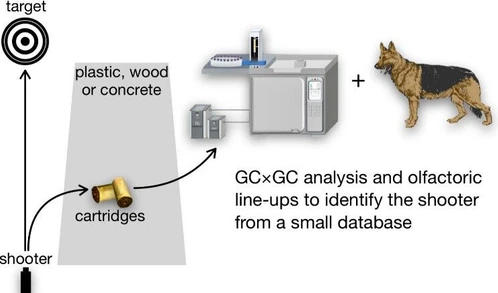
Forensic olfactronics and human scent signatures created from GC×GC-MS data (Stepan Urban, MDCW 2025)
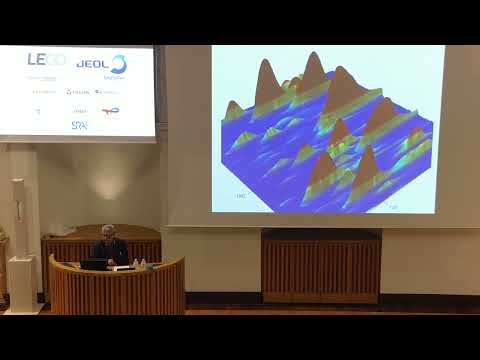
- Photo: MDCW: Forensic olfactronics and human scent signatures
created from GC×GC-MS data (Stepan Urban, MDCW 2025) - Video: LabRulez: Stepan Urban: Forensic olfactronics and human scent signatures created from GC×GC-MS data (MDCW 2025)
🎤 Presenter: Štěpán Urban (University of Chemistry and Technology in Prague, Prague, Czech Republic)
💡 Book in your calendar: 17th Multidimensional Chromatography Workshop (MDCW) 13 - 15. January 2026
Video transcription
Can human scent be used for personal identification, much like a fingerprint? Professor Štěpán Urban from the University of Chemistry and Technology in Prague answers this with a resounding yes. His pioneering work in forensic olfactronics explores how advanced analytical techniques like comprehensive two-dimensional gas chromatography (GC×GC-TOF-MS) can be used to decode the complex chemical profile of human scent, leading to accurate identification—even surpassing some capabilities of trained canines.
👃 The Science of Human Scent
Human scent is a volatile chemical mixture of tens of thousands of compounds, with recent research detecting over 60,000 unique molecules in a single sample using GC×GC‑TOF-MS. These molecules can be grouped into three categories:
- Primary scent: Genetically determined and individual-specific, stable over time. Forms the basis for forensic identification.
- Secondary scent: Varies based on lifestyle, diet, health, medication, and environment.
- Tertiary scent: Comes from external sources like cosmetics, pets, and surroundings.
Digital Scent Signatures
With the ability to analyze scent at ultra-high resolution, the team created digital human scent signatures by selecting and comparing concentration ratios of primary compounds. These can be stored in a searchable database, allowing for comparison with unknown samples to confirm a person’s identity.
Real-World Applications
The research, initially sparked by a request from Czech police in 2013, has expanded into:
- Individual identification via scent signatures
- Class-based differentiation (e.g. male vs. female, blood types, ethnic origin)
- Medical olfactronics, investigating how diseases like diabetes, Alzheimer’s, Parkinson’s, and cancer alter scent profiles through DNA-related changes
Key Insights from the Research
- Scent is nearly impossible to hide—billions of molecules are emitted even from a single open palm every second.
- GC×GC-TOF-MS offers sensitivity approaching trained dogs, but with the added benefit of creating searchable and reproducible datasets.
- Applications range from criminal forensics to early diagnostics in medicine.
This text has been automatically transcribed from a video presentation using AI technology. It may contain inaccuracies and is not guaranteed to be 100% correct.
-Workshop-LOGO_s.webp)