GCMS
More information
WebinarsAbout usContact usTerms of use
LabRulez s.r.o. All rights reserved. Content available under a CC BY-SA 4.0 Attribution-ShareAlike
Author
William & Mary
William & Mary
We're different, and we like it that way. William & Mary is unlike any other university in America. We’re the second oldest institution of higher education in the nation, but also a cutting-edge research university. We’re highly selective, but also public, offering a world-class education without the sticker shock.
Tags
Article
Science and research
Video
Toxicology
LinkedIn Logo

A Winning Lab

We, 12.2.2025
| Original article from: William & Mary /Annie Powell
A Winning Lab - Chemistry professor receives new lab equipment that expands research capacity and student training.
Video placeholder
  • Photo: William & Mary: A Winning Lab
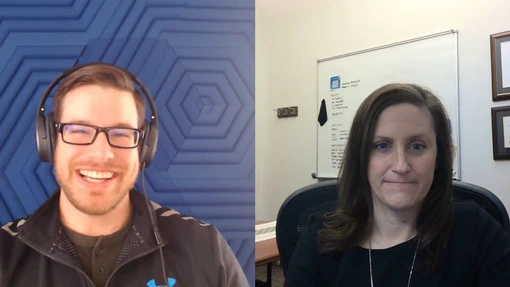
  • Video: Pittcon: Katelynn Perrault: 2D Gas Chromatography in Forensic Science

When a police dog is tasked with finding a missing person, which odors will guide its search? And which combination of chemicals forms those odors?

Katelynn Perrault Uptmor, assistant professor of chemistry at William & Mary, answers questions like these in her research into the chemical breakdown of substances involved in forensics (such as decomposing remains or fingerprint residue) and food (including coffee and kombucha). Now, she has a new, state-of-the-art instrument to elevate her work.

In June 2024, Perrault Uptmor won a national contest and was awarded an advanced piece of lab equipment: a brand-new Leco Pegasus BTX 4D with Paradigm Shift Flow Modular from Leco Corp., one of the leaders of separation science tools.

William & Mary: Expanding Research: Chemistry professor Katelynn Perrault Uptmor (center) stands with research students at her lab in the Integrated Science Center. (Photos courtesy of Katelynn Perrault Uptmor)William & Mary: Expanding Research: Chemistry professor Katelynn Perrault Uptmor (center) stands with research students at her lab in the Integrated Science Center. (Photos courtesy of Katelynn Perrault Uptmor)

The new instrument will be a valued addition to Perrault Uptmor’s lab, where she studies the composition and structure of matter through separation science tools. It will increase the capacity of her lab’s productivity, provide additional research opportunities for students and enable her to solve more complex research questions.

“I'm not the chemist who sits at a bench mixing chemicals together to make something new. I'm the chemist who tries to find out what something is made of,” says Perrault Uptmor.

She arrived at William & Mary in August 2023 after an academic world tour: After growing up in Toronto, she moved to Australia to complete a Ph.D., traveled to Belgium for postdoctoral training and accepted her first faculty position at Chaminade University of Honolulu in Hawaii. At W&M, she is excited about having increased resources, time for research and students who are eager to embark on chemistry research.

The new equipment from Leco will further energize her work, which utilizes a process called comprehensive two-dimensional gas chromatography (GC×GC) to identify the components of chemical samples.

William & Mary: The new Leco equipment arrived at Perrault Uptmor's lab in the summer of 2024William & Mary: The new Leco equipment arrived at Perrault Uptmor's lab in the summer of 2024

“Based on the lab’s needs, the importance of the work being done and the genuine passion for GC×GC, we believe she is the most deserving of this state-of-the-art equipment,” says John Hayes, separation science product manager at Leco.

 The process of gas chromatography allows Perrault Uptmor to gain a more comprehensive separation of all the chemicals in a sample and therefore acquire more specific data. The Leco instrument is further advanced in this process than alternative separation science tools, with superior sensitivity and sustainability. 

Emma Macturk, a graduate student in chemistry who studies the composition of fingerprint residue in Perrault Uptmor’s lab, says that the gift will significantly improve the lab’s ability to conduct separation research: “With more sophisticated instrumentation, we can ask and answer more complex questions.”

GC×GC instruments contain tubes (called capillaries) through which samples travel as they are separated into their different components. The capillaries in many conventional GC×GC instruments are not long enough to separate the hundreds of compounds in Perrault Uptmor’s complex samples. But the Leco GC×GC instrument contains two capillaries connected via an interface, enabling better detection and sensitivity.  

The new instrument also provides a more sustainable process of research, a feature that both Perrault Uptmor and Macturk emphasize. The improved sustainability stems from the instrument’s modulator, which enables the process of separation. Other instruments use temperature to control separation — increasing heat to speed up the process and cooling to slow it down — and requires a constant supply of liquid cryogens. But the new Leco instrument uses valves to stop and release flow, a much greener approach. The old approach costs money and time and resources, Perrault Uptmor says, while the new system avoids those constraints.

William & Mary: Perrault Uptmor started teaching and researching in the chemistry department at W&M in August 2023.William & Mary: Perrault Uptmor started teaching and researching in the chemistry department at W&M in August 2023.

The mechanical details of the new equipment are exciting; the consequent increased capacity for her lab and the impact on her students’ research is even more so, she says.

“This is a huge capacity build that allows us to essentially run double the number of projects, which means more undergraduate students get training on it,” says Perrault Uptmor.

Professor of Chemistry J.C. Poutsma, a fellow analytical chemist, is similarly enthusiastic about the impact of the equipment on student education and training: “We are delighted that Leco chose Kate to receive the new mass spectrometer. The acquisition of this state-of-the-art instrument will allow our undergraduate chemistry majors to experience cutting-edge mass spectrometry techniques in both classroom and independent research settings.”

Perrault Uptmor currently has seven undergraduates and one graduate student working in her lab. Students often begin as volunteers before signing up to do research for credit and working in the lab over the summer “My goal is for them to be fully responsible for their own project, take ownership of that project and get an authentic research experience,” she says.

While students take the lead on individual projects, there is still frequent collaboration in the lab. And students have one-on-one instruction with Perrault Uptmor as well, often working through data analysis strategies and software development.

Kira Fisher ’26, a chemistry major, works in Perrault Uptmor’s lab developing an easy workflow for method development with the GC×GC process. Fisher arrived at chemistry research after an initial interest in forensic science. Another chemistry professor directed her to Perrault Uptmor’s lab, where she has conducted research that she presented at the Eastern Analytical Symposium and the W&M Fall Undergraduate Research Symposium.

William & Mary: Perrault Uptmor's students will gain research experience with the new Leco instrument that is in demand with employersWilliam & Mary: Perrault Uptmor's students will gain research experience with the new Leco instrument that is in demand with employers

“I have gained so much hands-on experience in the lab. I feel comfortable analyzing data on my own and doing daily lab tasks by myself — something I was not comfortable doing before joining this lab,” Fisher says.

Sarah Foster ’27, another student in Perrault Uptmor’s lab, got an early start in the lab in the fall of her first year at W&M. Foster is working on two research projects: analyzing volatile organic compounds (VOCs) present in fresh versus fermented poi (a traditional Polynesian food) and analyzing VOCs in different brands of kombucha. For the kombucha project, she is using the new Leco instrument.

“It is really amazing to have the opportunity to work with new instrumentation like the Leco instruments we have in our lab,” Foster says. “At first, I was nervous to work with such fancy equipment, but Dr. Kate really helped me feel comfortable around everything. It is a real confidence boost to be trusted to run the instruments and take care of regular lab maintenance.”

This past summer, Foster accepted a summer fellowship with the Food and Drug Administration through the Oak Ridge Institute for Science and Education, where she performed bioanalytical chemistry research.

Experience with lab work and this type of instrumentation will be beneficial for W&M chemistry students’ career options.

“A large majority of companies want students that are trained in analytical chemistry. And a lot of schools are actually minimizing their analytical departments,” says Perrault Uptmor.

With the addition of the Leco instrument, Perrault Uptmor’s lab will distinguish the W&M chemistry department from those at other universities and ensure that students can develop highly marketable job skills. “From a research and teaching perspective,” she says, “this is really exciting.”

William & Mary
LinkedIn Logo
 

Related content

Quantitative Volatile PFAS Analysis in Textiles

Applications
| 2026 | Agilent Technologies
Instrumentation
GC/MSD, GC/MS/MS, GC/QQQ
Manufacturer
Agilent Technologies
Industries
Materials Testing

Effectiveness of the MonoTrap Collection Method for VOC Analysis in Exhaled Breath Using GC-MS

Applications
| 2026 | Shimadzu
Instrumentation
GC/MSD, Thermal desorption, GC/SQ
Manufacturer
Shimadzu
Industries
Clinical Research

Rapid analysis of organochlorine pesticides (OCPs) in soil samples using the EXTREVA ASE accelerated solvent extractor

Applications
| 2026 | Thermo Fisher Scientific
Instrumentation
Sample Preparation, GC
Manufacturer
Thermo Fisher Scientific
Industries
Environmental

Total Hydrocarbon Impurity Analysis in PEM Fuel Cell Grade Hydrogen Using the Agilent 8890 GC-FID System

Applications
| 2026 | Agilent Technologies
Instrumentation
GC
Manufacturer
Agilent Technologies
Industries
Energy & Chemicals

Analysis of Aroma Components in Apples Using the Smart Aroma Database

Applications
| 2026 | Shimadzu
Instrumentation
GC/MSD, GC/SQ, HeadSpace
Manufacturer
Shimadzu
Industries
Food & Agriculture
 

Related articles

The Effect of Needle Gauge and Flow Rate on Evaporation Rate
Article | Science and research

The Effect of Needle Gauge and Flow Rate on Evaporation Rate

The study evaluates how needle gauge, nitrogen flow rate, and needle design influence solvent evaporation rate during sample concentration and provides practical optimization guidance.
Organomation
tag
share
more
News from LabRulezGCMS Library - Week 11, 2026
Article | Application

News from LabRulezGCMS Library - Week 11, 2026

This week we bring you application notes by Agilent Technologies, Shimadzu and Thermo Fisher Scientific and poster by MDCW / C³AL!
LabRulez
tag
share
more
CATRIN researchers offer a “greener” way to make supercapacitors
Article | Science and research

CATRIN researchers offer a “greener” way to make supercapacitors

CATRIN scientists show that green solvents Cyrene and Tamisolve can replace toxic NMP in supercapacitor production while maintaining high electrochemical performance and enabling more sustainable manufacturing.
CATRIN
tag
share
more
Teaching Separation Science in High School
Interview | Scientists

Teaching Separation Science in High School

This interview explores how high school students learn separation science through filtration, gravimetric analysis, and chromatography, building the foundations for future chemistry studies.
Organomation
tag
share
more
 

Related content

Quantitative Volatile PFAS Analysis in Textiles

Applications
| 2026 | Agilent Technologies
Instrumentation
GC/MSD, GC/MS/MS, GC/QQQ
Manufacturer
Agilent Technologies
Industries
Materials Testing

Effectiveness of the MonoTrap Collection Method for VOC Analysis in Exhaled Breath Using GC-MS

Applications
| 2026 | Shimadzu
Instrumentation
GC/MSD, Thermal desorption, GC/SQ
Manufacturer
Shimadzu
Industries
Clinical Research

Rapid analysis of organochlorine pesticides (OCPs) in soil samples using the EXTREVA ASE accelerated solvent extractor

Applications
| 2026 | Thermo Fisher Scientific
Instrumentation
Sample Preparation, GC
Manufacturer
Thermo Fisher Scientific
Industries
Environmental

Total Hydrocarbon Impurity Analysis in PEM Fuel Cell Grade Hydrogen Using the Agilent 8890 GC-FID System

Applications
| 2026 | Agilent Technologies
Instrumentation
GC
Manufacturer
Agilent Technologies
Industries
Energy & Chemicals

Analysis of Aroma Components in Apples Using the Smart Aroma Database

Applications
| 2026 | Shimadzu
Instrumentation
GC/MSD, GC/SQ, HeadSpace
Manufacturer
Shimadzu
Industries
Food & Agriculture
 

Related articles

The Effect of Needle Gauge and Flow Rate on Evaporation Rate
Article | Science and research

The Effect of Needle Gauge and Flow Rate on Evaporation Rate

The study evaluates how needle gauge, nitrogen flow rate, and needle design influence solvent evaporation rate during sample concentration and provides practical optimization guidance.
Organomation
tag
share
more
News from LabRulezGCMS Library - Week 11, 2026
Article | Application

News from LabRulezGCMS Library - Week 11, 2026

This week we bring you application notes by Agilent Technologies, Shimadzu and Thermo Fisher Scientific and poster by MDCW / C³AL!
LabRulez
tag
share
more
CATRIN researchers offer a “greener” way to make supercapacitors
Article | Science and research

CATRIN researchers offer a “greener” way to make supercapacitors

CATRIN scientists show that green solvents Cyrene and Tamisolve can replace toxic NMP in supercapacitor production while maintaining high electrochemical performance and enabling more sustainable manufacturing.
CATRIN
tag
share
more
Teaching Separation Science in High School
Interview | Scientists

Teaching Separation Science in High School

This interview explores how high school students learn separation science through filtration, gravimetric analysis, and chromatography, building the foundations for future chemistry studies.
Organomation
tag
share
more
 

Related content

Quantitative Volatile PFAS Analysis in Textiles

Applications
| 2026 | Agilent Technologies
Instrumentation
GC/MSD, GC/MS/MS, GC/QQQ
Manufacturer
Agilent Technologies
Industries
Materials Testing

Effectiveness of the MonoTrap Collection Method for VOC Analysis in Exhaled Breath Using GC-MS

Applications
| 2026 | Shimadzu
Instrumentation
GC/MSD, Thermal desorption, GC/SQ
Manufacturer
Shimadzu
Industries
Clinical Research

Rapid analysis of organochlorine pesticides (OCPs) in soil samples using the EXTREVA ASE accelerated solvent extractor

Applications
| 2026 | Thermo Fisher Scientific
Instrumentation
Sample Preparation, GC
Manufacturer
Thermo Fisher Scientific
Industries
Environmental

Total Hydrocarbon Impurity Analysis in PEM Fuel Cell Grade Hydrogen Using the Agilent 8890 GC-FID System

Applications
| 2026 | Agilent Technologies
Instrumentation
GC
Manufacturer
Agilent Technologies
Industries
Energy & Chemicals

Analysis of Aroma Components in Apples Using the Smart Aroma Database

Applications
| 2026 | Shimadzu
Instrumentation
GC/MSD, GC/SQ, HeadSpace
Manufacturer
Shimadzu
Industries
Food & Agriculture
 

Related articles

The Effect of Needle Gauge and Flow Rate on Evaporation Rate
Article | Science and research

The Effect of Needle Gauge and Flow Rate on Evaporation Rate

The study evaluates how needle gauge, nitrogen flow rate, and needle design influence solvent evaporation rate during sample concentration and provides practical optimization guidance.
Organomation
tag
share
more
News from LabRulezGCMS Library - Week 11, 2026
Article | Application

News from LabRulezGCMS Library - Week 11, 2026

This week we bring you application notes by Agilent Technologies, Shimadzu and Thermo Fisher Scientific and poster by MDCW / C³AL!
LabRulez
tag
share
more
CATRIN researchers offer a “greener” way to make supercapacitors
Article | Science and research

CATRIN researchers offer a “greener” way to make supercapacitors

CATRIN scientists show that green solvents Cyrene and Tamisolve can replace toxic NMP in supercapacitor production while maintaining high electrochemical performance and enabling more sustainable manufacturing.
CATRIN
tag
share
more
Teaching Separation Science in High School
Interview | Scientists

Teaching Separation Science in High School

This interview explores how high school students learn separation science through filtration, gravimetric analysis, and chromatography, building the foundations for future chemistry studies.
Organomation
tag
share
more
 

Related content

Quantitative Volatile PFAS Analysis in Textiles

Applications
| 2026 | Agilent Technologies
Instrumentation
GC/MSD, GC/MS/MS, GC/QQQ
Manufacturer
Agilent Technologies
Industries
Materials Testing

Effectiveness of the MonoTrap Collection Method for VOC Analysis in Exhaled Breath Using GC-MS

Applications
| 2026 | Shimadzu
Instrumentation
GC/MSD, Thermal desorption, GC/SQ
Manufacturer
Shimadzu
Industries
Clinical Research

Rapid analysis of organochlorine pesticides (OCPs) in soil samples using the EXTREVA ASE accelerated solvent extractor

Applications
| 2026 | Thermo Fisher Scientific
Instrumentation
Sample Preparation, GC
Manufacturer
Thermo Fisher Scientific
Industries
Environmental

Total Hydrocarbon Impurity Analysis in PEM Fuel Cell Grade Hydrogen Using the Agilent 8890 GC-FID System

Applications
| 2026 | Agilent Technologies
Instrumentation
GC
Manufacturer
Agilent Technologies
Industries
Energy & Chemicals

Analysis of Aroma Components in Apples Using the Smart Aroma Database

Applications
| 2026 | Shimadzu
Instrumentation
GC/MSD, GC/SQ, HeadSpace
Manufacturer
Shimadzu
Industries
Food & Agriculture
 

Related articles

The Effect of Needle Gauge and Flow Rate on Evaporation Rate
Article | Science and research

The Effect of Needle Gauge and Flow Rate on Evaporation Rate

The study evaluates how needle gauge, nitrogen flow rate, and needle design influence solvent evaporation rate during sample concentration and provides practical optimization guidance.
Organomation
tag
share
more
News from LabRulezGCMS Library - Week 11, 2026
Article | Application

News from LabRulezGCMS Library - Week 11, 2026

This week we bring you application notes by Agilent Technologies, Shimadzu and Thermo Fisher Scientific and poster by MDCW / C³AL!
LabRulez
tag
share
more
CATRIN researchers offer a “greener” way to make supercapacitors
Article | Science and research

CATRIN researchers offer a “greener” way to make supercapacitors

CATRIN scientists show that green solvents Cyrene and Tamisolve can replace toxic NMP in supercapacitor production while maintaining high electrochemical performance and enabling more sustainable manufacturing.
CATRIN
tag
share
more
Teaching Separation Science in High School
Interview | Scientists

Teaching Separation Science in High School

This interview explores how high school students learn separation science through filtration, gravimetric analysis, and chromatography, building the foundations for future chemistry studies.
Organomation
tag
share
more
Other projects
LCMS
ICPMS
Follow us
FacebookX (Twitter)LinkedInYouTube
More information
WebinarsAbout usContact usTerms of use
LabRulez s.r.o. All rights reserved. Content available under a CC BY-SA 4.0 Attribution-ShareAlike