GCMS
More information
WebinarsAbout usContact usTerms of use
LabRulez s.r.o. All rights reserved. Content available under a CC BY-SA 4.0 Attribution-ShareAlike
Author
Czech Academy of Sciences
The Czech Academy of Sciences (CAS) was established by Act No. 283/1992 Coll. as the Czech successor of the former Czechoslovak Academy of Sciences. It is set up as a complex of 54 public research institutions.
Tags
Article
Science and research
LinkedIn Logo

AMULET project to focus on multiscale materials development

Tu, 2.7.2024
| Original article from: CAS/Markéta Wernerová, Tereza Novická
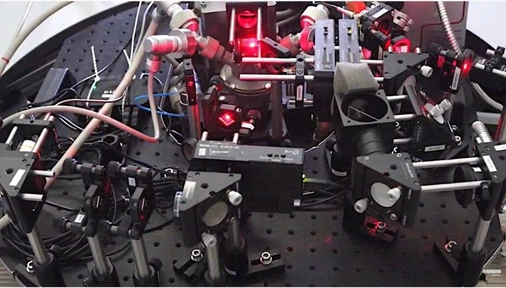
The research and development of multiscale materials is being carried out by researchers as part of the AMULET project led by the J. Heyrovský Institute of Physical Chemistry of the CAS.
<ul>
<li><strong>Photo:</strong> CAS: AMULET project to focus on multiscale materials development</li>
</ul>
  • Photo: CAS: AMULET project to focus on multiscale materials development

Multiscale materials could find practical applications in electrical engineering, medicine, and environmental technologies. Their research and development is being carried out by researchers as part of the AMULET project led by the J. Heyrovský Institute of Physical Chemistry of the CAS. The consortium of eight partners from academia and research has received funding in the amount of nearly half a billion crowns in the ‘Excellence in Research’ call from the Johannes Amos Comenius Programme of the Czech Ministry of Education, Youth and Sports.

The aim of the AMULET (Advanced MUltiscaLe materials for key Enabling Technologies) project is clearly defined – to develop advanced materials with a wide range of applications. By combining zero-dimensional (quantum dots), one-dimensional (e.g., nanotubes), and two-dimensional (e.g., graphene) materials, experts are developing multiscale materials to give them new and unusual properties. Smart materials with unique functionalities and surprising applications in many different fields can thus be obtained by combining these nanomaterials.

Which unusual properties are these in particular? According to the project’s coordinator, Martin Kalbáč from the J. Heyrovský Institute of Physical Chemistry of the CAS, there is an entire range of them and it is not exactly an easy feat to define them in general terms.

CAS/Jana Plavec: AMULET project to focus on multiscale materials development.CAS/Jana Plavec: AMULET project to focus on multiscale materials development.

“I’ll give the example of graphene, which is probably the most well-known two-dimensional material. It exhibits both optical transparency and electrically conductive properties, which can be utilised for things like touchscreens. It is also interesting that charge carriers in graphene, such as electrons, can move over a large distance without scattering occurring. In practice, this can be utilised for the design of electronic components,” Kalbáč explains.

However, graphene is a semimetal and, in this form, cannot be used for applications in conventional transistors, which require a semiconductor material. “However, if we correctly combine two graphene layers, the resulting material, under certain conditions, can exhibit semiconducting properties. In the context of macroscopic objects, such changes in fundamental physical properties are hard to imagine,” the researcher adds.

CAS/Jana Plavec: Martin Kalbáč (J. Heyrovský Institute of Physical Chemistry), the AMULET project coordinator.CAS/Jana Plavec: Martin Kalbáč (J. Heyrovský Institute of Physical Chemistry), the AMULET project coordinator.

Modern materials science

Current trends in materials science draw inspiration from nature. Beyond naturally occurring elements and compounds, nature enables so-called material genetics, i.e., the targeted folding and “cross-breeding” of material components in 3D space. “Research of one- and two-dimensional materials has become very popular recently. One of the main ideas of the project is to combine these materials in a targeted way,” says Kalbáč, adding that the project will integrate a number of trends in the field of nanomaterials research, which may lead to unexpected discoveries of unique functionalities.

Experts will be investigating how multiscale materials interact with biological environments and whether they can be used for electrochemical or optical sensors and in electro-photochemical catalysis to remove harmful substances from air and water. They will also test new nano/micro-devices that can be used for energy conversion, production, and storage.

A large part of Kalbač’s home institute is involved in the AMULET project. “To name several significant points of interest we’re focusing on, I would mention the preparation and use of atomic clusters, the development of super-resolution optical microscopy, and the use of multiscale materials for special sensors and detectors, on which we will be working closely with the Faculty of Mathematics and Physics at Charles University,” the researcher adds.

As part of the international scientific board of the AMULET project, the progress and direction of the research will be overseen by Konstantin Novoselov, winner of the Nobel Prize in Physics for the discovery of graphene. “As the discoverer of graphene, Professor Novoselov is an icon in the field of 2D materials research. I am delighted that he has been able to join the project’s scientific board. I would like to thank my colleague Matěj Velický, who has been instrumental in helping make this happen,” Kalbáč adds.

CAS/Jana Plavec: AMULET project to focus on multiscale materials development.CAS/Jana Plavec: AMULET project to focus on multiscale materials development.

Half a billion crowns in funding

AMULET succeeded in competition with 66 projects submitted to the Excellence in Research Call in the Johannes Amos Comenius Programme administered by the Czech Ministry of Education, Youth and Sports. The call is aimed at supporting research with the potential for excellent results applicable in practice. The money is earmarked for excellent research teams that will help Czech scientific institutions deepen their relations with international partners and also strengthen the competitiveness of the Czech Republic in the long run.

The project, coordinated by the J. Heyrovský Institute of Physical Chemistry of the CAS, will receive almost half a billion crowns from the programme. “Approximately one third of this amount will go to my home institute. I am very happy that our project succeeded, as it will help us retain experts that we would otherwise probably lose due to lack of funding,” Kalbáč adds.

The consortium consists of eight partners – five institutes of the Czech Academy of Sciences and three Czech universities. “Coordinating such a large project is quite the challenge. On the other hand, I will be assisted by an administrative team from our institute. The partner institutions are represented by my colleagues with whom I have always had a good experience working together, so I believe that we will successfully be able to build on this cooperation,” Kalbáč concludes.

The following CAS institutes are involved in the project:

  • J. Heyrovský Institute of Physical Chemistry of the CAS (Martin Kalbáč, the main coordinator of the project)
  • Institute of Photonics and Electronics of the CAS (Jiří Homola)
  • Institute of Organic Chemistry and Biochemistry of the CAS (Petr Cígler)
  • Institute of Physics of the CAS (Jiří Červenka)
  • Nuclear Physics Institute of the CAS (Anna Macková)
  • Charles University, Faculty of Mathematics and Physics (Jana Kalbáčová Vejpravová)
  • University of Chemical Technology, Prague (Zdeněk Sofer)
  • Jan Evangelista Purkyně University, Faculty of Science (Zdeňka Kolská)

CAS: AMULET project to focus on multiscale materials development - the project partners.CAS: AMULET project to focus on multiscale materials development - the project partners.

Resources
  • The press release is available on the website of the J. Heyrovský Institute of Physical Chemistry of the Czech Academy of Sciences.
Czech Academy of Sciences
LinkedIn Logo
 

Related content

Quantitative Volatile PFAS Analysis in Textiles

Applications
| 2026 | Agilent Technologies
Instrumentation
GC/MSD, GC/MS/MS, GC/QQQ
Manufacturer
Agilent Technologies
Industries
Materials Testing

Effectiveness of the MonoTrap Collection Method for VOC Analysis in Exhaled Breath Using GC-MS

Applications
| 2026 | Shimadzu
Instrumentation
GC/MSD, Thermal desorption, GC/SQ
Manufacturer
Shimadzu
Industries
Clinical Research

Rapid analysis of organochlorine pesticides (OCPs) in soil samples using the EXTREVA ASE accelerated solvent extractor

Applications
| 2026 | Thermo Fisher Scientific
Instrumentation
Sample Preparation, GC
Manufacturer
Thermo Fisher Scientific
Industries
Environmental

Total Hydrocarbon Impurity Analysis in PEM Fuel Cell Grade Hydrogen Using the Agilent 8890 GC-FID System

Applications
| 2026 | Agilent Technologies
Instrumentation
GC
Manufacturer
Agilent Technologies
Industries
Energy & Chemicals

Analysis of Aroma Components in Apples Using the Smart Aroma Database

Applications
| 2026 | Shimadzu
Instrumentation
GC/MSD, GC/SQ, HeadSpace
Manufacturer
Shimadzu
Industries
Food & Agriculture
 

Related articles

The Effect of Needle Gauge and Flow Rate on Evaporation Rate
Article | Science and research

The Effect of Needle Gauge and Flow Rate on Evaporation Rate

The study evaluates how needle gauge, nitrogen flow rate, and needle design influence solvent evaporation rate during sample concentration and provides practical optimization guidance.
Organomation
tag
share
more
Sniff smarter: Empowering GC–O with trap-based enrichment and GC×GC for advanced aroma profiling (Lina Mikaliunaite, MDCW 2026)
Presentation | Video

Sniff smarter: Empowering GC–O with trap-based enrichment and GC×GC for advanced aroma profiling (Lina Mikaliunaite, MDCW 2026)

Integrating GC-O with GC×GC enables a direct link between chemical data and sensory perception. Sample enrichment, two-dimensional separation, and chemometrics improve aroma analysis.
The Multidimensional Chromatography Workshop
tag
share
more
News from LabRulezGCMS Library - Week 11, 2026
Article | Application

News from LabRulezGCMS Library - Week 11, 2026

This week we bring you application notes by Agilent Technologies, Shimadzu and Thermo Fisher Scientific and poster by MDCW / C³AL!
LabRulez
tag
share
more
CATRIN researchers offer a “greener” way to make supercapacitors
Article | Science and research

CATRIN researchers offer a “greener” way to make supercapacitors

CATRIN scientists show that green solvents Cyrene and Tamisolve can replace toxic NMP in supercapacitor production while maintaining high electrochemical performance and enabling more sustainable manufacturing.
CATRIN
tag
share
more
 

Related content

Quantitative Volatile PFAS Analysis in Textiles

Applications
| 2026 | Agilent Technologies
Instrumentation
GC/MSD, GC/MS/MS, GC/QQQ
Manufacturer
Agilent Technologies
Industries
Materials Testing

Effectiveness of the MonoTrap Collection Method for VOC Analysis in Exhaled Breath Using GC-MS

Applications
| 2026 | Shimadzu
Instrumentation
GC/MSD, Thermal desorption, GC/SQ
Manufacturer
Shimadzu
Industries
Clinical Research

Rapid analysis of organochlorine pesticides (OCPs) in soil samples using the EXTREVA ASE accelerated solvent extractor

Applications
| 2026 | Thermo Fisher Scientific
Instrumentation
Sample Preparation, GC
Manufacturer
Thermo Fisher Scientific
Industries
Environmental

Total Hydrocarbon Impurity Analysis in PEM Fuel Cell Grade Hydrogen Using the Agilent 8890 GC-FID System

Applications
| 2026 | Agilent Technologies
Instrumentation
GC
Manufacturer
Agilent Technologies
Industries
Energy & Chemicals

Analysis of Aroma Components in Apples Using the Smart Aroma Database

Applications
| 2026 | Shimadzu
Instrumentation
GC/MSD, GC/SQ, HeadSpace
Manufacturer
Shimadzu
Industries
Food & Agriculture
 

Related articles

The Effect of Needle Gauge and Flow Rate on Evaporation Rate
Article | Science and research

The Effect of Needle Gauge and Flow Rate on Evaporation Rate

The study evaluates how needle gauge, nitrogen flow rate, and needle design influence solvent evaporation rate during sample concentration and provides practical optimization guidance.
Organomation
tag
share
more
Sniff smarter: Empowering GC–O with trap-based enrichment and GC×GC for advanced aroma profiling (Lina Mikaliunaite, MDCW 2026)
Presentation | Video

Sniff smarter: Empowering GC–O with trap-based enrichment and GC×GC for advanced aroma profiling (Lina Mikaliunaite, MDCW 2026)

Integrating GC-O with GC×GC enables a direct link between chemical data and sensory perception. Sample enrichment, two-dimensional separation, and chemometrics improve aroma analysis.
The Multidimensional Chromatography Workshop
tag
share
more
News from LabRulezGCMS Library - Week 11, 2026
Article | Application

News from LabRulezGCMS Library - Week 11, 2026

This week we bring you application notes by Agilent Technologies, Shimadzu and Thermo Fisher Scientific and poster by MDCW / C³AL!
LabRulez
tag
share
more
CATRIN researchers offer a “greener” way to make supercapacitors
Article | Science and research

CATRIN researchers offer a “greener” way to make supercapacitors

CATRIN scientists show that green solvents Cyrene and Tamisolve can replace toxic NMP in supercapacitor production while maintaining high electrochemical performance and enabling more sustainable manufacturing.
CATRIN
tag
share
more
 

Related content

Quantitative Volatile PFAS Analysis in Textiles

Applications
| 2026 | Agilent Technologies
Instrumentation
GC/MSD, GC/MS/MS, GC/QQQ
Manufacturer
Agilent Technologies
Industries
Materials Testing

Effectiveness of the MonoTrap Collection Method for VOC Analysis in Exhaled Breath Using GC-MS

Applications
| 2026 | Shimadzu
Instrumentation
GC/MSD, Thermal desorption, GC/SQ
Manufacturer
Shimadzu
Industries
Clinical Research

Rapid analysis of organochlorine pesticides (OCPs) in soil samples using the EXTREVA ASE accelerated solvent extractor

Applications
| 2026 | Thermo Fisher Scientific
Instrumentation
Sample Preparation, GC
Manufacturer
Thermo Fisher Scientific
Industries
Environmental

Total Hydrocarbon Impurity Analysis in PEM Fuel Cell Grade Hydrogen Using the Agilent 8890 GC-FID System

Applications
| 2026 | Agilent Technologies
Instrumentation
GC
Manufacturer
Agilent Technologies
Industries
Energy & Chemicals

Analysis of Aroma Components in Apples Using the Smart Aroma Database

Applications
| 2026 | Shimadzu
Instrumentation
GC/MSD, GC/SQ, HeadSpace
Manufacturer
Shimadzu
Industries
Food & Agriculture
 

Related articles

The Effect of Needle Gauge and Flow Rate on Evaporation Rate
Article | Science and research

The Effect of Needle Gauge and Flow Rate on Evaporation Rate

The study evaluates how needle gauge, nitrogen flow rate, and needle design influence solvent evaporation rate during sample concentration and provides practical optimization guidance.
Organomation
tag
share
more
Sniff smarter: Empowering GC–O with trap-based enrichment and GC×GC for advanced aroma profiling (Lina Mikaliunaite, MDCW 2026)
Presentation | Video

Sniff smarter: Empowering GC–O with trap-based enrichment and GC×GC for advanced aroma profiling (Lina Mikaliunaite, MDCW 2026)

Integrating GC-O with GC×GC enables a direct link between chemical data and sensory perception. Sample enrichment, two-dimensional separation, and chemometrics improve aroma analysis.
The Multidimensional Chromatography Workshop
tag
share
more
News from LabRulezGCMS Library - Week 11, 2026
Article | Application

News from LabRulezGCMS Library - Week 11, 2026

This week we bring you application notes by Agilent Technologies, Shimadzu and Thermo Fisher Scientific and poster by MDCW / C³AL!
LabRulez
tag
share
more
CATRIN researchers offer a “greener” way to make supercapacitors
Article | Science and research

CATRIN researchers offer a “greener” way to make supercapacitors

CATRIN scientists show that green solvents Cyrene and Tamisolve can replace toxic NMP in supercapacitor production while maintaining high electrochemical performance and enabling more sustainable manufacturing.
CATRIN
tag
share
more
 

Related content

Quantitative Volatile PFAS Analysis in Textiles

Applications
| 2026 | Agilent Technologies
Instrumentation
GC/MSD, GC/MS/MS, GC/QQQ
Manufacturer
Agilent Technologies
Industries
Materials Testing

Effectiveness of the MonoTrap Collection Method for VOC Analysis in Exhaled Breath Using GC-MS

Applications
| 2026 | Shimadzu
Instrumentation
GC/MSD, Thermal desorption, GC/SQ
Manufacturer
Shimadzu
Industries
Clinical Research

Rapid analysis of organochlorine pesticides (OCPs) in soil samples using the EXTREVA ASE accelerated solvent extractor

Applications
| 2026 | Thermo Fisher Scientific
Instrumentation
Sample Preparation, GC
Manufacturer
Thermo Fisher Scientific
Industries
Environmental

Total Hydrocarbon Impurity Analysis in PEM Fuel Cell Grade Hydrogen Using the Agilent 8890 GC-FID System

Applications
| 2026 | Agilent Technologies
Instrumentation
GC
Manufacturer
Agilent Technologies
Industries
Energy & Chemicals

Analysis of Aroma Components in Apples Using the Smart Aroma Database

Applications
| 2026 | Shimadzu
Instrumentation
GC/MSD, GC/SQ, HeadSpace
Manufacturer
Shimadzu
Industries
Food & Agriculture
 

Related articles

The Effect of Needle Gauge and Flow Rate on Evaporation Rate
Article | Science and research

The Effect of Needle Gauge and Flow Rate on Evaporation Rate

The study evaluates how needle gauge, nitrogen flow rate, and needle design influence solvent evaporation rate during sample concentration and provides practical optimization guidance.
Organomation
tag
share
more
Sniff smarter: Empowering GC–O with trap-based enrichment and GC×GC for advanced aroma profiling (Lina Mikaliunaite, MDCW 2026)
Presentation | Video

Sniff smarter: Empowering GC–O with trap-based enrichment and GC×GC for advanced aroma profiling (Lina Mikaliunaite, MDCW 2026)

Integrating GC-O with GC×GC enables a direct link between chemical data and sensory perception. Sample enrichment, two-dimensional separation, and chemometrics improve aroma analysis.
The Multidimensional Chromatography Workshop
tag
share
more
News from LabRulezGCMS Library - Week 11, 2026
Article | Application

News from LabRulezGCMS Library - Week 11, 2026

This week we bring you application notes by Agilent Technologies, Shimadzu and Thermo Fisher Scientific and poster by MDCW / C³AL!
LabRulez
tag
share
more
CATRIN researchers offer a “greener” way to make supercapacitors
Article | Science and research

CATRIN researchers offer a “greener” way to make supercapacitors

CATRIN scientists show that green solvents Cyrene and Tamisolve can replace toxic NMP in supercapacitor production while maintaining high electrochemical performance and enabling more sustainable manufacturing.
CATRIN
tag
share
more
Other projects
LCMS
ICPMS
Follow us
FacebookX (Twitter)LinkedInYouTube
More information
WebinarsAbout usContact usTerms of use
LabRulez s.r.o. All rights reserved. Content available under a CC BY-SA 4.0 Attribution-ShareAlike