

Overcoming Raman Microscopy Challenges in Microplastics and Life Sciences
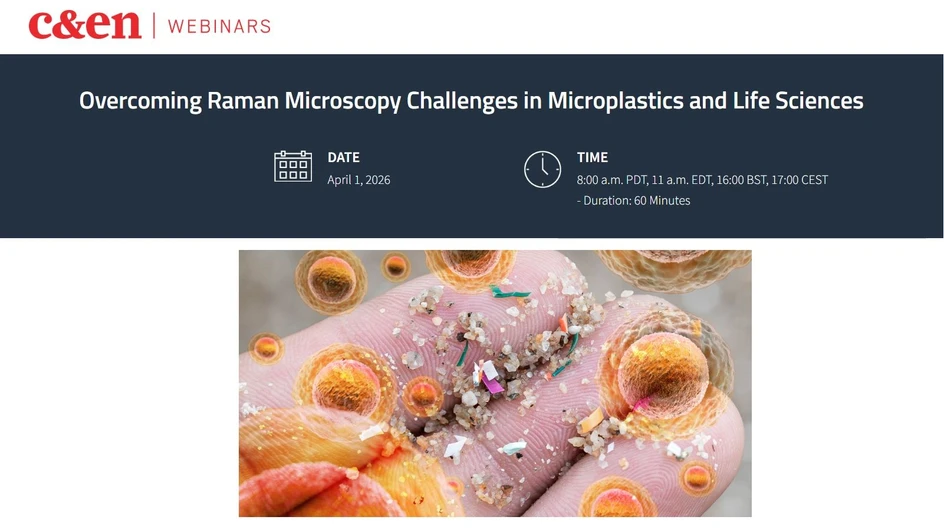
Raman microscopy is widely used for chemical identification and chemical imaging, yet many real-world organic samples remain difficult to analyze with Raman. Biological tissues, cells, and environmental microplastic samples often exhibit strong fluorescence backgrounds, while weak scattering limits sensitivity. This can lead to researchers frequently encountering long acquisition times, uncertain particle identification, or datasets that lack the quality needed for confident interpretation and identification.
Infrared spectroscopy is a powerful technique for chemical identification of organic samples but it has poor spatial resolution compared to Raman, tied to its much larger wavelengths. This webinar will discuss a breakthrough new sub-500nm IR spectroscopy technique called Optical photothermal IR spectroscopy (O-PTIR). O-PTIR provides chemical imaging and spectroscopy without fluorescence interference in seconds on organic samples such as microplastics and life sciences.
This webinar will also discuss examples of simultaneous sub-micron IR and Raman spectroscopy, from the same sample region, such that the complementarity of IR and Raman without fluorescence interference in seconds as well as new laser-scanning based innovations for high-speed imaging for improved throughput. Application examples in microplastics characterization and life science research will demonstrate how challenging samples can be analyzed more reliably, how chemical specificity can be improved, and how multimodal workflows can provide actionable chemical information where traditional Raman imaging struggles.
Key Learning Objectives:
- Understand the fundamental limitations of Raman microscopy when analyzing samples such as microplastics and life science.
- Learn about the new breakthrough O-PTIR technique that allows one to get sub-500nm spectra on organic samples with examples provided from microplastics and life sciences.
- Discover how a combination of IR and Raman spectra obtained simultaneously and from the same sample location, can improve confidence in unknowns identification and provided, and also improved data quality.
Who Should Attend:
- Microplastics and environmental researchers studying polymer particles in complex matrices
- Cell and tissue biologists using chemical imaging or microscopy techniques
- Biopharmaceutical scientists investigating subvisible protein particles, aggregates, and formulation stability
- Raman microscopy and spectroscopy users encountering fluorescence or weak signal limitations
- Polymer and materials scientists performing particle or surface characterization
- Analytical chemists working with heterogeneous or challenging samples
- Core facility managers and laboratory directors responsible for analytical instrumentation selection
Presenter: Andrew P. Ault (Professor, Department of Chemistry, University of Michigan)
Presenter: Dr. Mustafa Kansiz (Director of Product Management, Photothermal Spectroscopy Corp)


