

Emissions of PFAS from fluoropolymer-coated cookware: Analytical advances and findings
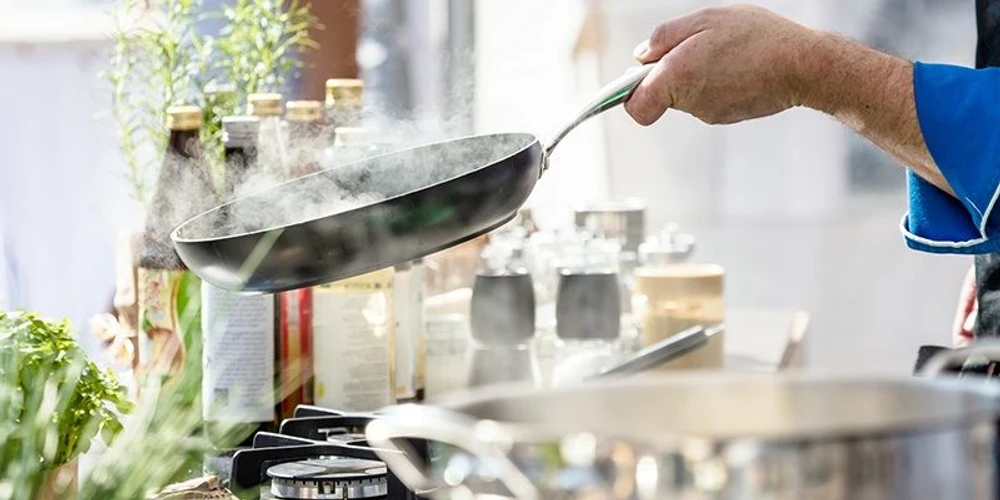
PFAS compounds are known for their persistence and toxicity and can pose serious health and environmental risks. This has led to an increased interest in their analysis in recent years. However, accurately detecting and quantifying PFAS in air can be a challenge for GC–MS analysts, because of their low concentrations and the nature of the compounds themselves.
In this webinar, Sarah Enge and Professor Thomas J. Simat, Food Science and Food Contact Material group at the Technische Universität Dresden, and Carlos Gil, Markes International, discuss recent advances in the research into PFAS emissions from fluoropolymer-based non-stick coatings in both cookware and food contact materials, such as baking paper. They will discuss how advanced thermal desorption (TD)–GC–MS overcomes the challenges faced with the analysis of PFAS, and the implications of these results for consumer safety and regulatory standards.
By attending this presentation, you will learn:
- The latest and best practices for trace-level sampling and analysis of food contact materials subject to high temperatures
- How advanced thermal desorption (TD)–GC–MS techniques can overcome the challenges faced in PFAS analysis
- Analytical considerations for consumer safety and regulatory standards
Who should attend?
- Researchers interested in PFAS and PFAS monitoring
- Laboratory and project managers working with PFAS
- Analysts monitoring food contact materials at high temperature
- Environmental consultants
What you need to know:
Date: 27 June, 2024
Start times:
Broadcast #1: 27 June - 10 am BST (London) / 11 am CEST (Paris/Berlin) / 2:30 pm IST (New Delhi) / 5 pm SGT (Singapore)
Broadcast #2: 27 June - 10 am PDT (Los Angeles) / 12 pm CDT (Chicago) / 1 pm EDT (New York)
Duration: Approximately 60 minutes
Presenter: Sarah Enge (PhD Candidate, TU Dresden)
Sarah Enge is currently pursuing her PhD at TUD Dresden University of Technology, specializing in food science and food contact materials. She holds a Diploma in Food Chemistry from the same institution, where she conducted research on PFAS analysis and the migration of fluorinated compounds from cookware. Her current research focuses on the migration of PFAS and other compounds from food contact materials in high-temperature settings.
Presenter: Prof. Dr habil. Thomas J. Simat (Chair of Food Science and Food and Skin Contact Materials, TU Dresden)
Professor Simat is a renowned researcher in food contact materials, focusing on specific migration from materials such as plastics, coatings, elastomers, inks, and paper. His research also includes the sensory evaluation of olfactory active volatile organic compounds (oVOCs) in consumer products. He holds a PhD in Food Chemistry and has been the Chair of Food Science and Food and Skin Contact Materials at TU Dresden since 2003. He lectures on subjects including nutritional biochemistry, the chemistry of food contact materials, their legal regulations and sustainability, and sensory evaluation techniques. Professor Simat is an active member and chairman of several scientific committees and advisory boards focusing on consumer products and food contact materials.
Presenter: Carlos Gil (Business Development Manager DACH/EMEAI, Markes International GmbH)
Carlos is a professional with over 20 years' experience in analytical chemistry with a focus on sample preparation and sample introduction techniques mainly for GC–MS. He’s a graduate engineer in Applied Chemistry and is currently Business Development Manager for Schauenburg Analytics (the parent company of Markes International), supporting customers and partners in finding the best possible analytical solutions, following new analytical trends, and initiating collaborations.


