
GCMS
More information
WebinarsAbout usContact usTerms of use
LabRulez s.r.o. All rights reserved. Content available under a CC BY-SA 4.0 Attribution-ShareAlike
Organizer
Agilent Technologies
Analytical scientists and clinical researchers worldwide rely on Agilent to help fulfill their most complex laboratory demands. Our instruments, software, services and consumables address the full range of scientific and laboratory management needs.
Tags
GC/MS
GC/HRMS
LinkedIn Logo

Complementarity of GCQTOF-MS and GCQqQ-MS/MS in pesticide residue analysis
RECORD | Already taken place We, 15.7.2020
The application and advantages of nominal mass GC/MS and GC-HRAMS will be discussed along with strategies to minimize false positive and false negative detections.
Go to the webinar
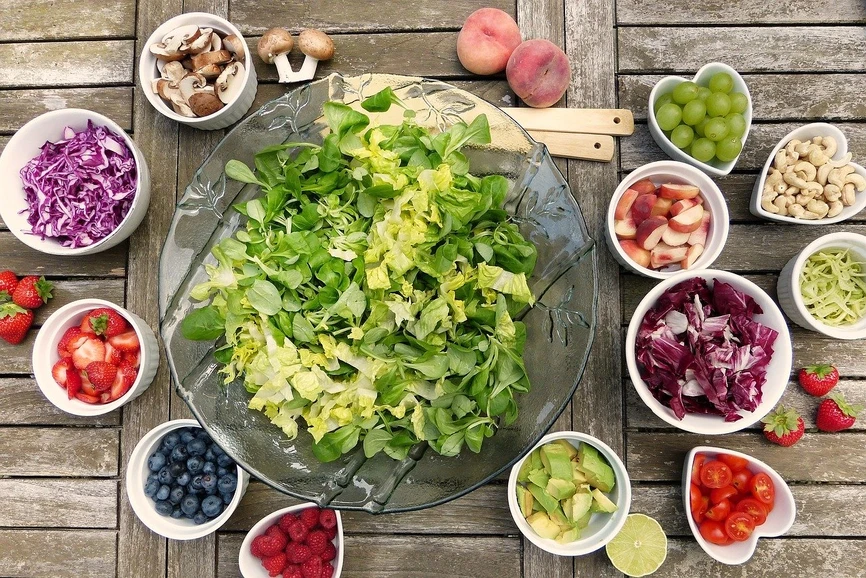
Pixabay/silviarita: MS Strategies to Determine Panels of Polar and Non-Polar Pesticides in Fruit and Vegetables

How GC-MS gas chromatography can increase the scope of the analysis to include non-polar pesticide residues.

The application and advantages of nominal mass GC/MS and GC-High Resolution Accurate Mass Spectrometry (GC-HRAMS) will be discussed along with strategies to minimize false positive and false negative detections.

Presenter: Lorena Manzano Sánchez (European Union Reference Laboratory for Pesticide Residues in Fruits and Vegetables, Agrifood Campus of International Excellence ceiA3 (ceiA3), Department of Chemistry and Physics, University of Almería)

MS Strategies to Determine Panels of Polar and Non-Polar Pesticides in Fruit and Vegetables

The combination of LC and GC separation with mass spectrometric detection have for many years been the techniques of choice for the analysis of pesticide residues. Targeted quantitative analysis is the principle domain of triple quadrupole instrumentation, whereas non-targeted workflows with retrospective analysis are the domain of HRMS technologies. However, due to the widely differing polarity and thermal lability of pesticide classes, both LC and GC chromatographic separation technologies are necessary to cover the complete range of pesticides in use around the globe today.

Agilent Technologies
LinkedIn Logo
 

Related content

Analysis of Aroma Components in Apples Using the Smart Aroma Database

Applications
| 2026 | Shimadzu
Instrumentation
GC/MSD, GC/SQ, HeadSpace
Manufacturer
Shimadzu
Industries
Food & Agriculture

Analysis of Acetaldehyde and Limonene in Recycled PET Using an HS-GCMS System (Carrier Gas: H2)

Applications
| 2026 | Shimadzu
Instrumentation
GC/MSD, GC/SQ, HeadSpace
Manufacturer
Shimadzu
Industries
Energy & Chemicals

What Causes GC Capillary Column Performance Degradation, and How Can I Prevent It?

Technical notes
| 2026 | Agilent Technologies
Instrumentation
Consumables, GC columns
Manufacturer
Agilent Technologies
Industries
Other

Aromatic Component Analysis of Gasoline According to ASTM D5580 Using the Brevis GC- 2050 Gas Chromatograph

Applications
| 2025 | Shimadzu
Instrumentation
GC
Manufacturer
Shimadzu
Industries
Energy & Chemicals

Micro GC Analysis of Permanent Gas Impurities in PEM Fuel Cell-Grade Hydrogen

Applications
| 2025 | Agilent Technologies
Instrumentation
GC
Manufacturer
Agilent Technologies
Industries
Energy & Chemicals
Other projects
LCMS
ICPMS
Follow us
More information
WebinarsAbout usContact usTerms of use
LabRulez s.r.o. All rights reserved. Content available under a CC BY-SA 4.0 Attribution-ShareAlike