

How To... Drive Faster! The Fast GC Technology Forum
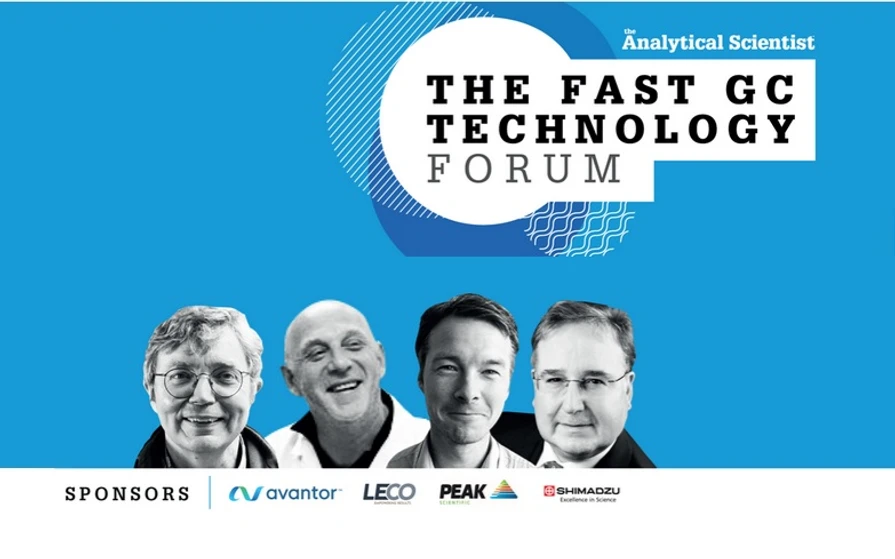
Do you feel the need for speed, but don’t have the right kit or know how? Join four leading experts and technology providers, who each present words of wisdom, innovation updates, and applications notes to help you jump-start your fast-GC journey towards increased throughput, productivity, and cost effectiveness.
Join four leading experts and technology providers, who each present words of wisdom, innovation updates, and applications notes to help you jump-start your fast-GC journey towards increased throughput, productivity, and cost effectiveness.
Agenda
Tony Edge (Avantor) will provide a theoretical 101 – and the practical implications – in his inimitable style.
“Some context: gas chromatography is the most established of all the forms of modern chromatography and, as such, could be considered a ‘mature’ technology. It is noteworthy then that there have been substantial advances in recent times, resulting in an improvement in chromatographic performance. One such area is the use of short, very narrow diameter columns for use with so-called Fast GC. I’ll go through some of the underlying theory of how the approach works, looking at the common scaling equations and the practical implications of transferring to very short and narrow i.d. capillaries.”
Ed Connor (Peak Scientific) will talk “supply” as you consider the switch from helium to hydrogen.
“I’ll introduce hydrogen generator technology and its advantages, including safety, convenience and uninterrupted supply, as well as other key considerations for selecting and installing a laboratory hydrogen generator. I will also present application examples to demonstrate improvements in sample throughput that can be achieved using hydrogen carrier gas for Fast GC compared with other carrier gases.”
Franz Kramp (Shimadzu) will delve into the practical aspects, sharing insight into the various practical steps – including a focus on the need for rapid detection.
“I’ll help you optimize all the essential parameters to gain sharper peaks separated in a shorter amount of time. I’ll discuss the different steps but also the requirement of a fast responding detection system transmitting the sharp signals for best possible results.”
David Benanou (Veolia) will further explore the applicability of fast GC – and the absolute need for sufficient data points over narrow peaks.
“Fast GC analyses increase laboratory throughput and increase detection sensitivity – great! But, to be done correctly, a number of factors need to considered – not least obtaining sufficient data points over narrow peaks, optimising separation, and achieving robust and high quality mass spectral data when using hydrogen carrier gas. I’ll describe how these factors can be addressed using a uniquely-designed fast acquisition TOF-MS detector with hydrogen carrier gas.”
PLUS Live Q&A Session
Finally, with years of combined experience at your command, any questions you may have about a shift (in gear) to fast GC will find an answer in our live Q&A-based discussion session.
Presenter: Dr Tony Edge (Site Director (Production & R&D) Hichrom, Avantor)
Tony Edge is Site Lead at Avantor Sciences, heading a team of specialist scientists in manufacturing and developing next generation stationary phases for HPLC. He has worked in both manufacturing and also industry, having periods of employment at LGC and also AstraZeneca as well as ThermoFisherScientific and latterly Agilent Technologies. In 2008, he was fortunate enough to be awarded the Desty memorial lecture for his contributions to innovating separation science, and in the same year also won a clinical excellence award from AstraZeneca.
Presenter: Ed Connor (Product Manager, PEAK Scientific)
As a Product Manager at PEAK, Ed is responsible for the ongoing management and marketing of current gas generator solutions, as well as driving development of new systems.
In addition to management of the products, Ed is involved in a number of projects with end users, distributors andOEMs, particularly focusing on the use of hydrogen and nitrogen as alternative carrier gases to helium. Ed has produced a number of articles and application notes to highlight the PEAK Scientific gas generator ranges for LC and GC applications.
Presenter: Dr. Franz Kramp (Product Manager GC, Shimadzu Europa GmbH)
Since 1999 working for Shimadzu Europe. First as Product Specialist responsible for application and technical support in Gas Chromatography. From 2013 on as Product Manager responsible for Shimadzu Gas Chromatography product line in Europe.
Worked at the Research Center in Jülich. Development of automated gas chromatographic techniques for trace measurements of hydrocarbons in atmosphere.
Worked at University of California in Los Angeles (UCLA), on kinetics of degradation processes for atmospheric pollutants.
PhD thesis in Atmospheric Science at Research Center in Jülich (Germany), research on degradation of atmospheric pollutants within the Tropospheric Ozone Research (TOR), a EUROTRAC subproject.
Presenter: David Benanou (Expert Analytical Research, Veolia France)
Dr. David Benanou started to work for Veolia more than twenty years ago, mainly being involved in research and innovation dedicated to analytical chemistry. After 10 years at the head of the team of analytical chemistry, he is the world wide expert for research and chemistry. Specialist on separation techniques and mass spectrometry as well as on sample preparation, his domain of expertise is mainly dedicated to micropollutants as well as organic matter characterization in environmental matrices and materials in contact with such matrices.


