PhD student Sabina Cerulová: Science gives you so much, but it also takes a lot — you really must enjoy it
RECETOX-MUNI: PhD student Sabina Cerulová: Science gives you so much, but it also takes a lot — you really must enjoy it
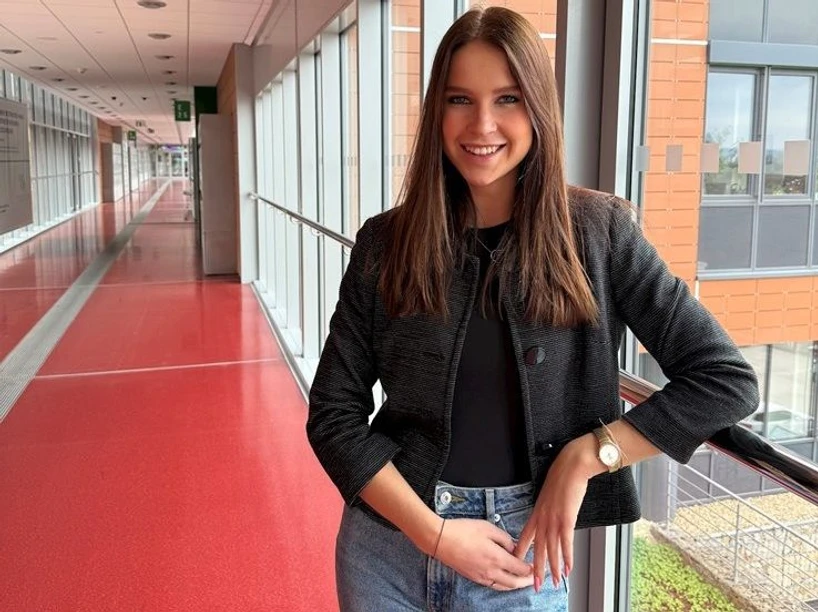
Sabina Cerulová originally planned to study veterinary medicine, but coincidence, the covid‑19 pandemic, and her bachelor’s project led her to research at RECETOX. Today, as a PhD student, she studies a rare genetic mutation responsible for severe symptoms in a specific patient, and she works with animal models, microbiome, and advanced imaging methods. What motivates her in science is the variety of work, the opportunity to constantly learn, and the hope that her work will one day help real people.
 RECETOX-MUNI: PhD student Sabina Cerulová: Science gives you so much, but it also takes a lot — you really must enjoy it
How did you get into studying biochemistry and later into research at RECETOX?
I went to grammar school and for a long time I had no idea what exactly I wanted to do. It wasn’t until my final year that I realized I was drawn to veterinary medicine. But high school was wild. I had good grades, but I didn’t study much, and I thought the entrance exams would be similar. I was very wrong.
I applied to veterinary schools and biochemistry at the Faculty of Science, where I was luckily accepted, so I enrolled. Originally, I planned to transfer to veterinary medicine the next year, but then covid came, and admissions were based on high school grades, usually only straight A’s, so I didn’t get in.
In my second year, I started working on my bachelor’s thesis, and something just clicked. I got better at it, I understood more, my grades improved, and I decided to finish my bachelor’s degree. And then I was offered an amazing project.
Before we get to that project, what did you work on in your bachelor’s thesis
My bachelor’s thesis focused on analyzing the microbiome in the root canal of teeth in patients with apical periodontitis. I worked on it here at RECETOX under Associate Professor Petra Bořilová Linhartová. It was incredibly interesting — completely new work, new analyses. Because of covid, we had fewer lab classes, but I still really enjoyed it. After my bachelor’s, I received an offer from my supervisor, who knew I was interested in animals and veterinary science. For my thesis, she offered me the project we’ve already mentioned, which we work on in collaboration with the Institute of Histology and Embryology, in Associate Professor Křivánek’s group. They work with animal models, mainly mice, and study the effect of a genetic mutation found in a specific patient.
Why were you so drawn to animals? Have you ever considered studying medicine?
I’ve been close to animals since I was little. I used to ride horses, and at home we had hamsters, chinchillas, cats, and dogs. Everyone asked me why I didn’t go into medicine, but I guess I just like animals more than people (laughs). I liked the idea of having my own veterinary practice and being close to them.
Biochemistry was more of a backup plan; I didn’t really know what I was getting into. And I don’t regret it. Veterinary medicine will probably always be a dream, but I’m glad I stayed here.
Could you describe the project in more detail? If I understand correctly, you’re continuing the same topic in your dissertation.
Yes, that's right. Our research group collaborates with a hospital, which provided us with results from a patient who had numerous pathological findings since childhood: bone lesions, shortened tooth roots, enamel hypomineralization, joint pain, high phosphate levels in the blood.
Whole‑exome sequencing was performed, and a very rare mutation was identified in the gene that I study. In collaboration with other institutions, we created a mouse with the same point of mutation. It underwent phenotyping screening, and its symptoms were very similar to the patient’s. That was a huge success. Now we’re trying to further characterize the model and, in the future, test treatment options on it — diets, DNA modification, anything that could help not only her but also other patients with similar symptoms.
Do you work only with that one mutation, or with other models as well?
Primarily, I focus on one specific point of mutation, but we also worked with knockout mice where the gene is completely switched off. The results were quite variable, so we now study both lines. Thanks to our collaborations, we also have access to data from other mouse models with mutations in genes closely associated with hyperphosphatemia, which helps us put our results into a broader context.
Are you planning to study additional patients as well?
Yes. We want to publish a paper on additional patients, especially those on dialysis, and examine their phosphate levels and potential genetic modifications. Phosphate is not routinely tested, so similar disorders may be hidden. We’d like to find out whether their problems could be related to this gene and thus make our project applicable to a larger group of patients.
Do you use imaging methods? With what goal?
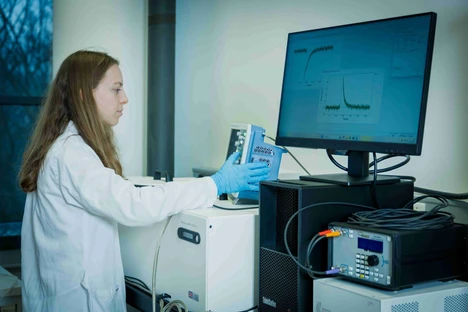
Yes. We wanted something non‑invasive, because microCT requires euthanizing the mice. In collaboration with the core facility, we’re testing MRI to observe manifestations of the mutation over time — in bones, soft tissues, kidneys. We obtained a grant for this, currently for one year. We need to observe progression, and then we can apply for further funding.
What surprised you most about working with animal models?
The time. Everything takes so long. Mice are living organisms, sometimes they’re born and then eat each other. It’s unpredictable. And we got our first shock when we were expecting offspring and nothing happened. Only later we found out that males with this mutation are infertile. As an animal lover, I cried over the first mouse I lost. But then you remind yourself that you're doing this to help patients. And you look for ways to use as few mice as possible.
 RECETOX-MUNI: PhD student Sabina Cerulová: Science gives you so much, but it also takes a lot — you really must enjoy it
Why don’t you use vitro approaches instead, such as testing outside a living organism?
Because of speed and complexity. Mice reproduce quickly, live for about two years, and share 99% of their genes with humans. Using cells would be much slower, and we wouldn’t see the full picture of how the organism behaves.
What do you enjoy most about the work?
The variety. That I can tailor my day to what I have the capacity for. Sometimes I prepare samples for sequencing, sometimes I do analyses, sometimes I teach. I enjoy constantly learning and the diversity of tasks.
What is the hardest part of PhD studies for you?
Time management. I’m not good at it, and I’m very grateful to my supervisor, who helps me stay on track. And also, not losing myself in the work — I need to have a personal life. I do this because I enjoy it, but I don’t want to burn out.
How do you view working with students?
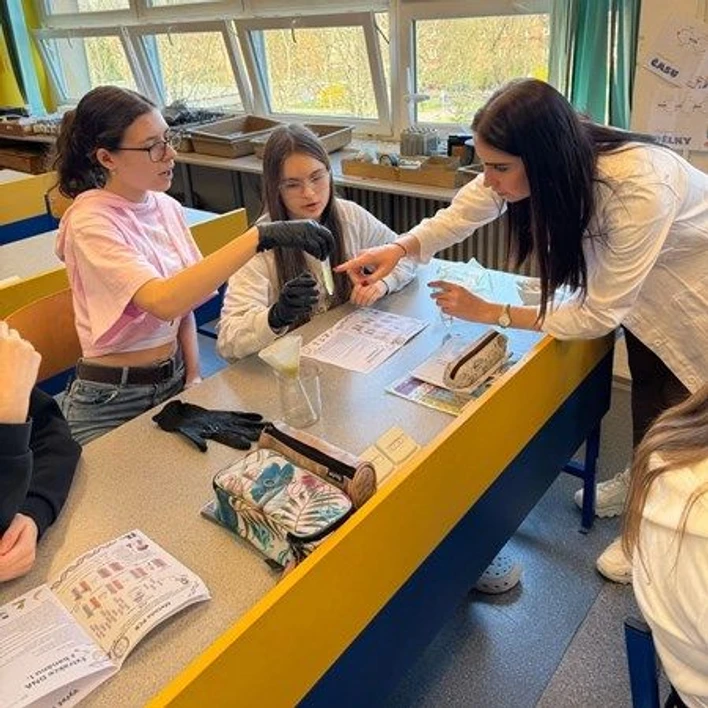
I enjoy it, but it’s demanding. Sometimes students mistake me for one of them (laughs), because I look young. And they’re very motivated — sometimes I feel like they know more than I do. But it has taught me a lot about patience and confidence. I really enjoy taking lectures.
 RECETOX-MUNI: PhD student Sabina Cerulová: Science gives you so much, but it also takes a lot — you really must enjoy it
What are you most proud of in your scientific journey so far?
My progress. I never imagined myself in academia. Looking back, I’m grateful to the consultants on my bachelor’s thesis for their patience. Changing my approach and discovering that I enjoy it has moved me forward the most. I’m not focused on one specific result but on personal growth.
What motivates you to keep going?
The idea that one day it will work out. I try to stay positive, even though some days are tough and nothing goes according to plan.
Do you also engage in science outreach?
Yes. We do a lot, especially for children. I recently visited my hometown, Karviná. We have third graders, ninth graders… It’s great; the kids are enthusiastic. Outreaching is extremely important — showing that science is fun and needed everywhere.
And what is next after the PhD?
I don’t know. Maybe another PhD (laughs). But I certainly want to stay in science.
What advice would you give to young people considering a scientific career?
You must enjoy it. Science gives you so much, but it takes a lot as well. You must be passionate about it and find a topic that’s truly yours.