
GCMS
More information
WebinarsAbout usContact usTerms of use
LabRulez s.r.o. All rights reserved. Content available under a CC BY-SA 4.0 Attribution-ShareAlike
Author
Institute of Organic Chemistry and Biochemistry of the Czech Academy of Sciences
The Institute of Organic Chemistry and Biochemistry of the Czech Academy of Sciences (IOCB Prague) is a leading scientific institution in the Czech Republic, recognized internationally. Its primary mission is basic research in the fields of chemical biology and medicinal chemistry, organic and material oriented chemistry, chemistry of natural compounds, biochemistry and molecular biology, physical chemistry, theoretical chemistry, and analytical chemistry.
Tags
Article
Science and research
Video
LinkedIn Logo

Research from IOCB Prague reveals a previously unknown mechanism of genetic transcription
Fr, 6.2.2026
| Original article from: IOCB Prague
Scientists at IOCB Prague reveal a previously unknown mechanism that initiates gene transcription. Using cryo-EM, they uncover how alarmone molecules enable RNA synthesis under stress.
Video placeholder
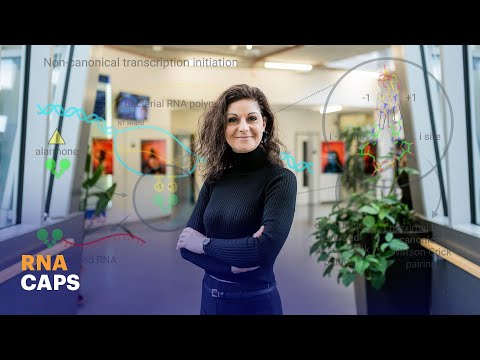
  • Photo: IOCB Prague: Research from IOCB Prague reveals a previously unknown mechanism of genetic transcription
  • Video: IOCB Prague: Research from IOCB Prague reveals a previously unknown mechanism of genetic transcription

Scientists at IOCB Prague are uncovering new details of gene transcription. They have identified a previously unknown molecular mechanism by which the transcription of genetic information from deoxyribonucleic acid (DNA) into ribonucleic acid (RNA) can be initiated. The researchers focused on a specific class of molecules known as alarmones, which are found in cells across a wide range of organisms and whose levels often increase under conditions of cellular stress. The results were published in the prestigious scientific journal Nature Chemical Biology.

IOCB Prague/Tomáš Belloň: Research from IOCB Prague reveals a previously unknown mechanism of genetic transcription: Dr. Hana Cahová, head of the Chemical Biology of Nucleic Acids research group.IOCB Prague/Tomáš Belloň: Research from IOCB Prague reveals a previously unknown mechanism of genetic transcription: Dr. Hana Cahová, head of the Chemical Biology of Nucleic Acids research group.

Molecules of ribonucleic acid can carry a variety of chemical modifications at one end, known as caps. In eukaryotic organisms, including human cells, the best-known cap plays an important role in RNA stability and in regulating its subsequent fate. In recent years, however, it has become clear that alternative, non-canonical RNA caps also exist, although their formation and the mechanisms by which they are attached to RNA remain only partially understood. These include alarmone caps, formed by dinucleoside polyphosphate molecules, that protect cellular RNA at moments when the cell is under threat.

In their study, Dr. Hana Cahová and colleagues examined bacterial RNA polymerase and investigated how this enzyme can initiate transcription using dinucleoside polyphosphates (NpNs) instead of the standard RNA building blocks. For the first time, the scientists described, at the atomic level, how RNA bearing an alarmone cap can be generated directly at the initiation of gene transcription. They also observed that NpNs bind through a different type of base pairing than is typically observed.

The work was significantly shaped by Valentina Serianni from Hana Cahová’s team, who demonstrated the ability of dinucleoside polyphosphates to initiate gene transcription, and by Jana Škerlová, who focused on the structural analysis of RNA polymerase. Using cryogenic electron microscopy data, she showed how dinucleoside polyphosphate molecules bind within the active site of RNA polymerase – that is, the core of the enzyme where genetic information is transcribed. Together, their findings help to elucidate the processes that accompany the transcription of genetic information from DNA to RNA.

Hana Cahová adds: “We’re describing something that truly occurs in cells and that we’re now able to observe directly at the level of individual molecules. This allows us to answer fundamental questions about cellular processes, such as how cells adapt to stress. RNA plays a central role in this, as it carries the cascade of information underlying any cellular response – for example, to threatening conditions caused by nutrient deprivation or temperature shock.”

IOCB Prague/Tomáš Belloň: Research from IOCB Prague reveals a previously unknown mechanism of genetic transcription: Dr. Tomáš Kouba, head of the Cryogenic Electron Microscopy core facility.IOCB Prague/Tomáš Belloň: Research from IOCB Prague reveals a previously unknown mechanism of genetic transcription: Dr. Tomáš Kouba, head of the Cryogenic Electron Microscopy core facility.

Cryogenic electron microscopy (cryo-EM) was central to the project. This part of the work was led by Dr. Tomáš Kouba, one of the authors of the study. “Cryogenic electron microscopy allows us to freeze biological molecules in a state very close to their natural form and then determine their three-dimensional structure. This makes it possible to look directly into the active centers of enzymes and observe their function down to the atomic level,” he explains.

Last year, IOCB Prague opened a new cryo-EM center that is unique within the Czech research environment. State-of-the-art cryogenic electron microscopes are housed in a specially designed building and enable the study of biological processes with exceptional structural precision.

IOCB Prague: Research from IOCB Prague reveals a previously unknown mechanism of genetic transcription: This work shows how NpnNs initiate bacterial transcription. Cryo-EM reveals how nucleobases pair with the template: one in canonical and one in reverse Watson–Crick mode, providing a structural basis for their function as non-canonical RNA caps.IOCB Prague: Research from IOCB Prague reveals a previously unknown mechanism of genetic transcription: This work shows how NpnNs initiate bacterial transcription. Cryo-EM reveals how nucleobases pair with the template: one in canonical and one in reverse Watson–Crick mode, providing a structural basis for their function as non-canonical RNA caps.

The Original article

Molecular insight into 5′ RNA capping with NpnNs by bacterial RNA polymerase

Valentina M. Serianni, Jana Škerlová, Anna Knopp Dubánková, Anton Škríba, Hana Šváchová, Tereza Vučková, Anatolij Filimoněnko, Milan Fábry, Pavlína Řezáčová, Tomáš Kouba & Hana Cahova 

Nat. Chem. Biol. 21 (2026)

https://doi.org/10.1038/s41589-025-02134-5

licensed under CC-BY 4.0

Abstract

RNA capped with dinucleoside polyphosphates has been discovered in bacteria and eukaryotes only recently. The likely mechanism of this specific capping involves direct incorporation of dinucleoside polyphosphates by RNA polymerase as noncanonical initiating nucleotides. However, how these compounds bind into the active site of RNA polymerase during transcription initiation is unknown. Here, we explored transcription initiation in vitro, using a series of DNA templates in combination with dinucleoside polyphosphates and model RNA polymerase from Thermus thermophilus. We observed that the transcription start site can vary on the basis of the compatibility of the specific template and dinucleoside polyphosphate. Cryo-electron microscopy structures of transcription initiation complexes with dinucleoside polyphosphates revealed that both nucleobase moieties can pair with the DNA template. The first encoded nucleotide pairs in a canonical Watson–Crick manner, whereas the second nucleobase pairs noncanonically in a reverse Watson–Crick manner. Our work provides a structural explanation of how dinucleoside polyphosphates initiate RNA transcription.

Institute of Organic Chemistry and Biochemistry of the Czech Academy of Sciences
LinkedIn Logo
 

Related content

Analysis of Acetaldehyde and Limonene in Recycled PET Using an HS-GCMS System (Carrier Gas: H2)

Applications
| 2026 | Shimadzu
Instrumentation
GC/MSD, GC/SQ, HeadSpace
Manufacturer
Shimadzu
Industries
Energy & Chemicals

What Causes GC Capillary Column Performance Degradation, and How Can I Prevent It?

Technical notes
| 2026 | Agilent Technologies
Instrumentation
Consumables, GC columns
Manufacturer
Agilent Technologies
Industries
Other

Aromatic Component Analysis of Gasoline According to ASTM D5580 Using the Brevis GC- 2050 Gas Chromatograph

Applications
| 2025 | Shimadzu
Instrumentation
GC
Manufacturer
Shimadzu
Industries
Energy & Chemicals

Micro GC Analysis of Permanent Gas Impurities in PEM Fuel Cell-Grade Hydrogen

Applications
| 2025 | Agilent Technologies
Instrumentation
GC
Manufacturer
Agilent Technologies
Industries
Energy & Chemicals

Quantification of 8 Disinfection Byproducts from Water by Liquid-Liquid Extraction and Gas Chromatography-MassSpectrometry

Applications
| 2025 | Shimadzu
Instrumentation
GC/MSD, GC/SQ
Manufacturer
Shimadzu
Industries
Environmental
 

Related articles

JUNIOR STAR Grants at UCT Prague: Two talented women from abroad driving innovation in science
Article | Scientists

JUNIOR STAR Grants at UCT Prague: Two talented women from abroad driving innovation in science

Two outstanding early-career researchers at UCT Prague, Filipa Oliveira and Stella Gonsales, received prestigious GAČR JUNIOR STAR grants for innovative research in materials science and sustainable chemistry.
UCT Prague
tag
share
more
How to Protect Your GC Column - Part 1
Article | Academy

How to Protect Your GC Column - Part 1

Dirty samples can quickly damage your GC column and shorten its lifetime. Learn simple, proven ways to protect your column, improve performance, and reduce downtime. Part 1 focuses on smart sample preparation.
Phenomenex
tag
share
more
Revealing hidden chemicals at sea
Article | Health

Revealing hidden chemicals at sea

Flame retardants were found throughout cruise ship interiors, with some areas showing much higher levels. A new RECETOX and NIVA study explores potential exposure risks for crew and passengers.
RECETOX - Centrum pro výzkum toxických látek v prostředí
tag
share
more
News from LabRulezGCMS Library - Week 06, 2026
Article | Application

News from LabRulezGCMS Library - Week 06, 2026

This week we bring you technical note by Agilent Technologies and application notes by BaySpec, Metrohm and Shimadzu!
LabRulez
tag
share
more
 

Related content

Analysis of Acetaldehyde and Limonene in Recycled PET Using an HS-GCMS System (Carrier Gas: H2)

Applications
| 2026 | Shimadzu
Instrumentation
GC/MSD, GC/SQ, HeadSpace
Manufacturer
Shimadzu
Industries
Energy & Chemicals

What Causes GC Capillary Column Performance Degradation, and How Can I Prevent It?

Technical notes
| 2026 | Agilent Technologies
Instrumentation
Consumables, GC columns
Manufacturer
Agilent Technologies
Industries
Other

Aromatic Component Analysis of Gasoline According to ASTM D5580 Using the Brevis GC- 2050 Gas Chromatograph

Applications
| 2025 | Shimadzu
Instrumentation
GC
Manufacturer
Shimadzu
Industries
Energy & Chemicals

Micro GC Analysis of Permanent Gas Impurities in PEM Fuel Cell-Grade Hydrogen

Applications
| 2025 | Agilent Technologies
Instrumentation
GC
Manufacturer
Agilent Technologies
Industries
Energy & Chemicals

Quantification of 8 Disinfection Byproducts from Water by Liquid-Liquid Extraction and Gas Chromatography-MassSpectrometry

Applications
| 2025 | Shimadzu
Instrumentation
GC/MSD, GC/SQ
Manufacturer
Shimadzu
Industries
Environmental
 

Related articles

JUNIOR STAR Grants at UCT Prague: Two talented women from abroad driving innovation in science
Article | Scientists

JUNIOR STAR Grants at UCT Prague: Two talented women from abroad driving innovation in science

Two outstanding early-career researchers at UCT Prague, Filipa Oliveira and Stella Gonsales, received prestigious GAČR JUNIOR STAR grants for innovative research in materials science and sustainable chemistry.
UCT Prague
tag
share
more
How to Protect Your GC Column - Part 1
Article | Academy

How to Protect Your GC Column - Part 1

Dirty samples can quickly damage your GC column and shorten its lifetime. Learn simple, proven ways to protect your column, improve performance, and reduce downtime. Part 1 focuses on smart sample preparation.
Phenomenex
tag
share
more
Revealing hidden chemicals at sea
Article | Health

Revealing hidden chemicals at sea

Flame retardants were found throughout cruise ship interiors, with some areas showing much higher levels. A new RECETOX and NIVA study explores potential exposure risks for crew and passengers.
RECETOX - Centrum pro výzkum toxických látek v prostředí
tag
share
more
News from LabRulezGCMS Library - Week 06, 2026
Article | Application

News from LabRulezGCMS Library - Week 06, 2026

This week we bring you technical note by Agilent Technologies and application notes by BaySpec, Metrohm and Shimadzu!
LabRulez
tag
share
more
 

Related content

Analysis of Acetaldehyde and Limonene in Recycled PET Using an HS-GCMS System (Carrier Gas: H2)

Applications
| 2026 | Shimadzu
Instrumentation
GC/MSD, GC/SQ, HeadSpace
Manufacturer
Shimadzu
Industries
Energy & Chemicals

What Causes GC Capillary Column Performance Degradation, and How Can I Prevent It?

Technical notes
| 2026 | Agilent Technologies
Instrumentation
Consumables, GC columns
Manufacturer
Agilent Technologies
Industries
Other

Aromatic Component Analysis of Gasoline According to ASTM D5580 Using the Brevis GC- 2050 Gas Chromatograph

Applications
| 2025 | Shimadzu
Instrumentation
GC
Manufacturer
Shimadzu
Industries
Energy & Chemicals

Micro GC Analysis of Permanent Gas Impurities in PEM Fuel Cell-Grade Hydrogen

Applications
| 2025 | Agilent Technologies
Instrumentation
GC
Manufacturer
Agilent Technologies
Industries
Energy & Chemicals

Quantification of 8 Disinfection Byproducts from Water by Liquid-Liquid Extraction and Gas Chromatography-MassSpectrometry

Applications
| 2025 | Shimadzu
Instrumentation
GC/MSD, GC/SQ
Manufacturer
Shimadzu
Industries
Environmental
 

Related articles

JUNIOR STAR Grants at UCT Prague: Two talented women from abroad driving innovation in science
Article | Scientists

JUNIOR STAR Grants at UCT Prague: Two talented women from abroad driving innovation in science

Two outstanding early-career researchers at UCT Prague, Filipa Oliveira and Stella Gonsales, received prestigious GAČR JUNIOR STAR grants for innovative research in materials science and sustainable chemistry.
UCT Prague
tag
share
more
How to Protect Your GC Column - Part 1
Article | Academy

How to Protect Your GC Column - Part 1

Dirty samples can quickly damage your GC column and shorten its lifetime. Learn simple, proven ways to protect your column, improve performance, and reduce downtime. Part 1 focuses on smart sample preparation.
Phenomenex
tag
share
more
Revealing hidden chemicals at sea
Article | Health

Revealing hidden chemicals at sea

Flame retardants were found throughout cruise ship interiors, with some areas showing much higher levels. A new RECETOX and NIVA study explores potential exposure risks for crew and passengers.
RECETOX - Centrum pro výzkum toxických látek v prostředí
tag
share
more
News from LabRulezGCMS Library - Week 06, 2026
Article | Application

News from LabRulezGCMS Library - Week 06, 2026

This week we bring you technical note by Agilent Technologies and application notes by BaySpec, Metrohm and Shimadzu!
LabRulez
tag
share
more
 

Related content

Analysis of Acetaldehyde and Limonene in Recycled PET Using an HS-GCMS System (Carrier Gas: H2)

Applications
| 2026 | Shimadzu
Instrumentation
GC/MSD, GC/SQ, HeadSpace
Manufacturer
Shimadzu
Industries
Energy & Chemicals

What Causes GC Capillary Column Performance Degradation, and How Can I Prevent It?

Technical notes
| 2026 | Agilent Technologies
Instrumentation
Consumables, GC columns
Manufacturer
Agilent Technologies
Industries
Other

Aromatic Component Analysis of Gasoline According to ASTM D5580 Using the Brevis GC- 2050 Gas Chromatograph

Applications
| 2025 | Shimadzu
Instrumentation
GC
Manufacturer
Shimadzu
Industries
Energy & Chemicals

Micro GC Analysis of Permanent Gas Impurities in PEM Fuel Cell-Grade Hydrogen

Applications
| 2025 | Agilent Technologies
Instrumentation
GC
Manufacturer
Agilent Technologies
Industries
Energy & Chemicals

Quantification of 8 Disinfection Byproducts from Water by Liquid-Liquid Extraction and Gas Chromatography-MassSpectrometry

Applications
| 2025 | Shimadzu
Instrumentation
GC/MSD, GC/SQ
Manufacturer
Shimadzu
Industries
Environmental
 

Related articles

JUNIOR STAR Grants at UCT Prague: Two talented women from abroad driving innovation in science
Article | Scientists

JUNIOR STAR Grants at UCT Prague: Two talented women from abroad driving innovation in science

Two outstanding early-career researchers at UCT Prague, Filipa Oliveira and Stella Gonsales, received prestigious GAČR JUNIOR STAR grants for innovative research in materials science and sustainable chemistry.
UCT Prague
tag
share
more
How to Protect Your GC Column - Part 1
Article | Academy

How to Protect Your GC Column - Part 1

Dirty samples can quickly damage your GC column and shorten its lifetime. Learn simple, proven ways to protect your column, improve performance, and reduce downtime. Part 1 focuses on smart sample preparation.
Phenomenex
tag
share
more
Revealing hidden chemicals at sea
Article | Health

Revealing hidden chemicals at sea

Flame retardants were found throughout cruise ship interiors, with some areas showing much higher levels. A new RECETOX and NIVA study explores potential exposure risks for crew and passengers.
RECETOX - Centrum pro výzkum toxických látek v prostředí
tag
share
more
News from LabRulezGCMS Library - Week 06, 2026
Article | Application

News from LabRulezGCMS Library - Week 06, 2026

This week we bring you technical note by Agilent Technologies and application notes by BaySpec, Metrohm and Shimadzu!
LabRulez
tag
share
more
Other projects
LCMS
ICPMS
Follow us
More information
WebinarsAbout usContact usTerms of use
LabRulez s.r.o. All rights reserved. Content available under a CC BY-SA 4.0 Attribution-ShareAlike