
GCMS
More information
WebinarsAbout usContact usTerms of use
LabRulez s.r.o. All rights reserved. Content available under a CC BY-SA 4.0 Attribution-ShareAlike
Author
Purdue University
Purdue University
Purdue University is a vast laboratory for discovery. The university is known not only for science, technology, engineering, and math programs, but also for our imagination, ingenuity, and innovation. It’s a place where those who seek an education come to make their ideas real — especially when those transformative discoveries lead to scientific, technological, social, or humanitarian impact.
Tags
Article
Scientific article
Video
LinkedIn Logo

Something’s in the air: It’s nanoplastic pollution
Mo, 10.6.2024
| Original article from: Purdue University/Brittany Steff, Kayla Wiles
A new study has discovered that a process that happens all over the developed world every day accelerates the airborne dispersal of these micro- and nanoplastic particles.
Video placeholder
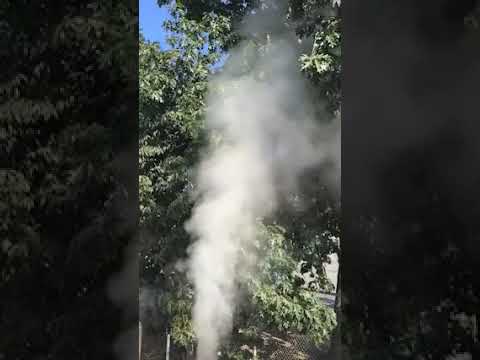
  • Photo: Purdue University: Purdue researchers perform testing during a CIPP installation in 2016.
  • Video: Science X: Phys.org, Medical Xpress, Tech Xplore: Widespread pipe repair technique sends nanoplastics into the atmosphere, new study finds.

Widespread pipe repair technique sends nanoplastics into the atmosphere, new study finds

WEST LAFAYETTE, Ind. – The tiny bits of plastic that wear off bottles, plastic bags, automotive parts and even cosmetics get into the soil and the water supply. They disrupt chemical cycles, throw off ecosystem health and pollute environments both marine and terrestrial. They eventually also get into the air, where they can damage lungs much more effectively. But for that to happen, they have to be worn away by water or earth and then be launched into the sky by winds.

A new study published in Nature Nanotechnology has discovered that a process that happens all over the developed world every day accelerates the airborne dispersal of these micro- and nanoplastic particles, posing a risk to human and environmental health. The study was led by Alexander Laskin, professor of analytical chemistry in Purdue University’s College of Science.

Laskin is an expert in environmental forensics: He takes complex samples and uses methods of the analytical chemistry to determine what, exactly, is in the air. In this case, what’s in the air are previously unsuspected amounts of aerosolized nanoplastics.

The origin of the issue lurks under the ground in every modern city, in technology to repair sewer pipes. When a sewer pipe breaks, the options to fix it are to physically dig a hole around it and replace a section of it or to treat it like the weakened area of a human artery and install a stent.

Purdue University: Purdue researchers perform testing during a CIPP installation in 2016.Purdue University: Purdue researchers perform testing during a CIPP installation in 2016.

“What they do,” explains Laskin, “is they put a resin-soaked sock into the pipe. That’s what it is, effectively a big sock, and then they cure it into place. It seals the pipe without any need for excavation. It is a very sophisticated and very practical technology. When they inflate the sock, they use pressurized steam, which then emerges as a discharged chemical plume. There’s no control on the resulting emissions, and it turns out that they produce a significant amount of pollution, including nanoplastic particles.”

The result is that around every modern urban or suburban area where this process takes place, there are uncounted and significant sources of these microplastics and nanoplastics, sources that have not before been considered or examined. Before, scientists thought the only route for plastics to get into the air is slow degradation followed by consistent wind.

“The amount of microplastic and nanoplastic in the atmosphere, floating around, has been explicitly assumed to only come from wind-borne sources. What we show here is that there is a process commonly used throughout the whole modern world that is dumping nanoplastic pollution into the air,” Laskin said.

Laskin worked with Andrew Whelton, a Purdue professor of civil engineering and environmental and ecological engineering, to quantify the impact of this cured-in-place pipe repair method, which Whelton has been studying for almost a decade. Whelton’s research has helped advise municipalities, utilities and public health agencies on how to lessen environmental pollution from this pipe repair method and protect the workers better.

This new study further unravels the mystery of what exactly is in the air when construction workers repair pipes using the cured-in-place method, something Whelton and other Purdue researchers have been studying for years.

“When we first investigated the plastic pipe air pollution practice, we discovered there had been no independent testing or oversight,” Whelton said. “It was being used in neighborhoods and in environmentally sensitive areas, sometimes prompting immediate health impacts to workers, bystanders, emergency responders and the environment. We often see workers who implement this pipe repair standing inside or near the micro- and nanoplastics waste exhaust plumes without respiratory protection. This new study indicates these workers and ones before them have likely been inhaling microplastics and nanoplastics.”

The effect of inhaled, aerosolized microplastics on human health has not been widely studied – not least because scientists have not been aware of it as a significant problem. This paper is important, because, like the first studies that heralded the trouble with chlorofluorocarbons, or CFCs, in aerosol sprays (like hairspray). It’s the first one to point to a potential significant risk that scientists were previously unaware of. They conducted the chemical imaging measurements of nanoplastics at the Advanced Light Source Synchrotron facility operated by Lawrence Berkeley National Laboratory and at the Environmental Molecular Sciences Laboratory operated by Pacific Northwest National Laboratory, with additional expertise provided by the Sonoma Technology staff. Ana Morales, a doctoral student in Laskin’s lab, integrated the observations into the published study as its first author.

“It’s not that no one cares about this problem,” Laskin said. “But with knowledge comes the need for solutions. Now that we know there is a problem, once we have assessed the issue, now we can develop mitigations and strategies to keep everyone safe.”

This study was funded by the National Science Foundation.

Resources
Purdue University
LinkedIn Logo
 

Related content

Quantitative Volatile PFAS Analysis in Textiles

Applications
| 2026 | Agilent Technologies
Instrumentation
GC/MSD, GC/MS/MS, GC/QQQ
Manufacturer
Agilent Technologies
Industries
Materials Testing

Effectiveness of the MonoTrap Collection Method for VOC Analysis in Exhaled Breath Using GC-MS

Applications
| 2026 | Shimadzu
Instrumentation
GC/MSD, Thermal desorption, GC/SQ
Manufacturer
Shimadzu
Industries
Clinical Research

Rapid analysis of organochlorine pesticides (OCPs) in soil samples using the EXTREVA ASE accelerated solvent extractor

Applications
| 2026 | Thermo Fisher Scientific
Instrumentation
Sample Preparation, GC
Manufacturer
Thermo Fisher Scientific
Industries
Environmental

Total Hydrocarbon Impurity Analysis in PEM Fuel Cell Grade Hydrogen Using the Agilent 8890 GC-FID System

Applications
| 2026 | Agilent Technologies
Instrumentation
GC
Manufacturer
Agilent Technologies
Industries
Energy & Chemicals

Analysis of Aroma Components in Apples Using the Smart Aroma Database

Applications
| 2026 | Shimadzu
Instrumentation
GC/MSD, GC/SQ, HeadSpace
Manufacturer
Shimadzu
Industries
Food & Agriculture
 

Related articles

The Effect of Needle Gauge and Flow Rate on Evaporation Rate
Article | Science and research

The Effect of Needle Gauge and Flow Rate on Evaporation Rate

The study evaluates how needle gauge, nitrogen flow rate, and needle design influence solvent evaporation rate during sample concentration and provides practical optimization guidance.
Organomation
tag
share
more
News from LabRulezGCMS Library - Week 11, 2026
Article | Application

News from LabRulezGCMS Library - Week 11, 2026

This week we bring you application notes by Agilent Technologies, Shimadzu and Thermo Fisher Scientific and poster by MDCW / C³AL!
LabRulez
tag
share
more
CATRIN researchers offer a “greener” way to make supercapacitors
Article | Science and research

CATRIN researchers offer a “greener” way to make supercapacitors

CATRIN scientists show that green solvents Cyrene and Tamisolve can replace toxic NMP in supercapacitor production while maintaining high electrochemical performance and enabling more sustainable manufacturing.
CATRIN
tag
share
more
Teaching Separation Science in High School
Interview | Scientists

Teaching Separation Science in High School

This interview explores how high school students learn separation science through filtration, gravimetric analysis, and chromatography, building the foundations for future chemistry studies.
Organomation
tag
share
more
 

Related content

Quantitative Volatile PFAS Analysis in Textiles

Applications
| 2026 | Agilent Technologies
Instrumentation
GC/MSD, GC/MS/MS, GC/QQQ
Manufacturer
Agilent Technologies
Industries
Materials Testing

Effectiveness of the MonoTrap Collection Method for VOC Analysis in Exhaled Breath Using GC-MS

Applications
| 2026 | Shimadzu
Instrumentation
GC/MSD, Thermal desorption, GC/SQ
Manufacturer
Shimadzu
Industries
Clinical Research

Rapid analysis of organochlorine pesticides (OCPs) in soil samples using the EXTREVA ASE accelerated solvent extractor

Applications
| 2026 | Thermo Fisher Scientific
Instrumentation
Sample Preparation, GC
Manufacturer
Thermo Fisher Scientific
Industries
Environmental

Total Hydrocarbon Impurity Analysis in PEM Fuel Cell Grade Hydrogen Using the Agilent 8890 GC-FID System

Applications
| 2026 | Agilent Technologies
Instrumentation
GC
Manufacturer
Agilent Technologies
Industries
Energy & Chemicals

Analysis of Aroma Components in Apples Using the Smart Aroma Database

Applications
| 2026 | Shimadzu
Instrumentation
GC/MSD, GC/SQ, HeadSpace
Manufacturer
Shimadzu
Industries
Food & Agriculture
 

Related articles

The Effect of Needle Gauge and Flow Rate on Evaporation Rate
Article | Science and research

The Effect of Needle Gauge and Flow Rate on Evaporation Rate

The study evaluates how needle gauge, nitrogen flow rate, and needle design influence solvent evaporation rate during sample concentration and provides practical optimization guidance.
Organomation
tag
share
more
News from LabRulezGCMS Library - Week 11, 2026
Article | Application

News from LabRulezGCMS Library - Week 11, 2026

This week we bring you application notes by Agilent Technologies, Shimadzu and Thermo Fisher Scientific and poster by MDCW / C³AL!
LabRulez
tag
share
more
CATRIN researchers offer a “greener” way to make supercapacitors
Article | Science and research

CATRIN researchers offer a “greener” way to make supercapacitors

CATRIN scientists show that green solvents Cyrene and Tamisolve can replace toxic NMP in supercapacitor production while maintaining high electrochemical performance and enabling more sustainable manufacturing.
CATRIN
tag
share
more
Teaching Separation Science in High School
Interview | Scientists

Teaching Separation Science in High School

This interview explores how high school students learn separation science through filtration, gravimetric analysis, and chromatography, building the foundations for future chemistry studies.
Organomation
tag
share
more
 

Related content

Quantitative Volatile PFAS Analysis in Textiles

Applications
| 2026 | Agilent Technologies
Instrumentation
GC/MSD, GC/MS/MS, GC/QQQ
Manufacturer
Agilent Technologies
Industries
Materials Testing

Effectiveness of the MonoTrap Collection Method for VOC Analysis in Exhaled Breath Using GC-MS

Applications
| 2026 | Shimadzu
Instrumentation
GC/MSD, Thermal desorption, GC/SQ
Manufacturer
Shimadzu
Industries
Clinical Research

Rapid analysis of organochlorine pesticides (OCPs) in soil samples using the EXTREVA ASE accelerated solvent extractor

Applications
| 2026 | Thermo Fisher Scientific
Instrumentation
Sample Preparation, GC
Manufacturer
Thermo Fisher Scientific
Industries
Environmental

Total Hydrocarbon Impurity Analysis in PEM Fuel Cell Grade Hydrogen Using the Agilent 8890 GC-FID System

Applications
| 2026 | Agilent Technologies
Instrumentation
GC
Manufacturer
Agilent Technologies
Industries
Energy & Chemicals

Analysis of Aroma Components in Apples Using the Smart Aroma Database

Applications
| 2026 | Shimadzu
Instrumentation
GC/MSD, GC/SQ, HeadSpace
Manufacturer
Shimadzu
Industries
Food & Agriculture
 

Related articles

The Effect of Needle Gauge and Flow Rate on Evaporation Rate
Article | Science and research

The Effect of Needle Gauge and Flow Rate on Evaporation Rate

The study evaluates how needle gauge, nitrogen flow rate, and needle design influence solvent evaporation rate during sample concentration and provides practical optimization guidance.
Organomation
tag
share
more
News from LabRulezGCMS Library - Week 11, 2026
Article | Application

News from LabRulezGCMS Library - Week 11, 2026

This week we bring you application notes by Agilent Technologies, Shimadzu and Thermo Fisher Scientific and poster by MDCW / C³AL!
LabRulez
tag
share
more
CATRIN researchers offer a “greener” way to make supercapacitors
Article | Science and research

CATRIN researchers offer a “greener” way to make supercapacitors

CATRIN scientists show that green solvents Cyrene and Tamisolve can replace toxic NMP in supercapacitor production while maintaining high electrochemical performance and enabling more sustainable manufacturing.
CATRIN
tag
share
more
Teaching Separation Science in High School
Interview | Scientists

Teaching Separation Science in High School

This interview explores how high school students learn separation science through filtration, gravimetric analysis, and chromatography, building the foundations for future chemistry studies.
Organomation
tag
share
more
 

Related content

Quantitative Volatile PFAS Analysis in Textiles

Applications
| 2026 | Agilent Technologies
Instrumentation
GC/MSD, GC/MS/MS, GC/QQQ
Manufacturer
Agilent Technologies
Industries
Materials Testing

Effectiveness of the MonoTrap Collection Method for VOC Analysis in Exhaled Breath Using GC-MS

Applications
| 2026 | Shimadzu
Instrumentation
GC/MSD, Thermal desorption, GC/SQ
Manufacturer
Shimadzu
Industries
Clinical Research

Rapid analysis of organochlorine pesticides (OCPs) in soil samples using the EXTREVA ASE accelerated solvent extractor

Applications
| 2026 | Thermo Fisher Scientific
Instrumentation
Sample Preparation, GC
Manufacturer
Thermo Fisher Scientific
Industries
Environmental

Total Hydrocarbon Impurity Analysis in PEM Fuel Cell Grade Hydrogen Using the Agilent 8890 GC-FID System

Applications
| 2026 | Agilent Technologies
Instrumentation
GC
Manufacturer
Agilent Technologies
Industries
Energy & Chemicals

Analysis of Aroma Components in Apples Using the Smart Aroma Database

Applications
| 2026 | Shimadzu
Instrumentation
GC/MSD, GC/SQ, HeadSpace
Manufacturer
Shimadzu
Industries
Food & Agriculture
 

Related articles

The Effect of Needle Gauge and Flow Rate on Evaporation Rate
Article | Science and research

The Effect of Needle Gauge and Flow Rate on Evaporation Rate

The study evaluates how needle gauge, nitrogen flow rate, and needle design influence solvent evaporation rate during sample concentration and provides practical optimization guidance.
Organomation
tag
share
more
News from LabRulezGCMS Library - Week 11, 2026
Article | Application

News from LabRulezGCMS Library - Week 11, 2026

This week we bring you application notes by Agilent Technologies, Shimadzu and Thermo Fisher Scientific and poster by MDCW / C³AL!
LabRulez
tag
share
more
CATRIN researchers offer a “greener” way to make supercapacitors
Article | Science and research

CATRIN researchers offer a “greener” way to make supercapacitors

CATRIN scientists show that green solvents Cyrene and Tamisolve can replace toxic NMP in supercapacitor production while maintaining high electrochemical performance and enabling more sustainable manufacturing.
CATRIN
tag
share
more
Teaching Separation Science in High School
Interview | Scientists

Teaching Separation Science in High School

This interview explores how high school students learn separation science through filtration, gravimetric analysis, and chromatography, building the foundations for future chemistry studies.
Organomation
tag
share
more
Other projects
LCMS
ICPMS
Follow us
FacebookX (Twitter)LinkedInYouTube
More information
WebinarsAbout usContact usTerms of use
LabRulez s.r.o. All rights reserved. Content available under a CC BY-SA 4.0 Attribution-ShareAlike